Retail Sculpture Interaction Brief: Touch and Public Use
For brand managers, retail designers and venue operators: “interactive sculpture” is too vague for a useful order brief. Define the visitor experience and the decisions behind it so the character, site arrangement, evidence and care responsibilities can be reviewed together before opening.
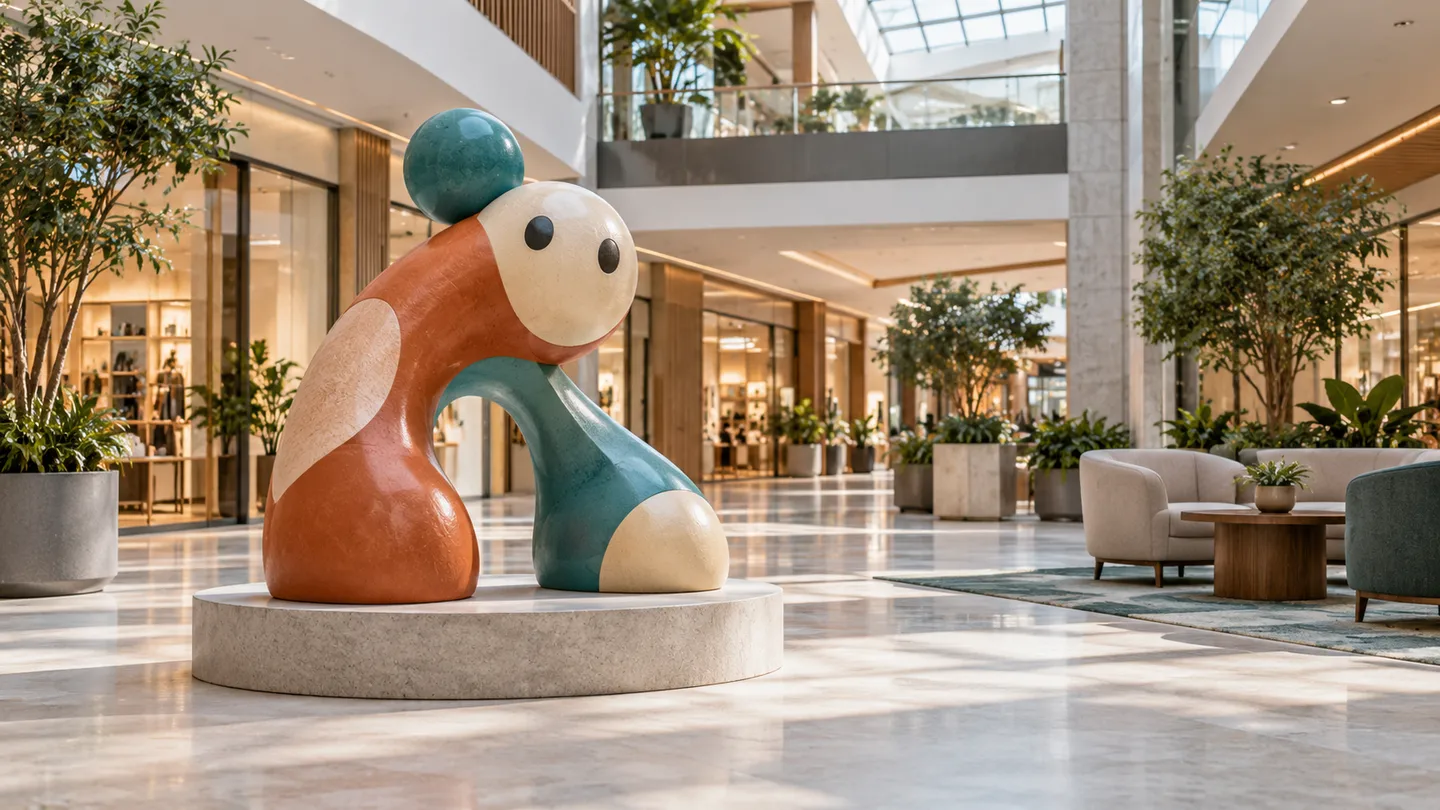
Replace the word interactive with observable actions
A retail sculpture interaction brief should say what people are expected to do. “Interactive mascot” can mean a photograph taken beside a display, a permitted touch area, a seat, a movement-based activity or a play feature. Those are different requirements. Describe the actions and the setting before choosing a material or asking the fabricator for a price; an attractive character rendering cannot settle the intended use.
Identify the brand manager, venue operator, designer and other appointed reviewers who must agree those requirements. Record the audience and the visitor journey in plain language. Include different approaches, nearby activities and how the piece will be used during normal trading and events. A temporary promotional display and a long-term installation can have different operating arrangements even when their visible shapes look similar.
Watford’s public-art commissioning toolkit includes maintenance, responsibilities and incidental play among the matters a commissioner should address in the brief. We use that as a limited example of joining design and operations. Its local approval process is not a rule for every shopping center or a certification for a Weiya catalogue item.
Build a contact and use matrix before requesting technical answers
Ask the project team to distinguish what is invited, what is not intended and what remains uncertain. Do not turn an unreviewed activity into permission just to complete the table. If a ledge, pose or adjacent seat may encourage behavior beyond the original display concept, include that question for the people appointed to assess it. The brief should expose the decision rather than quietly classify the object as harmless décor.
| Use question | Brief information to provide | Decision to assign |
|---|---|---|
| View and photograph | Approach routes, sightlines and expected photo behavior | Venue/designer agree the intended display relationship |
| Touch | Which surfaces and actions are intended | Specify evidence, care and review requirements |
| Lean or sit | Whether support of a person is intended or anticipated | Appointed team determines classification and technical review |
| Play / active interaction | The activity, audience and operating arrangement | Identify appropriate specialist assessment and responsibilities |
| Clean and service | Who accesses the work and how care is arranged | Supplier and operator agree surface-specific instructions |
| Change or relocate | What may change after the original approval | Name the owner who reopens affected decisions |

A contact map can be a simple marked drawing that refers to the current model. Give important surfaces or areas identifiers and describe the action to be assessed. This is a communication aid, not a substitute for a risk assessment or technical drawing. It should tell the supplier and reviewers what information is missing rather than prescribe unverified loads, gap sizes or fall-height rules.
Consider the real setting and people who encounter the work
Discuss visitors with different reach, mobility and viewing positions, together with staff who manage the area. Ask whether the sculpture should be approached from one side or encountered from several directions. Record how it relates to queues, circulation, ordinary seating and changing promotional layouts. Do not invent a generic clearance figure from a photograph; have the actual layout and relevant requirements reviewed by the responsible parties.
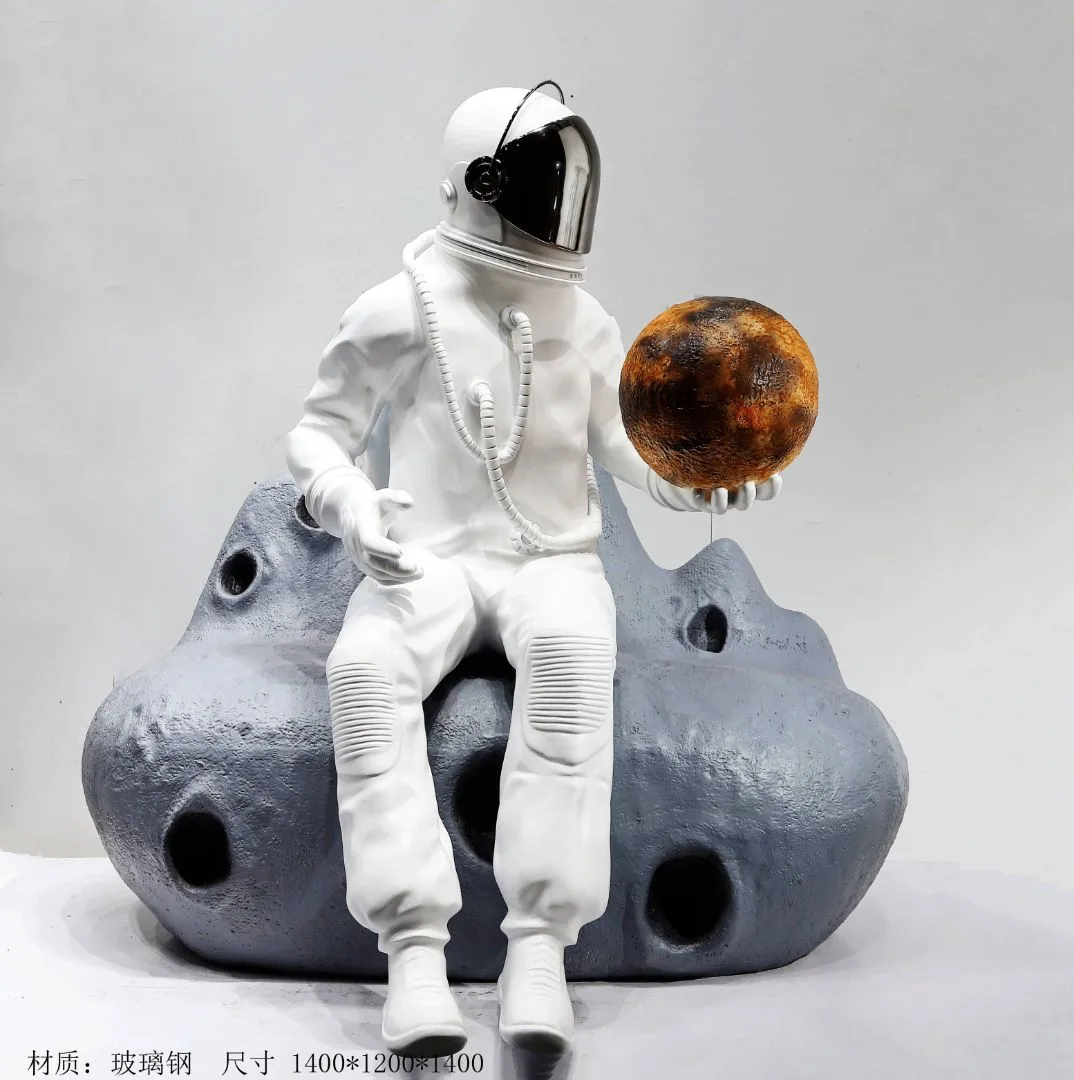
Separate the visitor experience from the object’s visual story. The brand may want a welcoming character, while the operator needs a defined approach and workable care routine. Ask who reconciles a conflict between those aims. For authorized IP, record which visual changes need brand approval and which questions need technical or operational review; a brand sign-off cannot close every other approval.
If play is genuinely part of the concept, assess that purpose rather than merely attaching a prohibition afterward. The UK HSE’s statement on children’s play and leisure supports a proportionate focus on real risks and benefits in its own context. It does not classify a commercial sculpture for you or establish another country’s requirements. Appoint the appropriate people to decide the project-specific approach, without pretending this article supplies a universal legal answer.
Turn touching and cleaning into sample questions
Once the intended actions are clear, ask for surface and construction information that responds to them. Record the proposed finish reference, the relevant contact areas and what the team needs to know about care, appearance and any technical performance. A word such as fiberglass, metal or resin identifies too little to settle all those questions. Keep the supplier’s actual proposal separate from general material associations.
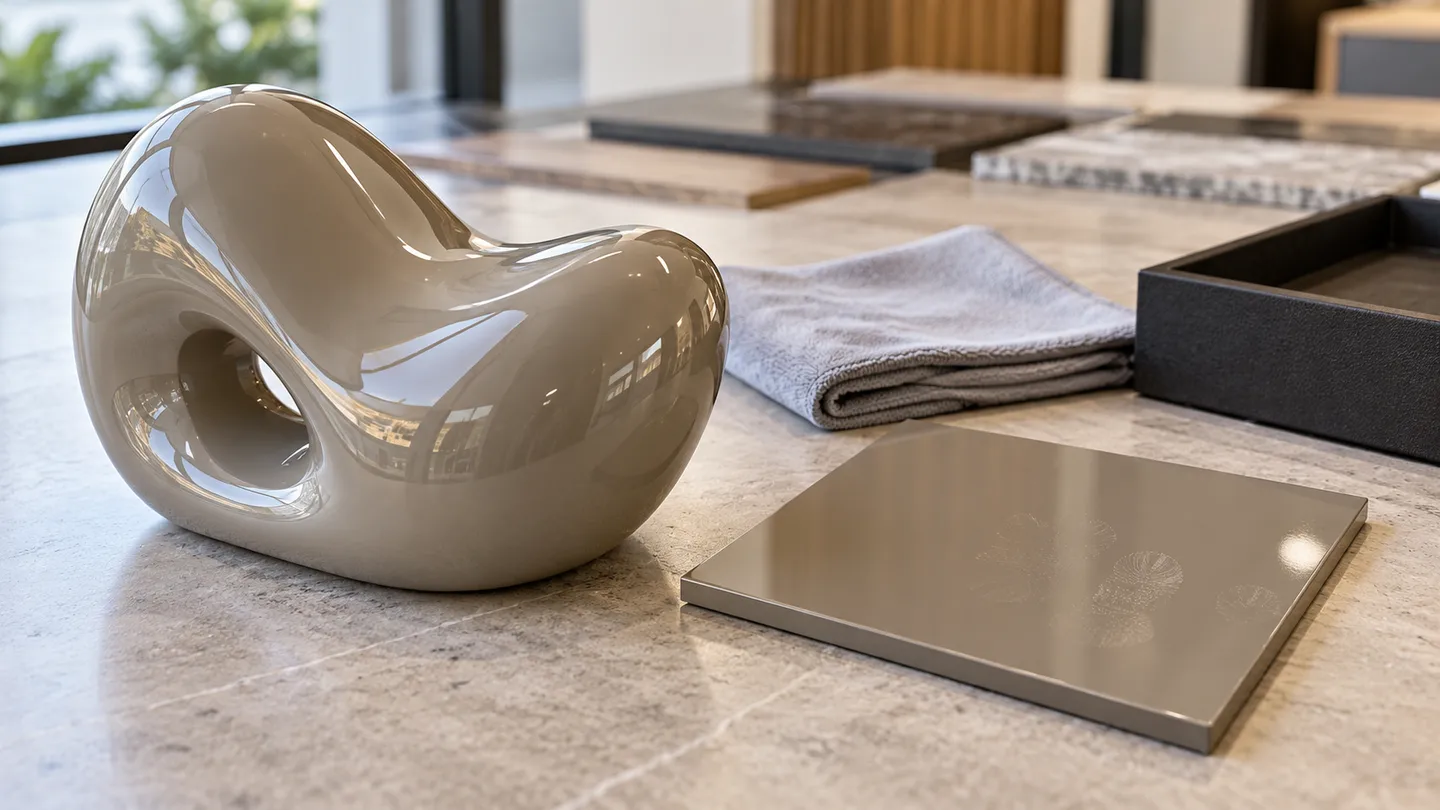
Review the sample for the appearance decision it can actually answer. If the team needs information about a proposed maintenance method or another performance requirement, identify the evidence and responsible reviewer separately. Do not treat a glossy sample or a polished photograph as proof of resistance to fingerprints, chemicals, impact, heat or repeated contact. Those claims require a basis relevant to the actual proposed work.

Use the finish sample approval checklist to record the physical reference and viewing conditions. Coordinate visible joints, edges, component boundaries and any agreed changes through the drawing approval log. The two records should point to the same current proposal, not to different variants of the character.
Use a real interactive artwork as a question, not a specification
Dix Park Conservancy’s October 2026 announcement for Alexandre Arrechea’s Orange Functional explicitly describes a playable artwork and discusses the move from a museum display context toward functional public participation. The useful distinction is the stated activity. “Interactive” is not a substitute for explaining what a visitor is invited to do.
That announcement does not provide the design or approval basis for your retail sculpture. We do not infer engineering details, a completed inspection, a material specification or a relationship with Weiya. Use the example to improve the brief: state whether the attraction is looking, photographing, touching, supporting a person or a defined activity, then identify who reviews the consequences in your own setting.
A visually similar form could be proposed for a very different purpose. If an event later changes a display into an activity, reopen the relevant decisions rather than borrowing the original approval. Record the new use, the affected components and layout, the responsible reviewers and the conditions required before the changed arrangement is offered to the public. Keep marketing language aligned with the scope actually accepted.
Name the operator and the response to a changed condition
Decide before opening who receives the care information, keeps records, notices and reports a changed condition, and can restrict use while an issue is assessed. Agree the relevant checks and review arrangements with the responsible parties rather than copying an inspection interval from a different type of equipment. The operator needs a workable handover, not simply a folder titled “maintenance.”

Clarify the boundary between routine care and specialist work. Ask who can advise on a damaged finish, an altered component or a change to the layout. Record the supplier’s actual care guidance and the project’s agreed response process. Do not allow a visual touch-up or a replacement component to be treated as automatic proof that the original approval still covers the changed object.
For several sites, make differences visible. A master character reference may control brand appearance, while each venue has its own setting, use assumptions and operating owner. Keep variant and location records linked. A successful review at one location is not evidence that an unreviewed installation or a new activity at another location has the same approval basis.
Use the interaction brief to close decisions before ordering
Illustrative scenario, not a completed Weiya project: a retail campaign initially asks for a photo-point mascot. The venue then requests a ledge where visitors may sit. The revised brief records that new activity, identifies the affected design and operating decisions, and asks the appointed team what assessment and evidence are needed. The original brand approval remains a visual record; it does not silently authorize the additional use.
If the venue decides to retain a display-only concept, document that choice and have the responsible team resolve how the design and operating arrangement support it. If a different use is accepted, update the controlling brief, relevant drawings, commercial scope and handover records. Keep the decision understandable to the people who will run the space after the launch team has left.
Download the retail sculpture interaction brief (.txt). It prompts intended actions, uncertain behavior, audience, layout, samples, review responsibilities, operations and change triggers. It is a blank procurement tool, not a safety assessment or certification.
For the earlier procurement stage, use the RFQ checklist and scope comparison worksheet. For character-development context, see the custom mascot and IP sculpture guide, while confirming actual service terms and project requirements with the team.
Brief the character and its intended public use together
Browse FRP character sculpture references and original IP references, then send authorized character references, intended visitor actions, site photographs and open review questions. State variants and quantities without treating catalogue imagery as proof of public-use suitability.
Frequently asked questions
What belongs in a retail sculpture interaction brief?
Describe the intended audience, location, expected visitor actions, relevant contact areas, operational setting and review owners. Separate display, touch, leaning, sitting and play rather than calling everything interactive. Record the evidence and decisions required before the work is released for its intended use.
Does a friendly mascot shape mean the sculpture can be climbed or sat on?
No. Appearance and catalogue photographs do not establish a permitted use, load capacity, safety review or certification. If leaning, sitting or play is intended or reasonably anticipated, describe it explicitly and ask the appointed project team to determine the relevant assessment and requirements.
Is a do-not-touch sign enough to settle the brief?
A sign communicates an intended boundary, but it does not by itself establish that the design and operating arrangement address the actual setting. Discuss likely behavior, access and management with the responsible team. Record any unresolved issue instead of treating the wording as a complete technical solution.
Can we specify fiberglass simply because visitors will touch the sculpture?
A material family alone does not confirm suitability. Agree the actual use and ask for project-specific construction, surface, maintenance and review information. Confirm the proposed sample and relevant evidence without inventing a universal coating, hygiene, impact or fire-performance claim.
Who should own maintenance after the sculpture opens?
Name the operator responsible for the agreed checks, care instructions, records, incident response and escalation to appropriate specialists. Agree what happens if a surface is damaged or a new use emerges. A maintenance owner must have a workable scope and the necessary handover information.
Does this guide certify that a sculpture meets playground or public-use standards?
No. It organizes procurement questions and responsibilities. The actual classification, applicable requirements, assessment and approvals depend on the project, location and intended use, and must be determined by the appointed parties. No universal safety dimensions or certification are supplied here.
Sources and further reading
Sources read on 25 October 2026. References support the limited observations identified in the text; our worksheets, matrices and illustrative scenarios are original editorial tools. Citations do not imply endorsement, a partnership or a shared client. Apply the actual project requirements rather than another organization’s contract or technical solution.