Sculpture Shop Drawing Approval: A Buyer’s Checklist
This guide is for architects, interior designers and art consultants reviewing custom sculpture submissions. A drawing can look complete while its finish, base interface or permission to proceed remains unresolved. Use a traceable review package to preserve the design intent and make the next production decision explicit.

Define the approval object before reviewing the drawing
Sculpture shop drawing approval is a decision about a defined package, not a reaction to an attractive image. Start with the project, artwork reference, intended location, drawing list and issue purpose. State whether the submission asks for appearance comments, dimensional coordination, technical review or permission for a particular production operation. The same file can support several reviews, but the record must say which decision each person is making.
A useful distinction appears in MISTICO DESIGN’s drawing guidance: a package for project coordination and a package for workshop production can serve different purposes. Our procurement application is to define the required outputs before asking someone to approve them. A shop drawing is not automatically complete just because the workshop can read it; the buyer’s team must also understand the visible result and the interfaces it is accepting.
Agree a reference hierarchy. For example, a model may control form, an approved sample may control surface appearance, and a coordinated detail may control a base interface. If they disagree, raise the conflict rather than silently choosing whichever file is easiest to fabricate. Keep the list short enough that a reviewer can identify the current references without searching an entire email archive.
Read the sculpture in more than one view
Review front, side, rear and plan information where relevant, then ask for sections or targeted close-ups where those views leave a decision unclear. The exact set depends on the form. A thin ribbon, a bulky figurative object and a suspended assembly do not need identical sheets. What matters is whether the reviewer can understand the silhouette, negative spaces, visible edges, major joints and orientation from the intended viewpoints.
Mark the artwork envelope separately from the overall installed envelope. Show the relationship to a pedestal or other adjoining work, and identify who verified the site information. A number copied from an early rendering should remain provisional until its basis is confirmed. Never read a physical dimension from a product photograph simply because it looks similar to the proposed object.
| Decision | What to ask for | What to record |
|---|---|---|
| Form and orientation | Views that show the important silhouette and rear | Controlling model; viewing direction; unresolved features |
| Overall dimensions | Artwork-only and installed envelopes; explicit units | Verified basis; provisional dimensions; owner |
| Visible joints and edges | Detail at the relevant locations and viewing conditions | Accepted location or a request for revision |
| Surface appearance | Finish reference linked to the correct component | Sample identifier; separate appearance decision |
| Location | Relationship to adjacent finishes and circulation | Site information source and coordination owner |

For a model review, rotate the object rather than approving a single camera angle. Ask the designer to identify the views that matter most to the visitor experience. Where a two-dimensional view hides a return edge or underside, ask for evidence that exposes it. Record a requested change by location and reference, such as the rear edge shown on a named view, rather than using a vague instruction like “make it more elegant.”
Separate artwork details from site interfaces
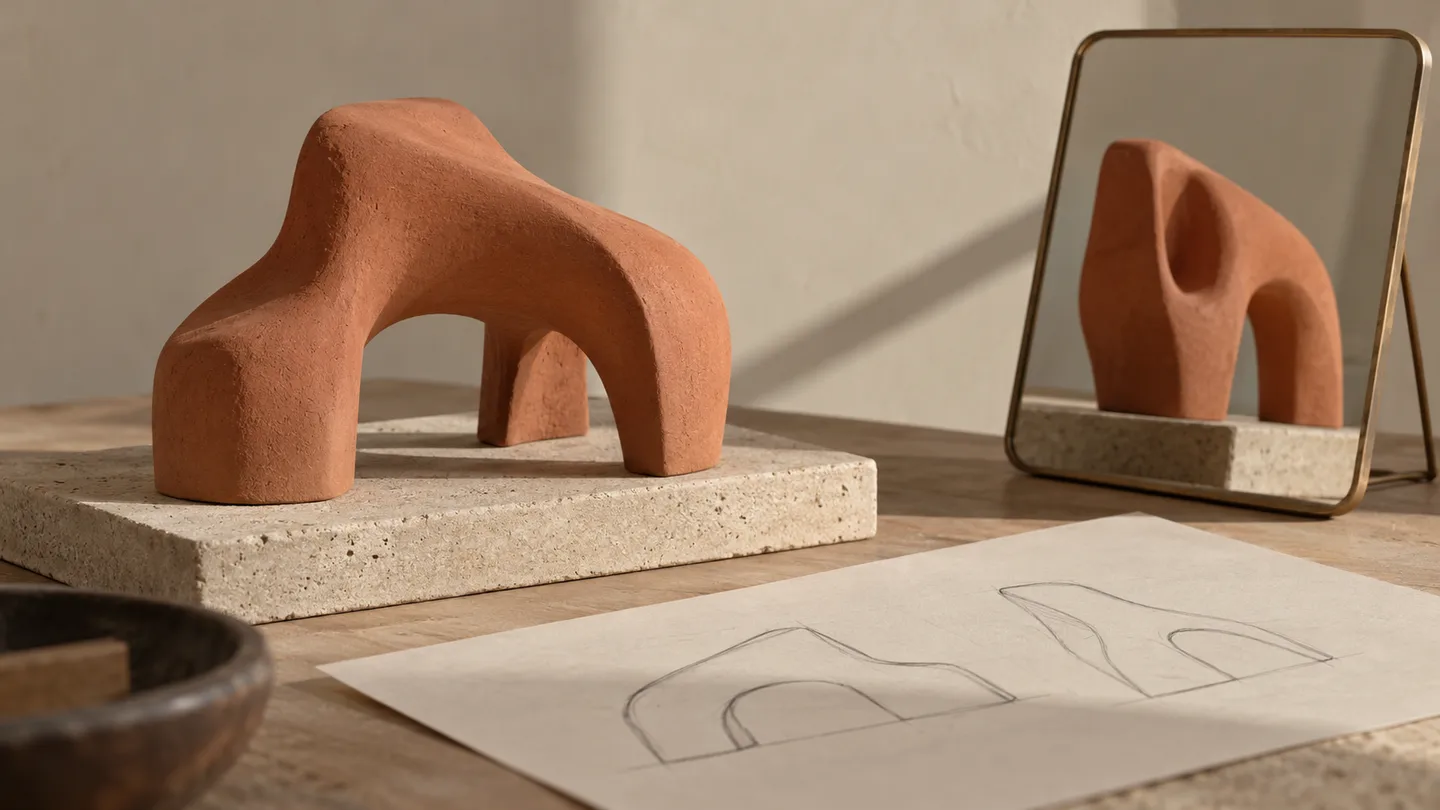
The drawing should make the boundary between the artwork and its surroundings readable. Ask which party provides the pedestal, supporting structure, local fixings, electrical provision or adjacent finish where those items apply. Request coordinated information from the appointed parties. An unmarked gap at the bottom of a rendering is not an agreement about who designs or supplies the connection.
Use an interface list rather than guessing a solution. Each line needs the artwork requirement, the site information required, the party preparing the detail and the party authorized to review it. If the floor build-up is unconfirmed, the action is to resolve that input with the site team. It is not to invent an anchor size in a blog checklist. Dimensions, loads, clearances and specialist documents must be defined for the actual project.

Check whether a proposed change alters more than appearance. A different base, sectional joint or assembly orientation can affect adjacent work and handling. Ask the responsible team to identify which earlier decisions must be reviewed again. Read our sculpture base and plinth guide for the broader coordination questions, and use project-specific professionals for the actual design.
Assign review owners and record their limits
Create an approval responsibility table before sending the package around. A designer may confirm appearance, an owner representative may accept a commercial choice, and appointed technical reviewers may address their particular disciplines. One person can coordinate responses without becoming responsible for every underlying decision. Name the actual people or appointed organizations in your project records; a blank “client approved” field tells the workshop too little.
| Review scope | Typical question to assign | Evidence to retain |
|---|---|---|
| Artistic / design intent | Does the proposed form match the authorized reference? | Designer or artist response tied to the issue |
| Site coordination | Are verified interfaces reflected in the package? | Coordinated site information and responses |
| Specialist technical scope | Who reviews structural, electrical or other relevant design? | Appointed reviewer’s required documents and disposition |
| Commercial change | Has an option or revision changed agreed scope? | Written scope and cost/schedule clarification |
| Production authorization | Who may authorize which operation? | Dated release naming the package and limitations |
The NYC DDC Percent for Art procedure is one concrete example of named authority: its project process places a fabrication notice after artwork shop drawing approval. That is a procedure for that program, not a rule we impose on other jurisdictions or contracts. The transferable procurement question is simply: who has authority to release the work, and what documented prerequisites must exist?

Close comments against a controlled revision
Issue one consolidated response rather than forwarding competing markups without reconciliation. Give each comment an identifier, a location, a responsible respondent and a disposition. Ask for the revised view or detail that demonstrates the response. “Done” is not enough when another reviewer needs to check what actually changed. Keep accepted alternatives and rejected options distinguishable so an old suggestion does not re-enter production by accident.
A revision record should say which files supersede which earlier files. Changes may be shown with a marked-up comparison, revision clouds or another agreed method; choose a method the team can actually use. SubmittalShop’s October 2026 workflow article highlights revision marking and responses as useful review inputs. Our sculpture-specific addition is to connect each comment to the controlling model, finish sample or site detail, because those references can change independently.
Treat unresolved conditions as active decisions. If a sample is still being reviewed, record that status and whether it blocks a named operation. If a dimension is awaiting a survey, show the survey owner and required input. Do not convert an unanswered question into an assumption simply to make the page look complete. If an assumption is used for a limited early task, state its scope and have the appropriate party accept that limitation.
Make the release decision explicit
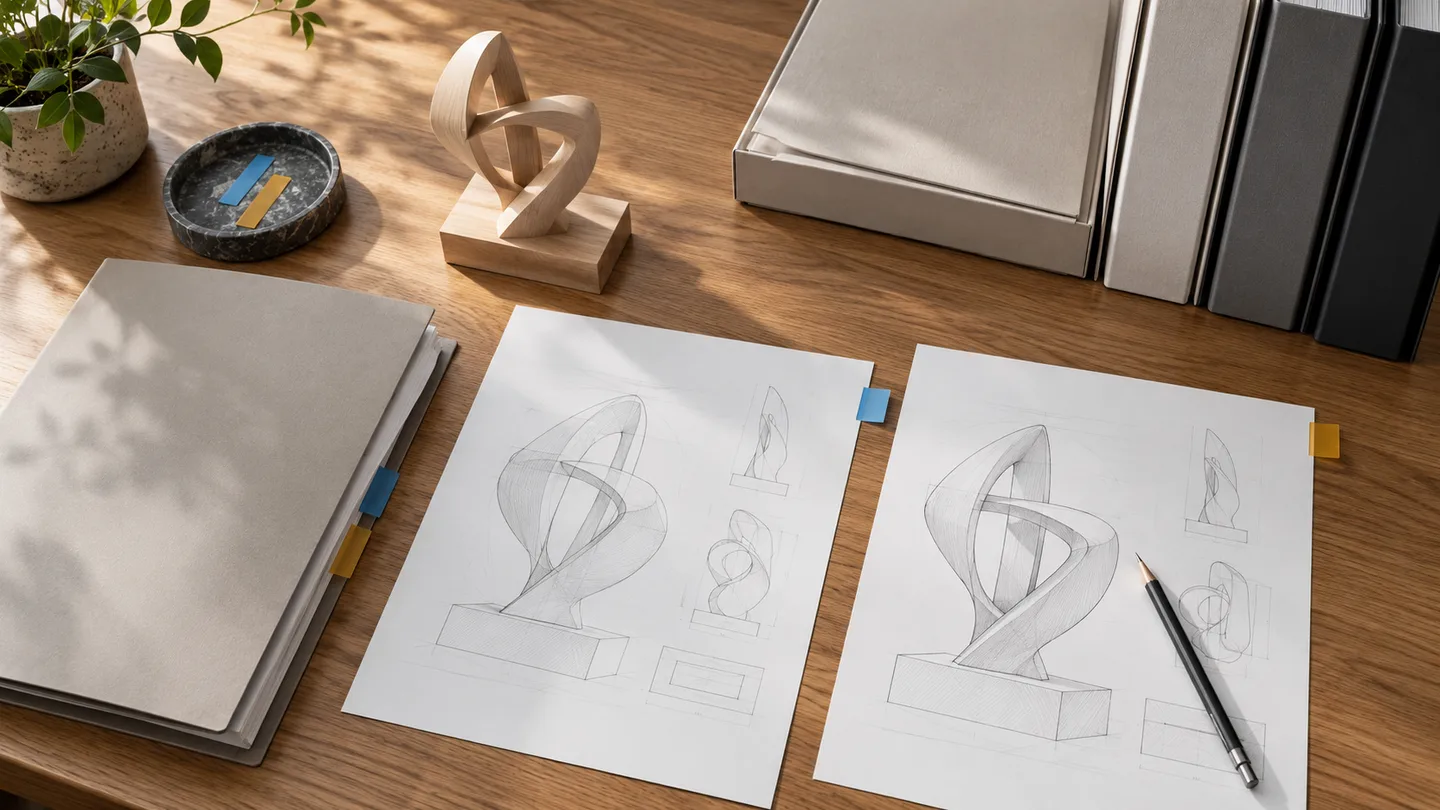
A release record should identify the artwork, issue, controlling files, accepted sample references, open conditions, authorizer, date and permitted work. Use the project’s agreed status language and read it alongside the comments. A phrase such as “approved with comments” has meaning only within that procedure. Do not assume it authorizes every operation, closes technical questions or accepts a commercial variation.
If partial release is necessary, describe it narrowly. State which components or activities are authorized, which are held, and how changes will be controlled. Ask the fabricator to confirm that the proposed split is practical before accepting it. A limited release is not permission to finish an affected surface, close an inaccessible connection or proceed with a dependent part merely because another activity has been accepted.
The staged drawing-and-sample gate in 1-OPH’s published process is a useful industry reference. It describes that company’s workflow; it does not establish Weiya’s contract terms. For your own commission, put the agreed approvals and prerequisites into the actual scope. Use the quotation comparison worksheet if a review change also changes what is included.
Use the approval log on a real review cycle
Illustrative scenario, not a completed Weiya project: a lobby sculpture has an accepted silhouette, but the finish sample and pedestal interface are still open. A useful response records the silhouette decision against its model issue, assigns the finish review to the designer, and asks the site coordinator to return the interface information. It does not label the entire package “fully approved” because one part of the brief is settled.
The next submission can close those two items with specific references and named responses. The authorized team then decides what work may proceed. If a changed pedestal affects the visible base or overall height, the designer reviews that consequence as well. This record is more useful at handover than an email containing a thumbs-up and an undated rendering.
Download the blank sculpture drawing approval log (.csv). It includes fields for review scope, comment, response evidence, status, owner and release limitation. Empty fields are prompts to resolve, not proof of acceptance. Adapt the labels to your project procedure.
Start earlier with the sculpture RFQ input checklist, and coordinate the separate finish sample approval record. For the overall commissioning sequence, use our custom sculpture commissioning guide.
Discuss a defined sculpture review package
Browse forged metal sculpture references and pedestal references, then send the current drawing/model issue, site constraints and open decisions for a scoped discussion. Include who reviews appearance and technical interfaces so the response addresses the right approval stage.
Frequently asked questions
What should sculpture shop drawing approval actually confirm?
Identify the controlling drawing and model revisions, the agreed appearance, relevant dimensions, finish reference, site interfaces and named reviewers. Record unresolved conditions and the exact work authorized. An attractive render alone does not establish a coordinated fabrication release.
Is approving the sculpture silhouette the same as approving its structure?
No. Appearance, structural design, fixing, electrical details and site coordination can involve different reviewers. Record their separate scopes and required evidence. A visual approval must not be presented as a structural or installation certification.
Can the supplier proceed when a drawing is approved with comments?
Only within the project’s agreed review procedure and the written scope of authorization. Identify which comments remain open, whether they prevent the proposed operation and who can close them. Do not assume that a review stamp has the same meaning on every project.
Do I need a physical maquette as well as drawings?
A maquette can clarify form, proportion and views that flat drawings leave ambiguous. It does not replace dimensioned interface information or a finish sample. Agree which reference controls each decision and whether making or revising the maquette is included in the scope.
What if the site dimension changes after drawings are approved?
Record the change against the current issue, identify the affected artwork and site work, and request coordinated revisions. Ask the authorized team to reassess fabrication, cost and schedule effects before continuing any affected operation.
Does this checklist replace the project contract or a local engineer?
No. It is an editorial procurement tool for organizing questions and decisions. Contract procedures, appointed technical reviewers and applicable local requirements govern the actual project. The checklist contains no certified fixing design or universal tolerance.
Sources and further reading
Sources read on 21 October 2026. Each supports the limited point identified in the article. Our checklists and worked examples are original editorial tools. A citation does not imply a commercial relationship, endorsement or application of another organization’s contract terms.