Sculpture Finish Sample Approval Under Project Lighting
This guide is for architects, interior designers and art consultants approving the appearance of a custom sculpture. “Brushed silver” or “warm bronze” is a useful direction, but it is not a complete acceptance record. Connect the physical reference, project lighting and authorized decision before treating a finish as approved.
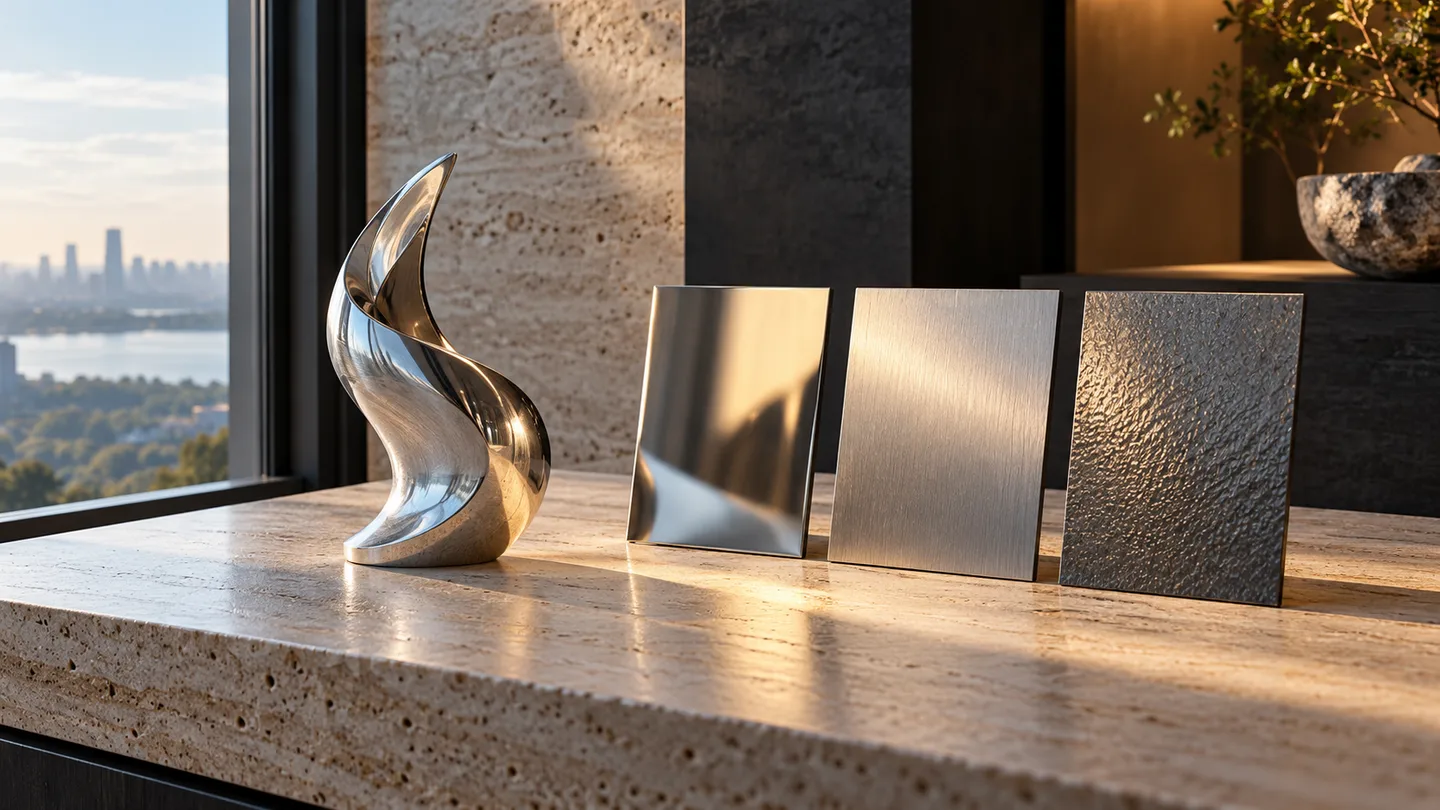
Give each sample a defined job
Sculpture finish sample approval should begin by separating a design preference from a controlling reference. A catalogue image can communicate a direction. A small physical sample can help review a proposed surface. A retained control sample can support a later comparison if its identity and role are agreed. Those objects are useful for different decisions; do not call all of them “the approved sample” without saying what they control.
Record the artwork and component, proposed material/process description, sample identifier, issue date, purpose and reviewer. Describe the visible quality you need to discuss: color family, gloss, grain, texture, surface transitions or an intentional variation. If a process or material has not been confirmed, keep that question open. A metallic-looking catalogue photograph does not establish the substrate, grade, coating system or exposure suitability of a new commission.
A useful manufacturer-specific example is Rimex Australia’s conditions for particular colored stainless-steel products: they distinguish promotional samples from agreed control samples and discuss appearance changes with lighting and production. That evidence supports asking what a sample means. It does not make Rimex’s tolerances or commercial terms apply to Weiya, nor prove that a catalogue sculpture uses Rimex material.

Review the sample under the project lighting that matters
Agree where the review will happen and which lighting states are relevant to the intended setting. For a lobby, the team may need to consider daylight, the normal evening scene and the final accent-light arrangement. These are project choices, not a mandatory universal test schedule. If the final luminaires are not available, describe the temporary setup and record what must be checked again when the actual lighting is installed.
Position the sample in its proposed orientation as far as practical, with representative surrounding materials. A reflective surface can pick up nearby windows, walls and bright sources. Check the views a visitor is expected to have rather than judging only under an inspection lamp held close to the sample. Record the agreed viewing position and whether a particular hot spot, reflection or shadow is acceptable; avoid an undefined instruction to “look the same in all light.”

Zahner’s discussion of stainless-steel surfaces describes different reflective behavior among mirror-like, diffused and low-reflection finishes. The procurement implication is to ask which viewing conditions define the intended effect. We do not assign a numeric reflectivity value, exposure rating or acceptable glare threshold to your project from that general explanation.
If lighting is still being designed, involve the relevant designer before freezing the surface choice. Record fixture identity and arrangement where known, the operating scene and the surroundings used in the review. A color-temperature number alone is not a complete record of how an installed surface was seen. Use our broader sculpture lighting guide for coordination topics, then agree the actual review setup with your project team.
Check grain, curvature, edges and joined areas
A flat coupon answers only some appearance questions. A curved surface can show reflection differently, and a directional finish can change character when a component is turned. Ask whether the sample represents the visible grain direction, the relevant curve and any transition between parts. If a particular edge, seam or local repair will be visible, request a representative detail rather than assuming the flat reference settles it.
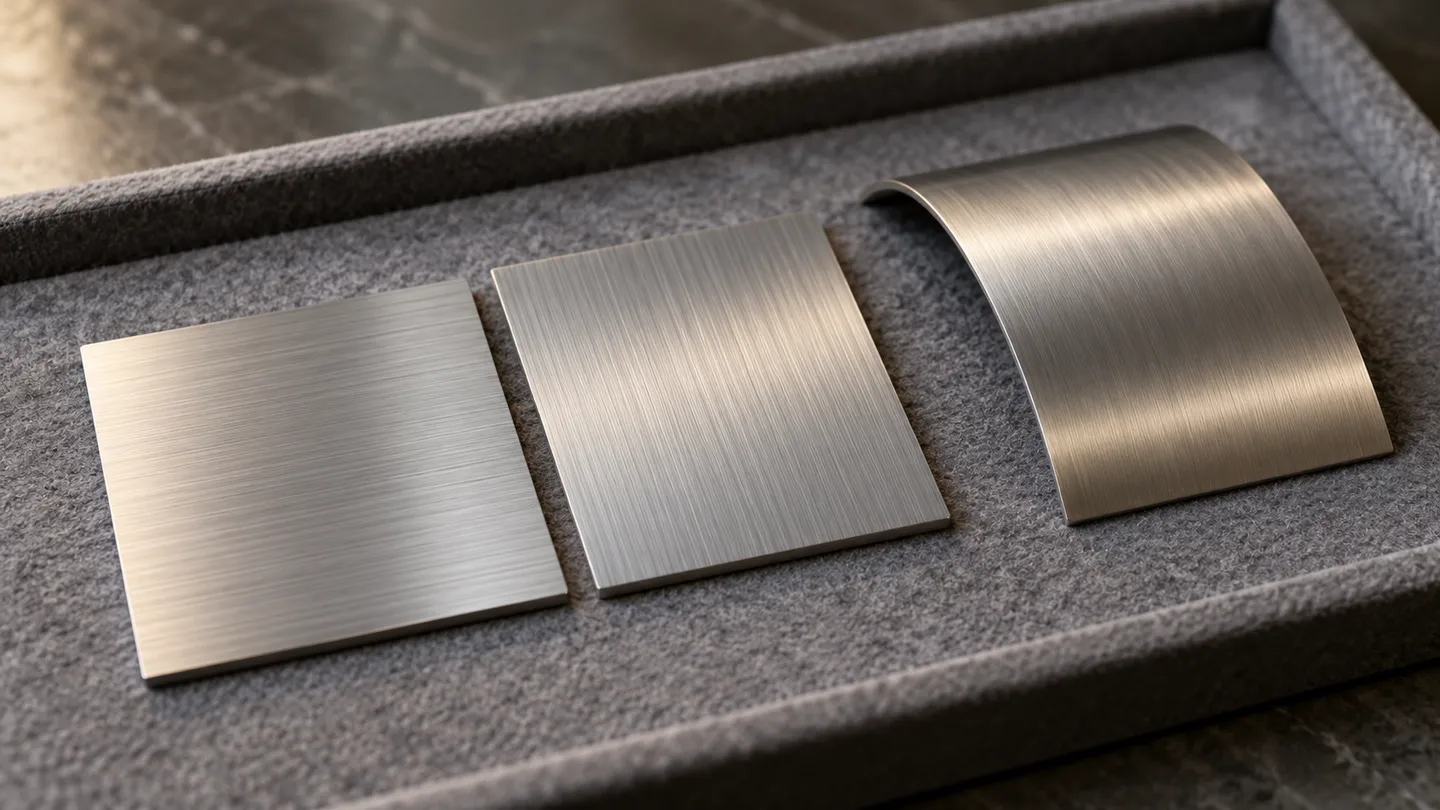
Write the intended orientation on the sample record and drawing reference. For a series of pieces, distinguish deliberate differences from unintended mismatch. Agree whether left and right components should share a grain direction or read as a mirrored arrangement. A finished form may include areas that cannot be judged from the principal front view, so ask the reviewer to consider the actual visitor routes before confirming the reference.
Do not demand a larger mockup by default. Choose the smallest useful evidence that can answer the outstanding question, then agree scope, ownership and any cost or schedule effect. A curved detail may resolve an appearance issue; another project may need a representative assembly. The point is to test the disputed feature, not to add an impressive but irrelevant sample stage. The drawing approval checklist helps link the sample decision to the correct component and revision.
Write an acceptance record that another person can use
Avoid a single “finish approved” field. Record what was reviewed, under what conditions, by whom, and with what exclusions. Keep appearance observations separate from missing information about material, coating, maintenance or exposure suitability. A beautiful sample can still leave those technical questions unresolved. The project’s appointed parties and supplier should define the evidence required for each decision.
| Field | Record explicitly | Leave open when |
|---|---|---|
| Reference | Sample ID, component and drawing/model issue | The sample cannot be traced to the proposed work |
| Lighting and surroundings | Actual or temporary setup and relevant scenes | Final lighting or surrounding finishes are unconfirmed |
| Viewing conditions | Orientation, relevant viewpoints and surfaces reviewed | The important curve, seam or edge was not represented |
| Appearance | Color/texture/grain/gloss observations and agreed range | A difference remains disputed or unexplained |
| Authority | Named reviewer, date and exact decision | Technical or commercial approval belongs to another party |
| Retention / release | Custodian, controlling reference and permitted work | A reference is damaged, changed or superseded |

Where variation is intentional or unavoidable for the selected process, discuss how it will be represented. The team might agree more than one physical reference, a specific reviewed detail or another justified comparison method. Record whose agreement is needed. A range sample is useful only when it represents an accepted range; it must not become a way to relabel an unresolved mismatch as an expected characteristic.
This guide deliberately supplies no universal color-difference, gloss or viewing-distance threshold. If quantitative measurements are appropriate, the responsible parties should define the method, equipment, geometry, units and acceptance basis. Do not copy a limit from an unrelated sheet product or another project without checking applicability. Our sculpture finishes overview explains the broader process choices; the actual acceptance record must remain specific to your selected surface.
Use photographs as evidence of the review, not as the entire standard
For a remote approval, agree how the physical reference will be reviewed and shared. A video call or photograph can show orientation and the general setup, but a screen cannot communicate every surface effect reliably. Record the limitations of remote evidence and the decision still needed from a physical review. Avoid making a final appearance claim solely because two photographs look similar on one laptop.
Keep a useful photo sequence: an overview that shows the lighting and surroundings, a view showing the sample’s position, and targeted details of the issue being discussed. Identify the reference and date in the accompanying record. Preserve the original files where practical and note any editing that affects interpretation. A neutral reference card can help explain a setup, but it does not make an uncontrolled photograph a certified color measurement.
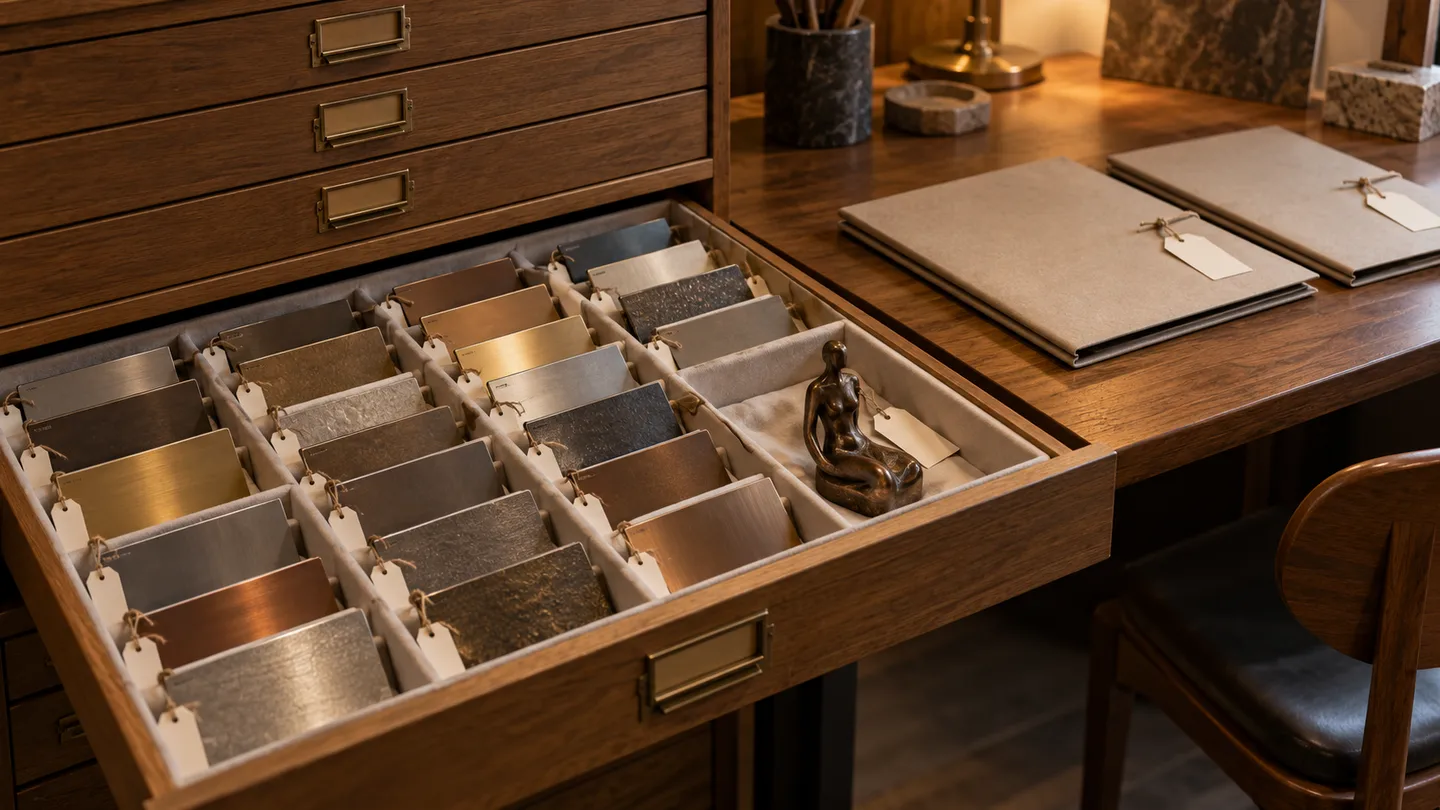
Assign custody of the agreed samples. If the buyer, supplier and inspector retain separate references, record how those references are identified and what happens if they disagree. Ask for appropriate storage and handling guidance for the actual surface. Damage, contamination, treatment or aging can make an old sample unsuitable for a simple comparison. Keep the agreed decision record with the sample rather than relying on the drawer location or someone’s memory.
Reopen the right decision when conditions change
An approval has boundaries. A changed finish process, substrate, color direction, repair method, lighting arrangement or visible geometry may require another review. The precise trigger depends on the project and agreement. Record the proposed change, the affected components, the earlier reference and the new evidence needed. Do not silently replace the approved sample or re-use an old approval for a materially different option.
Check commercial consequences separately. If a new sample, larger mockup or additional review is needed, ask the supplier to clarify the work, responsibility and schedule effect before proceeding. 1-OPH’s published process places drawing and physical sample confirmation in a distinct stage before fabrication. That illustrates an approval gate; it does not establish a free sample allowance, lead time or contract promise for Weiya.
Appearance approval is also separate from a maintenance plan or a performance claim. Ask for applicable information on the proposed material and surface for the intended location, and direct specialist questions to the appointed reviewers. Do not approve a substitute for exterior or public-contact use solely because its appearance matches. Document the remaining technical decisions so the team can see what has, and has not, been accepted.
Try the lighting check record before authorizing a finish
Illustrative scenario, not a completed Weiya project: a designer likes a warm metallic sample in the studio, but the intended lobby uses different accent lighting. The review record names the sample and intended component, notes that the studio view was provisional, and assigns a project-lighting review. The team agrees whether the actual sample or a representative curved detail is needed for that next decision.
At the project review, the designer records the relevant views and scenes, identifies any difference requiring a response and retains the agreed reference. If the evening scene remains unresolved, the record states that condition rather than treating a daylight approval as complete. The authorized team then determines which work, if any, can proceed without prejudging that remaining decision.
Download the sculpture finish and lighting approval checklist (.txt). It prompts the reviewer to identify the sample, component, conditions, observations, open questions, custodian and release boundary. The blank form does not decide conformity or replace the project’s approval procedure.
Use the RFQ checklist to request the required sample scope early, and the quotation comparison worksheet to check which reviews and revisions are included. These tools keep the approval discussion linked to what is actually being bought.
Discuss the surface your project needs to approve
Browse decorative metal sculpture references and forged metal forms. Then send your appearance references, intended lighting, site photographs and open sample decisions for a project-specific discussion. Keep the desired look and any technical requirements clearly distinguished.
Frequently asked questions
What is the purpose of sculpture finish sample approval?
It records the agreed appearance reference, the conditions in which it was reviewed, acceptable variation, responsible approvers and the work authorized. Identify the sample and affected components so the decision can be checked later. Approval of appearance does not prove material performance or suitability.
Can a photograph replace a physical finish sample?
A photograph can document a review and help remote discussion, but camera processing, screen settings, lighting and geometry can change apparent color and reflection. Agree when a physical sample, a curved detail or a larger mockup is required and which reference controls acceptance.
Why should a sample be viewed under the actual project lighting?
The light, its direction, the surrounding surfaces and the viewing angle can affect how a reflective or colored finish looks. Review the relevant project lighting states, record the setup and keep any untested condition explicitly open instead of treating one convenient view as universal approval.
Does the same finish name guarantee the same appearance?
No. A short finish name may omit texture, grain direction, preparation, coating or process details that matter to the intended look. Link the agreed appearance to an identifiable physical reference and written scope rather than relying only on a label such as brushed or bronze.
Who should retain the approved finish sample?
Agree a custodian and storage arrangement for the physical reference and any matched samples. Record identifiers, approval conditions and which copy controls if they disagree. Protect samples according to supplier advice and reassess a damaged or altered reference before using it to decide conformity.
Should every sculpture use the same color or gloss tolerance?
No universal tolerance is supplied by this guide. Ask the project team and supplier to agree a suitable visual method and any justified measurement procedure for the actual finish, geometry and use. Do not invent a numeric limit from a photograph or apply another manufacturer’s terms automatically.
Sources and further reading
Sources read on 21 October 2026. Each supports the limited point identified in the article. Our checklists and worked examples are original editorial tools. A citation does not imply a commercial relationship, endorsement or application of another organization’s contract terms.