How Stainless Steel Sculptures Are Made: Fabrication, Surface Finishes & Kinetic Design
Stainless steel dominates contemporary public art because it can be mirror-polished to reflect its surroundings, fabricated at monumental scale, and left outdoors for decades. But the result depends on shop-floor details most buyers never see: continuous welds ground invisible, passivation after grinding, and the right surface finish for the site. This is a fabricator's walkthrough — from 3D model to mirror, brushed and PVD finishes — plus kinetic (wind-driven) design and outdoor care. (For choosing between metals, see our stainless steel vs. bronze guide; this article is about how stainless is made.)
The Stainless Steel Sculpture Fabrication Process
Whatever the form, the workflow is consistent — the art is in the execution at each stage.
Design & 3D modeling turns the concept into a digital model; organic forms get a scaled foam or clay maquette for sign-off before any metal is cut. Nesting (放样) unfolds the model into flat patterns, then sheet and plate are precision-cut by fiber laser, CNC plasma or waterjet. Forming uses rolling and press-brake bending for geometric shapes and hand-forging / panel-beating over bucks for compound curves. Sections are then fit up around an internal stainless or steel armature.
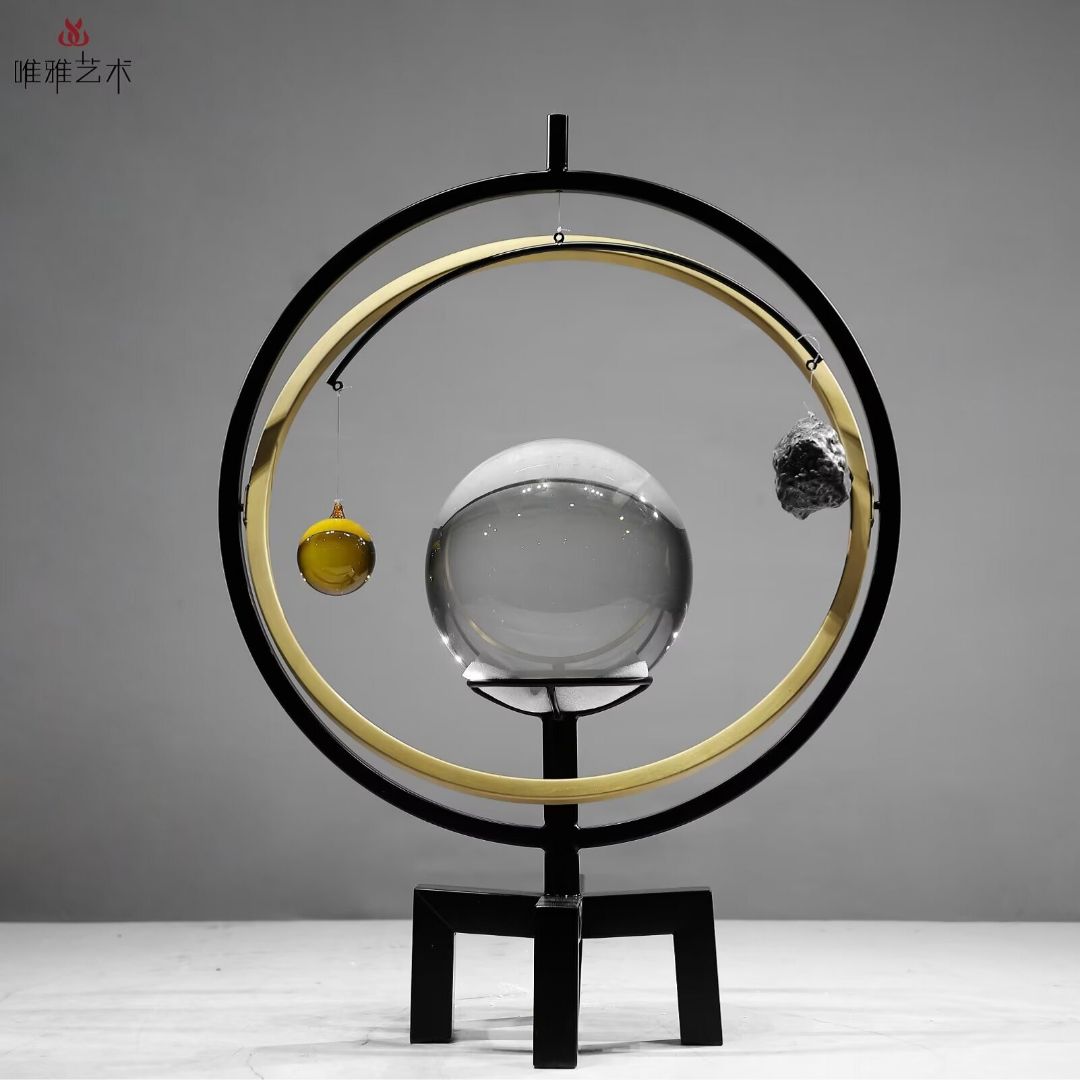
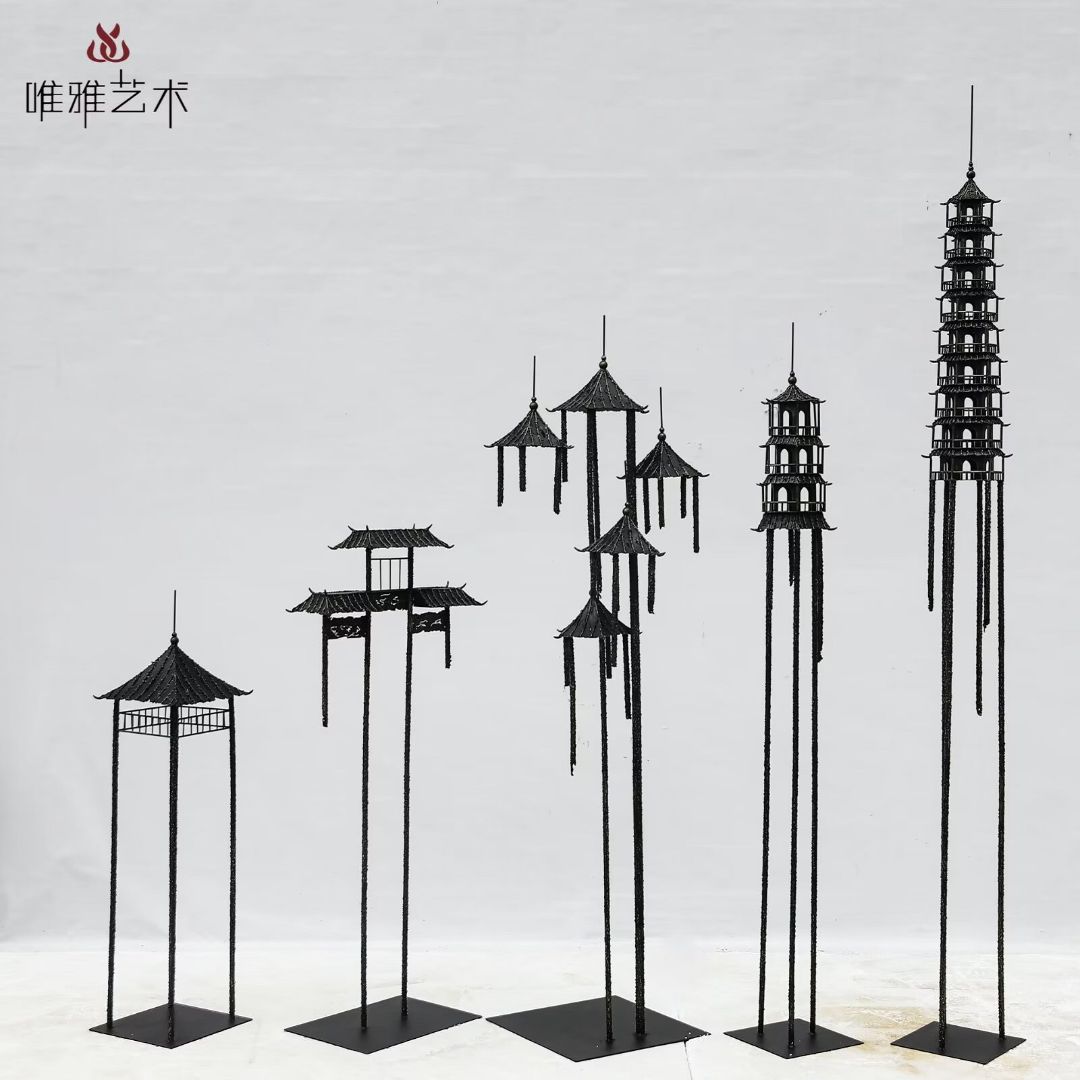
Welding, Grinding & Passivation — The Details That Decide Longevity
Visible seams are welded with TIG (GTAW) for clean, low-spatter beads, with argon back-purging to prevent root oxidation; heavier structural joints use MIG for speed. Then the credibility steps competitors skip:
- Continuous welds, ground flush — stitch/intermittent welds leave gaps that trap chlorides and cause crevice corrosion; we weld continuously and grind seams until they disappear.
- Passivation — grinding embeds free iron that can rust; after finishing we passivate (acid pickling / nitric or citric) to remove it and restore the chromium-oxide passive layer.
Stainless Steel Surface Finishes Compared
| Finish | Appearance | Process | Relative cost | Best for |
|---|---|---|---|---|
| Mirror (No.8 / 8K) | Reflective, like a mirror | Grit ladder 320→2000 + buffing | $$$$ | Iconic reflective public art |
| Brushed / satin (No.4) | Directional hairline grain | Single-grit abrasive belt | $$ | Modern, hides marks/fingerprints |
| Bead-blasted matte | Uniform non-directional matte | Media blasting | $$ | Anti-glare, soft contemporary look |
| PVD color | Gold/bronze/black/blue etc. | Vapor-deposited film over base | $$$ | Color that won't fade or peel |
| Painted / 2K | Any RAL color, opaque | Automotive/powder coat | $$ | Bold color, characters |
| Antiqued | Aged / worn | Chemical/mechanical | $$$ | Heritage looks |
304 vs 316L — In One Minute
304 is the standard 18/8 grade for general and inland use. 316/316L adds ~2% molybdenum for chloride and pitting resistance — specify it for coastal, marine, pool or de-icing-salt sites, where 304 is prone to tea staining (light brown surface discoloration). 316L (low carbon) is preferred where there is significant welding. Background on grades and the passive layer: stainless steel. Full decision detail is in our stainless vs. bronze guide.
Plate Thickness & Lead Time
| Material | Typical use |
|---|---|
| 16 ga (1.6 mm) | Light decorative panels / small indoor |
| 14 ga (2.0 mm) | Medium outdoor skins |
| 12 ga (2.78 mm) | Heavier panels / load areas |
| 3–6 mm+ plate | Structural ribs, base plates, monumental skins |
An internal frame carries the structural load, so the visible skin can stay lighter while resisting dents and oil-canning. Lead time runs roughly 2–4 weeks for tabletop pieces, 5–10 weeks for mid-size, and 10–20+ weeks for monumental work — add a premium for full mirror polishing, which is labour-intensive.
Kinetic & Wind-Driven Stainless Sculpture
Wind-driven pieces are an engineering project, not just an art object:
- Bearings — sealed, outdoor-rated and serviceable; sized for radial and thrust loads and protected from rain and dust.
- Balance — every moving element is individually counterweighted in the shop so it responds to a light breeze.
- Wind load & pitch — arm length, blade area and foundation are sized to local wind speed; blade pitch is tuned (steeper for light breezes, shallower to prevent overspeed in strong wind), with allowance for thermal expansion. The lineage of reflective and kinetic public art is well documented under kinetic art.
Installation & Long-Term Care
Large works ship in modules, are re-welded and blended on site, then crane-set and anchored to an engineered foundation. For mirror finishes outdoors, the key to lasting brilliance is simple: a periodic fresh-water rinse clears airborne salt before it stains — coastal sites benefit from a wash every few months. Smooth mirror finishes actually self-clean better than rough ones because deposits don't key in. Authoritative anti-staining guidance comes from the Australian Stainless Steel Development Association.
Frequently Asked Questions
Will a mirror finish fade, discolor or rust outdoors?
Does a mirror surface scratch easily, and can it be repaired?
How big can a stainless steel sculpture be?
Which grade should I use for a coastal project?
How much more does a mirror finish cost than brushed?
What's the typical lead time?
Get a quote for your stainless steel sculpture
Send your design or render and target size — we'll recommend the grade, finish and engineering, and quote.
Request a Quote