Corten Steel Sculpture: The Complete Guide to Weathering Steel for Public & Landscape Art
Corten — properly, weathering steel — has become the signature material of contemporary landscape and public art: that warm, evolving russet surface seems to belong in a garden or plaza. But its self-protecting rust comes with two honest caveats most suppliers won't tell you: it stains whatever sits below it, and it fails in salt and constant wet. This manufacturer's guide explains what corten actually is, how the patina works, the rust-color timeline, where it should and shouldn't be used, and how it compares with stainless and bronze.
What Is Corten / Weathering Steel?
COR-TEN® is a registered trademark (from CORrosion + TENsile); weathering steel is the generic material — a high-strength low-alloy steel that forms a stable, protective rust layer instead of needing paint. The alloying is what does it: about 0.25–0.55% copper (the key element, ~10× ordinary steel), plus chromium, nickel and phosphorus, which together build a dense, adherent oxide rather than the flaky rust of plain steel. Common grades, in plain language:
| ASTM grade | Form | Typical use |
|---|---|---|
| A242 (COR-TEN A) | Plate | Original; general structural |
| A588 (COR-TEN B) | Plate & shapes | Welded structures, ~50 ksi |
| A606 | Sheet / coil | Panels, cladding, lighter sculpture |
| A847 | Tube / HSS | Hollow sections |
Authoritative background: weathering steel and the brand owner SSAB COR-TEN®.
How the Protective Rust Patina Works
Unlike ordinary rust — which is porous, flakes off and exposes fresh metal — weathering steel's alloy mix forms a tight, adherent, self-limiting oxide that slows further corrosion and even re-heals minor scratches. The critical condition: the surface must go through wet/dry cycles and be allowed to dry. Kept continuously wet, it corrodes like any ordinary steel. And it needs no paint — in fact painting defeats the system, because the patina can't form where coating fails. It still corrodes, just very slowly (matured, on the order of ~2 µm/year versus ~50 for plain steel) — excellent, but not “maintenance-free forever.” The engineering authority on this is SteelConstruction.info.
The Rust Color Timeline: What to Expect
| Stage | Time | Look |
|---|---|---|
| Raw mill steel | Day 0 | Grey, slightly oiled |
| First rust | ~weeks–6 months (or ~1 hr accelerated) | Bright orange |
| Developing | ~6 months–2 years | Orange → red-brown |
| Mature, stabilized | ~2–6 years | Deep brown, even, fine-textured |
Don't confuse “first rust” with “stabilized.” Industrial or sulfur-rich air weathers faster and darker; clean rural air is slower and lighter. We can pre-weather a piece in the workshop so it arrives already in its mature color (which also greatly reduces the early staining below).
Corten vs Stainless Steel vs Bronze
| Corten | Stainless steel | Bronze | |
|---|---|---|---|
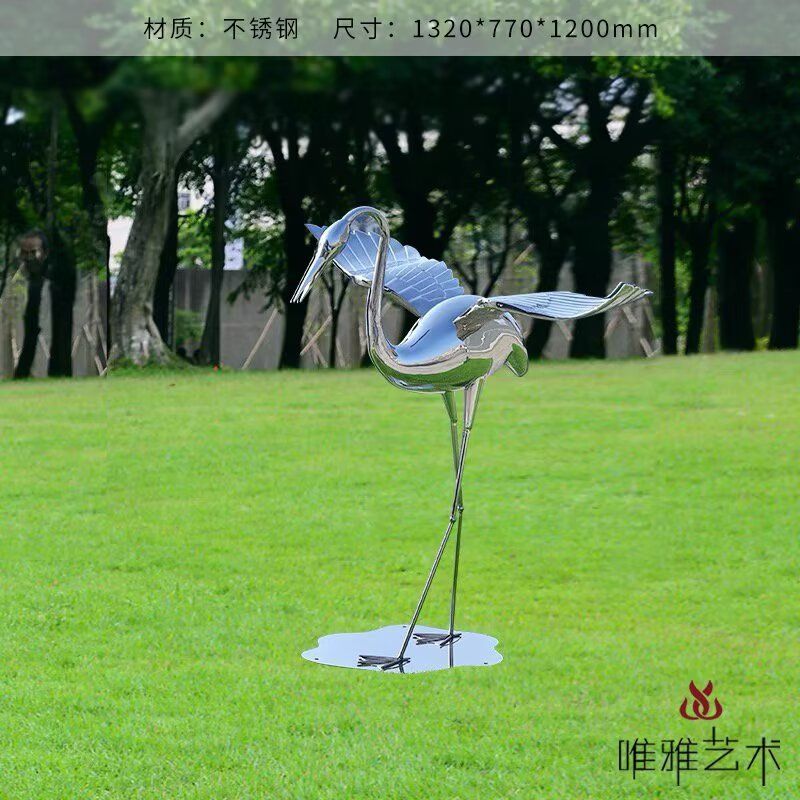
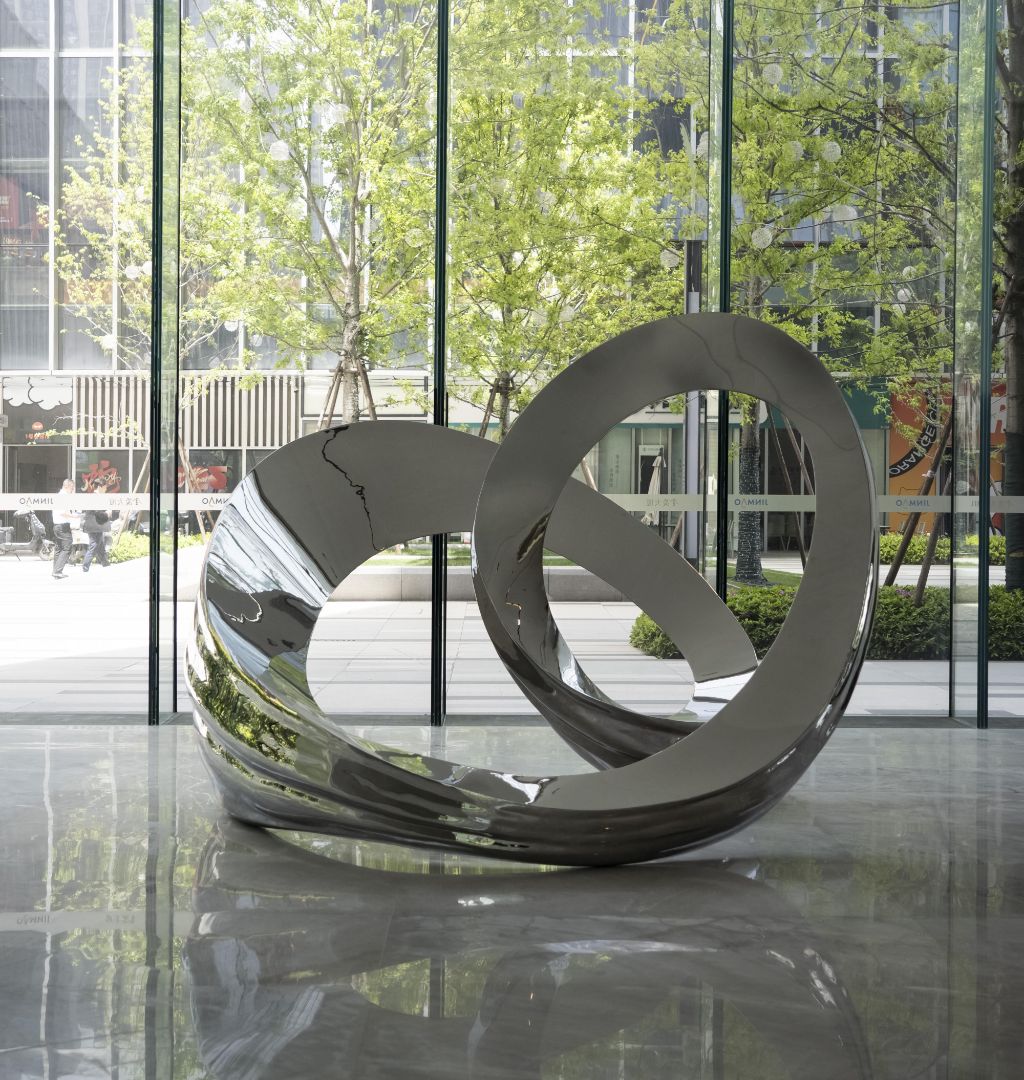
| Look | Warm evolving rust | Cool, reflective/satin | Classic patina |
| Relative cost | $ (lowest) | $$$ | $$$$ (cast) |
| Coastal / salt | Poor — avoid | Best (316) | Good |
| Maintenance | Low, but manage runoff | Rinse / polish | Wax periodically |
| Longevity | Decades (inland) | 50–100 yrs | Centuries |
| Best for | Inland naturalistic / modern | Coastal, reflective, modern | Figurative, heritage |
For the metal-fabrication and finishing detail behind these options, see our stainless steel vs. bronze guide.
Will the Rust Stain the Ground? (Honestly, Yes)
Where You Should NOT Use Corten
This is where honesty matters: chlorides destabilize the protective patina. Salt promotes a loose, hygroscopic rust that stays wet and keeps corroding — so in the wrong place, corten does not self-protect, it rusts through (documented in real failures). Avoid:
| Suitable | Unsuitable |
|---|---|
| Inland gardens, parks, plazas | Coastal / marine (within ~1–2 km of salt) |
| Dry, well-drained sites with wet/dry cycles | De-icing-salt roadsides |
| Free-standing pieces that dry out | Constant wet, ponding or submersion |
| Naturalistic & modern settings | Tunnels / sheltered spots that never dry; moisture-trapping crevices |
For a coastal project, 316 stainless is the right alternative. Engineering guidance for outdoor metal in humid/saline environments is published by the U.S. FHWA.
How We Fabricate Corten Sculpture
Corten cuts and forms like mild steel (laser for precision, plasma for thick/fast). The critical detail is welding: we use matching weathering-grade or 1%-nickel filler so welds color-match and weather at the same rate — ordinary mild-steel filler leaves welds that stay a different color and corrode faster. Outdoor structural pieces are specified with a corrosion allowance (extra thickness on exposed faces), and we can controlled-accelerate the patina so the piece ships already russet. Foundations and wind-load are covered in our outdoor sculpture engineering guide.
To Seal or Not — and Indoor Corten
Most corten is left unsealed so the patina stays active and self-renewing (the look artists intend). Seal only to stop runoff staining, lock a color, or for indoor pieces — indoors there are no wet/dry cycles, so a piece must be pre-rusted then sealed, or it will stain floors and never develop properly. Be aware sealing needs reapplication, can trap moisture (blistering), and slightly darkens and glosses the surface. A museum example of corten as fine art: Smithsonian American Art Museum.
Frequently Asked Questions
Will corten steel eventually rust through?
Will the rust water stain my concrete or paving?
Can I use a corten sculpture at the coast?
Do I need to seal it?
Can I put a corten sculpture indoors?
How long until the rust color stabilizes?
Get a quote for your corten steel sculpture
Send your design and site — we'll advise on suitability, detailing for runoff, and quote (pre-weathering available).
Request a Quote