Relief & Wall Sculpture: The Complete Guide to Bas-Relief, Bronze Plaques & Sculptural Feature Walls
Relief sits between drawing and sculpture in the round — a three-dimensional image that stays attached to a flat background, from a coin-shallow bas-relief portrait to a deep, dramatic high-relief mural. This manufacturer's guide covers the relief types and how to tell them apart, the material menu (bronze, FRP, GFRC, stone, wood, stainless), how reliefs are made, and the part most articles skip entirely: how a heavy relief panel is actually engineered and mounted on a wall, indoors and out.
What Is Relief Sculpture? (And Why Architects Choose It)
A relief projects from — or is cut into — a background plane, so it reads as sculpture while behaving like a wall surface. That makes it the natural choice when you want sculptural impact on a façade, a lobby feature wall, a memorial or a plaque without the footprint of a free-standing piece.
Types of Relief: Low, High, Sunken & More
| Type | Projection | Look | Best for |
|---|---|---|---|
| Low relief (bas-relief) | Slight | Subtle, light-and-shadow | Plaques, coins, portraits — economical, light |
| Mid-relief | Up to ~half | Fuller, no undercutting | Decorative panels |
| High relief (alto) | More than half; undercut | Dramatic, near in-the-round | Narrative murals, statement walls |
| Sunken / incised | Cut into the plane | Background stays highest | Harsh exterior, strong sun, durability |
| Counter-relief (intaglio) | Negative | Carved in like a seal | Stamps, special effects |
In short: low relief is subtle, lightweight and easy to mount; high relief is dramatic but heavier with deeper, undercut casting; sunken relief survives best in harsh exterior light. See Britannica on bas-relief for the art-historical detail.
Common Forms of Wall Sculpture We Build
Bronze dedication & historical plaques; memorial relief walls (names, portraits, narrative panels); donor recognition walls (modular, named tiers, leaf/tile systems); historical narrative mural reliefs; corporate lobby logo / brand feature walls (often backlit or gilded); architectural façade reliefs and friezes; and religious reliefs (altar panels, Stations of the Cross).
Materials for Relief & Wall Sculpture
| Material | Weight | Indoor/Outdoor | Max panel | Cost | Best for |
|---|---|---|---|---|---|
| Cast bronze | Heaviest | Both | Sectional | $$$$ | Memorials, civic, fine detail |
| Fiberglass (FRP) | Lightest | Both (coated) | Very large single panels | $$ | Big lobby/themed walls, faux finishes |
| GFRC (concrete) | Light vs precast | Exterior façade-grade | Large cladding | $$ | Building façades, friezes |
| Stone / marble | Very heavy | Both | Block / sectional | $$$ | Classical, civic, religious |
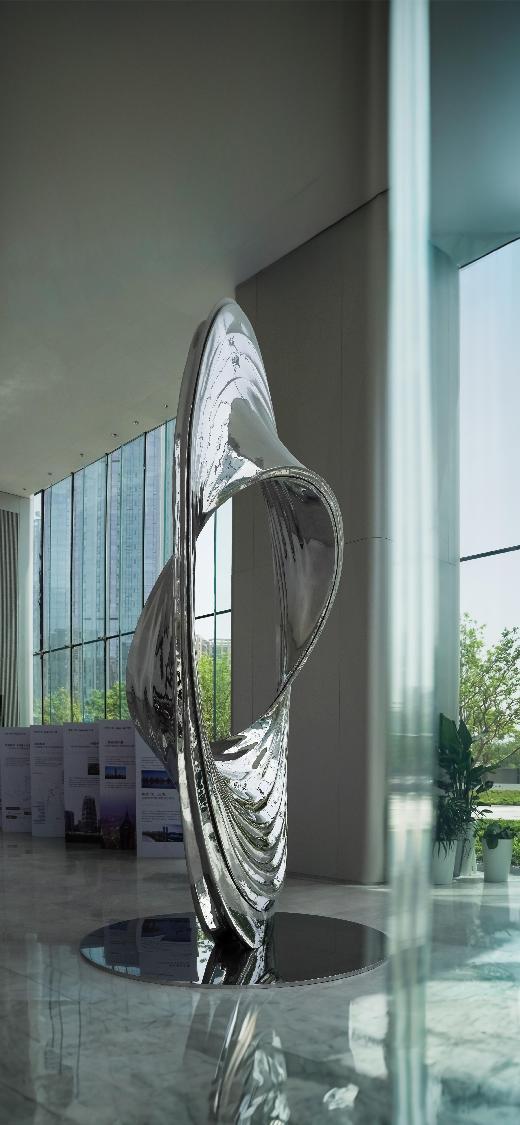
| Stainless steel | Medium | Both | Sectional | $$$ | Modern etched/forged feature walls |
Process detail for each lives in our material guides — bronze casting, stainless steel, marble & stone and GFRC themed work. Rule of thumb: bronze for permanence and detail; FRP for very large and light; GFRC for exterior façade panels; stone for classical permanence.
How Relief Sculptures Are Made
From your design, CAD or logo we model a clay original against the plane, take a one-piece mold (relief rarely needs the multi-part molds of in-the-round work), then cast (lost-wax bronze, GFRC spray, FRP lay-up) or CNC/hand-carve stone and wood, and finish with brushing, polishing, oxidising, chemical patina or colour-filled backgrounds. Large works are made as multiple panels with seams designed to fall along composition lines and shadow gaps so they read as one piece.
Mounting & Installation: The Part Most Guides Skip
Getting a heavy relief safely onto a wall is an engineering job, not an afterthought:
- Wall-load check — confirm the substrate can carry the dead load (bronze is heavy; FRP is light); large panels get a structural sign-off.
- Anchoring by substrate — masonry/concrete: drilled expansion or undercut anchors + adhesive; hollow/drywall: through to studs or added blocking; always corrosion-resistant stainless hardware outdoors.
- Mounting systems — concealed blind studs, decorative face screws, or back-bolt / Z-clip / sub-frame systems for big panels, rated to at least twice the panel weight.
- Exterior detailing — drainage/weep paths, sealed fixings, and allowance for thermal movement and freeze-thaw; a rainscreen sub-frame for façade panels.
- Building interface — reveals, offsets and electrical for backlit logo walls.
We supply a mounting drawing and the right hardware for your wall, and coordinate with your contractor on site.
Frequently Asked Questions
What's the difference between low relief (bas-relief) and high relief?
Can you make a relief from my design, logo or CAD?
How large can a relief wall sculpture be?
How do you mount a heavy relief panel on a wall?
Can relief sculpture be installed outdoors?
Bronze or fiberglass (FRP) — which should I choose?
Commission a custom relief or feature wall
Send your design, logo or CAD, the size and the wall — we recommend the material and mounting and quote.
Request a Quote