Illuminated & LED Light Sculptures: The Complete Guide to Designing, Engineering & Installing Glowing Landmarks
A light sculpture works twice — a sculptural form by day, a glowing landmark by night. But the difference between a piece that mesmerizes and one that fails in a season is not the shape; it's the lighting and electrical engineering behind it: the right LEDs, even hot-spot-free diffusion, a properly sized driver, an IP rating that survives the weather, thermal management and the control system. This guide covers the types of illuminated sculpture, the materials that transmit light, and — the part every competitor skips — how to actually specify and engineer one.
Types of Illuminated Sculpture
| Type | How it's lit | Best material | Effect |
|---|---|---|---|
| Internally-lit | LEDs inside a translucent shell | Acrylic / resin | Whole body glows |
| Edge-lit (light guide) | LEDs on the panel edge; etched lines scatter light | Clear acrylic | Signage-style flat glow |
| Translucent panel | Opal diffuser, lit behind | Acrylic / PC | Soft, even glow |
| Perforated metal | Light escapes laser-cut patterns | Stainless / aluminium | Patterned light |
| Neon / outline | Flexible neon or RGB strip on contours | Any + strip | Glowing outline |
| Interactive / programmable | Sensors + pixel-mapped RGB | Any | Animated, responsive |
This continues the lineage of light art and light sculpture.
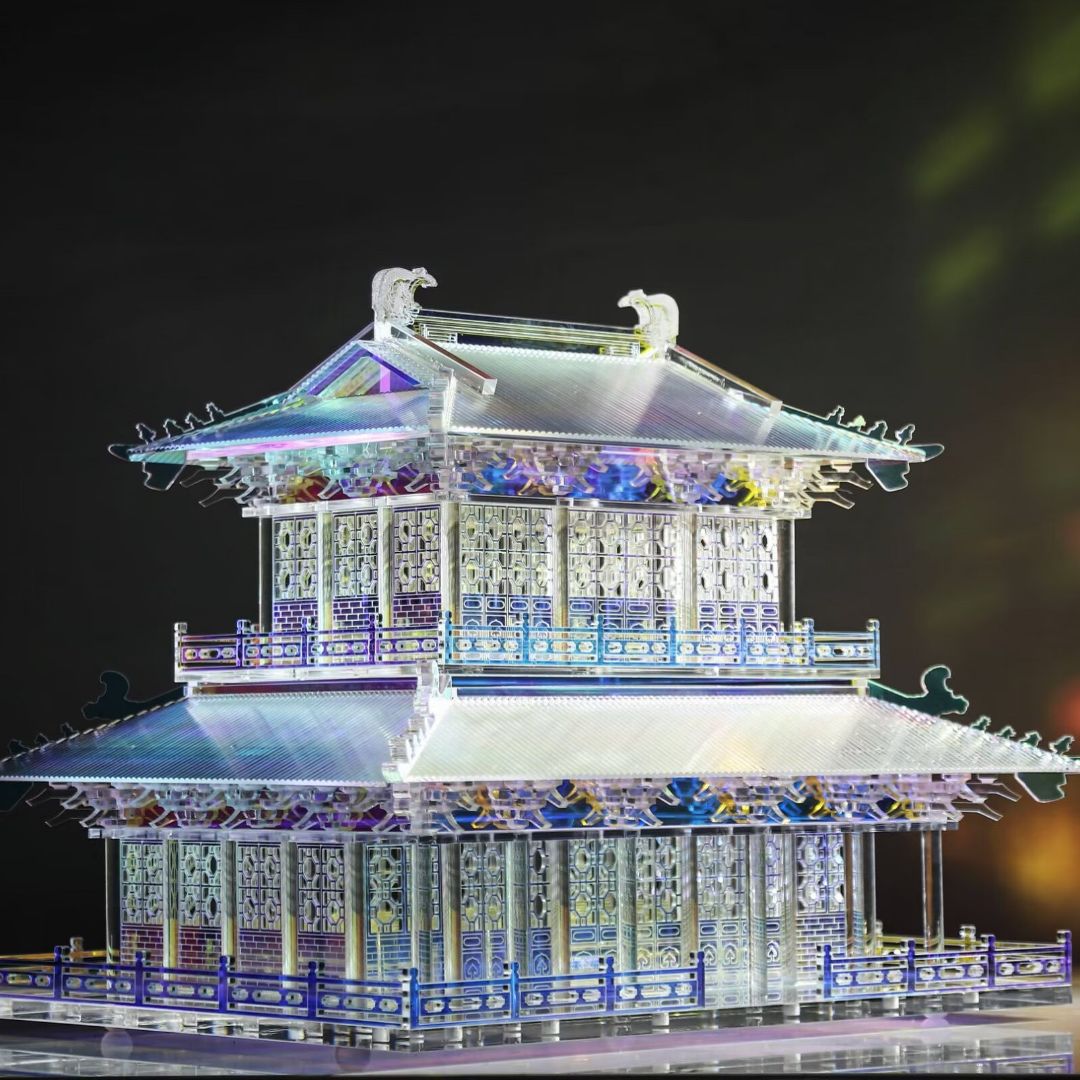
Materials & Light Transmission
| Material | Light transmission | Note |
|---|---|---|
| Acrylic / PMMA | Highest; doesn't yellow | The best light-guide medium |
| Polycarbonate (PC) | High | Tougher, impact-resistant |
| Cast resin | Translucent | Free-form castable shapes |
| Opal / milk diffuser | Diffuse | Eliminates hot spots, even glow |
| Perforated stainless | Through cut-outs | Durable metal that lets light out |
The translucent materials are covered in our acrylic vs. resin guide; the metal options in our stainless steel guide.
The Lighting & Electrical Engineering Behind a Great Glow
This is where light sculptures succeed or fail — and where most suppliers go silent. The specifics that matter:
- LED type & output — SMD modules, strips or neon flex; RGBW or tunable white gives cleaner whites and pastels than RGB alone.
- Even, hot-spot-free illumination — opal diffusers, laser-etched light guides, reflective backing and correct LED spacing/standoff turn point sources into a uniform glow. This diffusion work is the real craft.
- Drivers & low-voltage power — mains is converted to 12/24 V DC (touch-safe, important for public/interactive pieces), with the driver sized to about 80% of load for longevity.
- IP protection rating — per the IP Code, outdoor pieces need IP65+ (dust-tight, water-jet resistant); submerged/fountain work needs IP67/68; drivers go in sealed enclosures.
- Thermal management — LEDs and drivers are heat-sensitive; aluminium heat-sink channels and ventilation prevent flicker, lumen loss and early failure.
- Control systems — manual, DMX512 (the standard for synced animated shows), addressable/pixel control, app/Wi-Fi, or sensor-driven interactivity; stand-alone scene controllers run a show with no PC on site.
Lighting as an engineering discipline is defined by bodies like the Illuminating Engineering Society.
Indoor vs. Outdoor & IP Rating
| Environment | Min IP | Materials & sealing |
|---|---|---|
| Indoor | IP20–44 | Finish freedom; basic enclosure |
| Outdoor (exposed) | IP65+ | UV-stable acrylic, sealed connectors, corrosion-resistant finish |
| Submerged / fountain | IP67–68 | Fully sealed, marine-grade hardware |
Outdoor pieces also need UV-stable acrylic (so it won't yellow), condensation control and a wind-load structural rating.
Interactive & Programmable Light Sculptures
Touch, motion (PIR), gesture, proximity and sound sensors let a piece respond to people — which drives dwell time and social shares. Pixel-mapped RGB/RGBW enables animated sequences and scheduled scenes; a controller can run a full nightly show automatically.
From Concept to Night Landmark — Our Process
We design the light effect in 3D, build a lighting mock-up to test the glow before committing, fabricate, run a factory illumination test, then ship modular and connect, commission and calibrate on site. Complex custom landmarks should be planned well ahead — large programs can run many months.
Maintenance & Lifespan
Quality LEDs reach L70 ≈ 50,000 hours (output drops to 70% of original), and modules and drivers are designed to be replaceable. Maintenance is light: clean the surface, check sealed connectors, and swap a module if needed — see LED basics for lifespan context.
Frequently Asked Questions
Can LED light sculptures be used outdoors? Are they waterproof?
Can the colour change or be programmed?
Can it be interactive?
How much power does it use?
How long do the LEDs last and how often are they replaced?
Can you build it to my custom design?
Bring your design to life as a glowing landmark
Send your concept and site — we reply with a light-design approach, IP and control options, and a quote.
Request a Lighting-Design Consult