Suspended Sculpture Engineering: The Atrium & Ceiling Installation Guide
Almost everything written about hanging art from a ceiling is about hanging a picture at home — drywall anchors, 25 lb limits, a stud finder. None of it survives contact with a 320 kg cloud of polished petals floating four storeys above a shopping mall atrium. That job is a structural problem with an artistic brief attached, and it is decided long before anyone opens a toolbox. This guide is for the developers, architects, main contractors and mall operators who have to sign off on that piece: how the load actually reaches the building, what design factor to specify, what the ceiling can and cannot be asked to carry, and the coordination sequence that keeps a suspended commission from becoming a change order.
01 Why Suspension Is a Structural Question, Not a Decorating One
A floor-standing sculpture fails safely. If the calculation is wrong it settles, tilts, or scuffs a floor slab. A suspended sculpture has no such grace: every gram is held in tension by a handful of connections, above people's heads, permanently, in a building that moves. The consequences of an error are not aesthetic.
That difference drives three things buyers routinely underestimate:
- The ceiling you can see is almost never the ceiling that carries the load. Suspended plasterboard, mineral tile grids, baffle systems and stretch fabric are finishes. They are typically designed for their own self-weight plus a small services allowance — not for a point load of hundreds of kilograms.
- The decision has a deadline you cannot move. Anchors into structural concrete are far cheaper and far stronger when they are cast in. Once the slab is poured and the ceiling is closed, your options narrow to post-installed anchors, transfer steel, and a much larger bill.
- Sign-off is not the artist's to give. The fabricator supplies loads, geometry and connection details. A qualified structural engineer — usually the building's own — accepts those loads into the structure. Those are two different responsibilities and two different insurance policies.
The single most useful thing a client can do is issue the artwork's dry weight, wet weight, envelope and anchor layout to the structural engineer while the slab is still on paper. A 400 kg allowance designed in at that stage costs almost nothing. The same 400 kg retrofitted into a finished atrium can cost more than the sculpture.
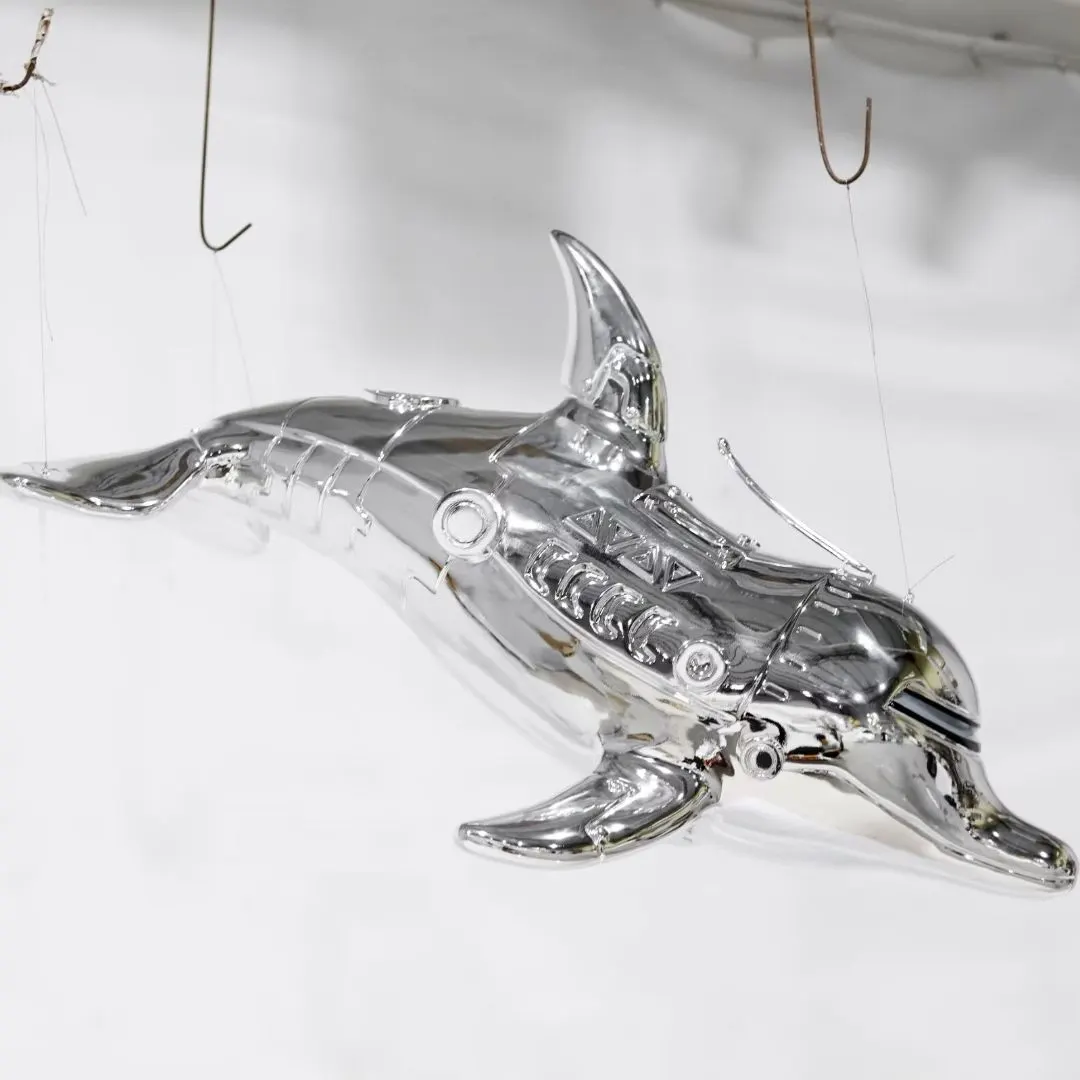
02 The Load Path, Drawn
“Load path” simply means: name every component the weight passes through, from the artwork to the earth. If you cannot name them all, you do not yet have a design. Three scenarios cover almost every commercial suspended commission:
Scenario B is the failure mode that shows up in real buildings, usually because nobody told the fit-out contractor what was coming. It is worth stating in the tender documents in exactly these words: the artwork shall be supported from primary structure; ceiling finish systems shall not form part of the load path.
03 Weight Budgeting & Material Choice
Material selection for a suspended piece is mostly an argument about mass. The same shape can differ by a factor of five depending on what it is made from, and that factor decides whether you need an engineer's intervention or a single cast-in anchor.
| Material | Indicative density | Typical build | Suspended verdict |
|---|---|---|---|
| Fiberglass (FRP/GRP) | ~1.5–1.8 g/cm³ laminate | Hollow shell, 3–6 mm wall, internal frame | The default. Best stiffness-to-weight for large sculptural volumes |
| Cast aluminium | ~2.70 g/cm³ | Solid or cored castings, welded assemblies | Strong option where a real metal is wanted — roughly a third of bronze |
| Stainless steel | ~8.0 g/cm³ | Fabricated hollow shell, welded/polished | Viable hollow; heavy fast if wall thickness creeps up |
| Bronze | ~8.8 g/cm³ | Cast shell, typically 4–8 mm | Reserve for smaller pendants; mass escalates quickly |
| Acrylic / transparent resin | ~1.18–1.20 g/cm³ | Cast or fabricated, often solid | Light, but solid sections add up; watch creep under sustained load |
| GFRC | ~2.0–2.2 g/cm³ | Sprayed shell 10–15 mm | Rarely suspended — specify only with engineer sign-off |
Three budgeting rules that keep projects out of trouble:
- Quote dry weight and wet weight separately. Water features, planted elements and pieces that will be cleaned in place gain mass in service. The engineer needs the worst case, not the shipping weight.
- Add the hardware. Cables, turnbuckles, shackles, internal armature, LED gear and drivers are routinely 10–20% on top of the sculpture's own weight. They are part of the suspended load.
- Declare the point loads, not just the total. A 300 kg piece on four cables is not “75 kg per anchor” — asymmetric geometry, tensioning and any one-cable-slack condition mean individual anchors can see far more. Ask your fabricator for the per-anchor reactions.
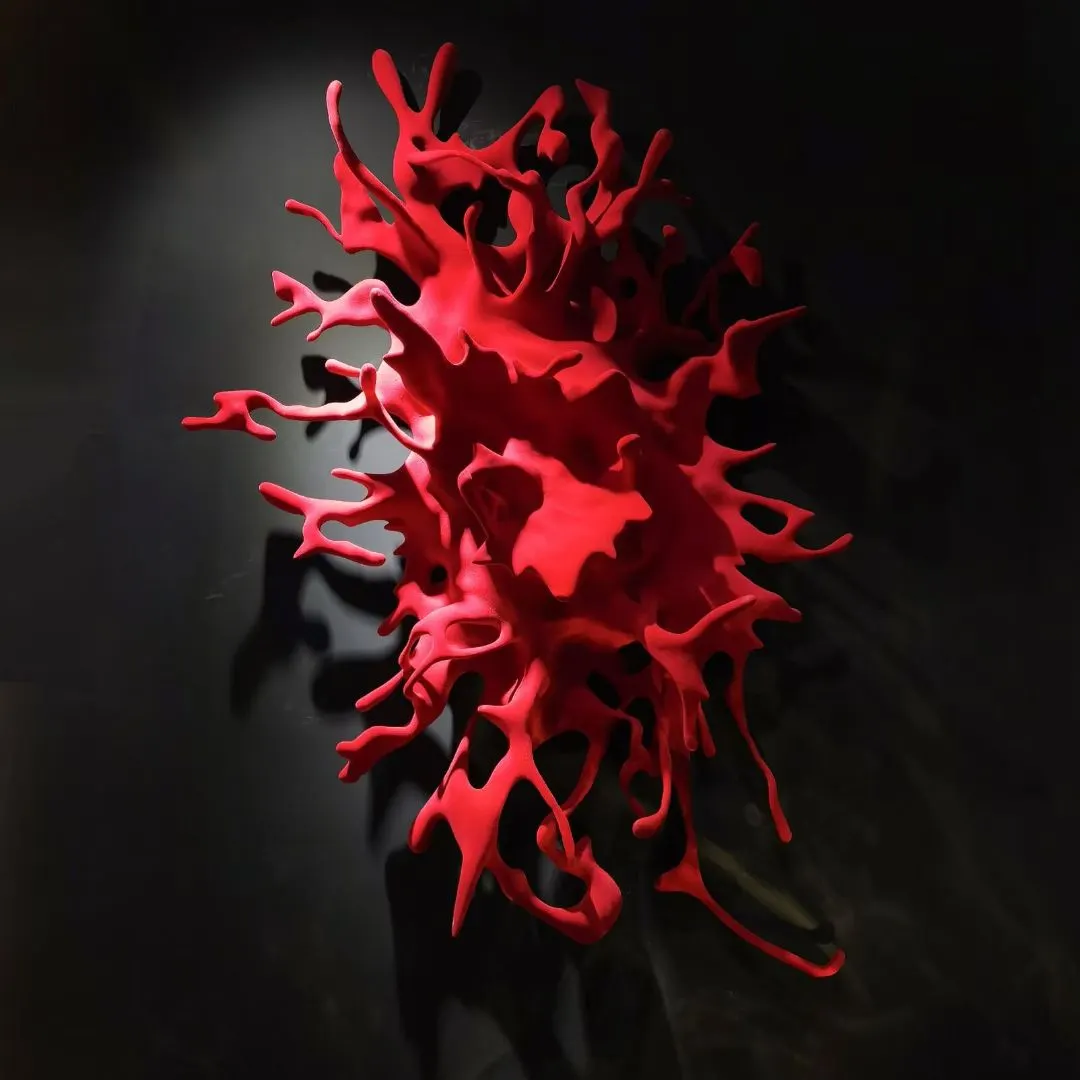
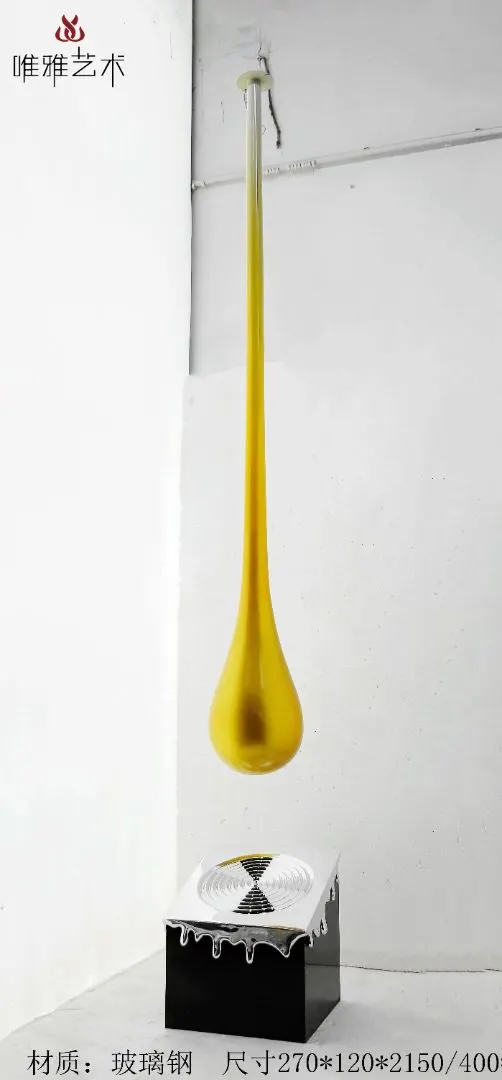
04 Design Factors and Secondary Safety
A “design factor” (or safety factor) is the ratio between a component's breaking strength and the load you actually put on it. General lifting and rigging practice works to 5:1. Entertainment and event rigging — where loads sit above an audience for long periods — pushes higher, and the ESTA/ANSI family of entertainment standards specifies 10:1 design factors for high-risk and life-safety applications such as performer flying.
A permanent sculpture over a public atrium sits squarely in that second world. It is above people, it is there for years, and nobody inspects it daily. Industry safety guidance on overhead load rigging is a useful cross-check, as is the general rigging duty of care set out in OSHA’s rigging equipment rules.
| Situation | Design factor to specify | Why |
|---|---|---|
| Back-of-house, no public beneath | 5:1 | General rigging baseline |
| Public area, static piece | 8:1 – 10:1 | Permanent load over people; no daily inspection |
| Kinetic or wind-affected piece | 10:1 and dynamic analysis | Movement introduces cyclic and shock loading |
| Temporary / event install | 8:1 minimum | Repeated rig and de-rig, less controlled conditions |
Secondary safety is the other half of the answer, and the half most often value-engineered out. It means an independent second load path that catches the piece if the primary connection fails — a safety bond around the structure, sized for the full load, slack in normal service. It costs very little at fabrication stage and is close to impossible to retrofit tidily. Specify it from the start:
- Every discrete suspended element gets its own secondary bond, not one bond for the assembly.
- The bond attaches to structure, not to the primary bracket — a shared bracket is a shared failure.
- Keep it short. A long slack bond converts a quiet failure into a shock load that can defeat the catch.
- Use materials that will not quietly corrode out of sight. Stainless bonds in stainless fittings.
05 Fire, HVAC, Sprinklers & Seismic
The four disciplines that reliably ambush a suspended art package late in the programme:
| Discipline | What it asks of the artwork | Get this settled by |
|---|---|---|
| Fire & life safety | Surface-spread-of-flame class for the finish; the piece must not obstruct escape signage or smoke reservoirs | Concept sign-off |
| Sprinklers | A large horizontal element can shadow heads below it, sometimes requiring additional heads under the artwork (an obstruction question under NFPA 13 and local equivalents) | Before services coordination freezes |
| HVAC | Supply air makes light pieces move and hum; diffuser positions may need shifting, or the piece damping | Setting-out drawing stage |
| Seismic | In seismic regions, non-structural components need restraint against sway, not just gravity support | Structural engagement, day one |
The sprinkler shadow is the most common late surprise. A wide suspended canopy in an atrium can be treated as an obstruction, and the fix — extra heads and pipework beneath a finished artwork — is ugly, expensive and lands on someone's budget at the worst possible moment. A single early conversation with the fire engineer usually resolves it by adjusting the artwork's density or profile instead.
06 The Coordination Sequence
Suspended work has a fixed order of operations. Skipping a step does not save time; it just moves the cost later, when it is larger.
07 Installation on Site
The install itself is usually the shortest phase and the one with the most constraints attached. What determines its cost is rarely the sculpture — it is access.
- Access equipment. Atrium heights beyond about 12 m generally mean a boom lift or a scaffold tower, both of which need floor-loading approval and a route in. Check the goods lift dimensions and the smallest doorway on the path before finalising segment sizes.
- Segmentation. Large pieces ship in sections and are joined in the air. Where the joints fall is a design decision, not an afterthought — they should follow the form's own lines.
- Working over a live floor. Mall and hotel installs are usually night work with exclusion zones, banksmen and a fixed window. Build that into the programme; a two-night job squeezed into one night is where mistakes happen.
- Tensioning and levelling. Multi-cable pieces are adjusted, not just hung. Allow time for the piece to settle and be re-trued before the access equipment leaves.
Inside the workshop: forming, finishing and trial-assembling large sculptural work before it ships.
08 Inspection & Maintenance
A suspended artwork is a permanent piece of rigging in a building that vibrates, expands and gets cleaned. It needs an inspection regime, and that regime should be handed over as a document, not a verbal assurance.
| Interval | Check | By |
|---|---|---|
| Post-install (2–4 weeks) | Re-check tension and level after initial settling; re-torque fittings | Installer |
| Every 6 months | Visual from floor: level, sag, obvious damage, staining below | Facilities |
| Annually | Close-up at height: fittings, bonds, corrosion, cable condition, fixings | Competent rigger |
| Every 5 years | Full survey; consider replacing wear components regardless of appearance | Specialist |
| After any event | Impact, flood, fire, seismic activity or nearby structural work | Specialist |
09 The 12 Questions to Ask Before You Sign
Hand this list to any fabricator quoting a suspended piece. The quality of the answers separates a sculpture supplier from a supplier who has actually hung things above the public.
- What is the dry weight, and the wet/serviced weight?
- What are the reactions at each individual anchor point?
- What design factor have you used, and against which standard?
- Is secondary safety included in this price?
- What is the internal armature made of, and how is it protected?
- Who produces the connection detail drawings?
- Which parts of the load path are in your scope, and which are not?
- What surface-spread-of-flame class does the finish achieve?
- How does the piece break down for transport and for the lift?
- What access equipment does your method statement assume?
- What documentation is issued at handover?
- What is the inspection interval, and who is qualified to do it?
Question 7 is the one that saves projects. The gap between “we supply the sculpture with lifting eyes” and “we supply a hung, tensioned, certified installation” is enormous, and it is very often left undefined until someone is standing in an atrium with a crate and no anchors. Get the scope boundary in writing.
Frequently Asked Questions
How heavy can a suspended sculpture actually be?
There is no fixed ceiling — multi-tonne pieces hang in airports and malls. The practical limit is set by what the building's structure will accept and when you ask. Under roughly 150 kg is usually straightforward into a concrete slab. Between 150 kg and about a tonne normally needs a specific engineering review and possibly transfer steel. Above that, it becomes a structural design item that must be in the building's own design from early stages.
Can we hang the piece from a suspended ceiling or ceiling grid?
No. Plasterboard, mineral tile grids, baffles and stretch fabric are finish systems designed for their own weight plus light services. Sculpture loads must reach primary structure — slab, beam or purpose-installed transfer steel. The visible ceiling is something the cable passes through, not something it hangs from.
What design factor should we specify?
For a permanent piece above a public area, specify 8:1 to 10:1 against the breaking strength of every tension component, plus independent secondary safety. General rigging practice of 5:1 is a back-of-house baseline. Kinetic pieces should use 10:1 with a dynamic analysis, because movement introduces cyclic loading that a static calculation will not capture.
How early do we need to involve the structural engineer?
Before the slab design is finalised, if at all possible. Cast-in anchors are dramatically cheaper and stronger than post-installed ones, and designing a load allowance into a slab that has not been poured costs almost nothing. The worst case — and a common one — is discovering the artwork after the ceiling is closed.
Which material gives the biggest form for the least weight?
Hollow fiberglass (FRP), by a clear margin. A large sculptural volume in FRP with an internal steel armature typically weighs a fraction of the same form in cast metal, which is why most large atrium pieces are FRP with a metallic or painted finish. Where a genuine metal is required, cast aluminium is roughly a third the density of bronze.
Do suspended sculptures move, and is that a problem?
Light pieces will move in HVAC airflow, and some sway is normal and harmless. It becomes a problem when it is visible enough to look unstable, when it causes noise, or when it introduces cyclic loading the connections were not designed for. It is solved by damping, by adjusting nearby diffusers, or by adding mass — all much easier to design in than to retrofit.
Who is liable if a suspended artwork fails?
Liability follows the scope boundary, which is exactly why it needs to be written down. Typically the fabricator warrants the artwork, its internal structure and its declared loads; the structural engineer accepts those loads into the building; the installer certifies the installation. Gaps between those three are where disputes live. Insist that each interface is named in the contract before work starts.
Planning a suspended or wall-mounted piece for an atrium, lobby or retail space? Weiya Art designs and fabricates custom suspended sculpture in fiberglass, metal and transparent resin — with load data, connection details and installation support from concept through to handover.
Related reading: choosing the finish that will survive at height, cast aluminium when you need real metal at low weight, and outdoor sculpture engineering for pieces that also face wind and weather.