Sculpture Finishes: Paint, Powder Coat, Plating & Patina Compared
Two sculptures can leave the same workshop, the same shape, the same material — and one still looks new in fifteen years while the other is chalky and blotchy in three. The difference is almost never the sculpture. It is the finish system: what went underneath it, how many microns went on, and whether anyone wrote down a standard. Finish is also where quotes diverge most wildly, because “painted white” can honestly mean anything from a single coat of industrial enamel to a five-layer automotive build with a 10-year fluoropolymer warranty. This guide gives you the vocabulary to tell them apart and specify the one you actually want.
The Five Finish Families
Nearly every sculpture finish on the market belongs to one of five families. They are not interchangeable: each has a substrate it likes, an environment it suits, and a failure mode it is prone to.
/BLG-CX-Y001-01a1.webp)
Any colour, any gloss. The default for FRP.
/BLG-CX-D001-01a1.webp)
Mirror chrome and metallic effects.
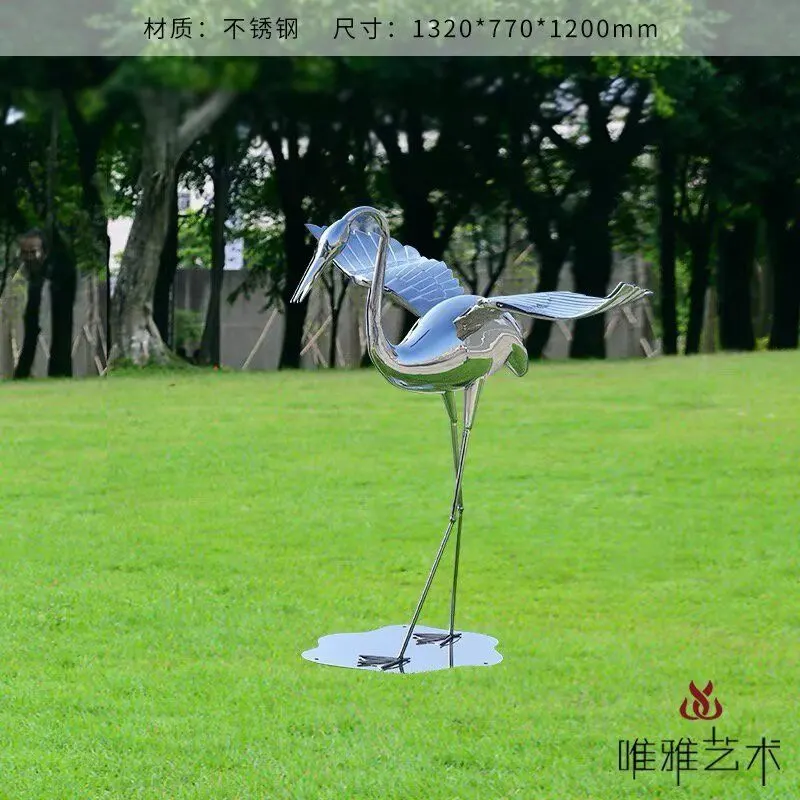
The metal itself, polished or brushed.
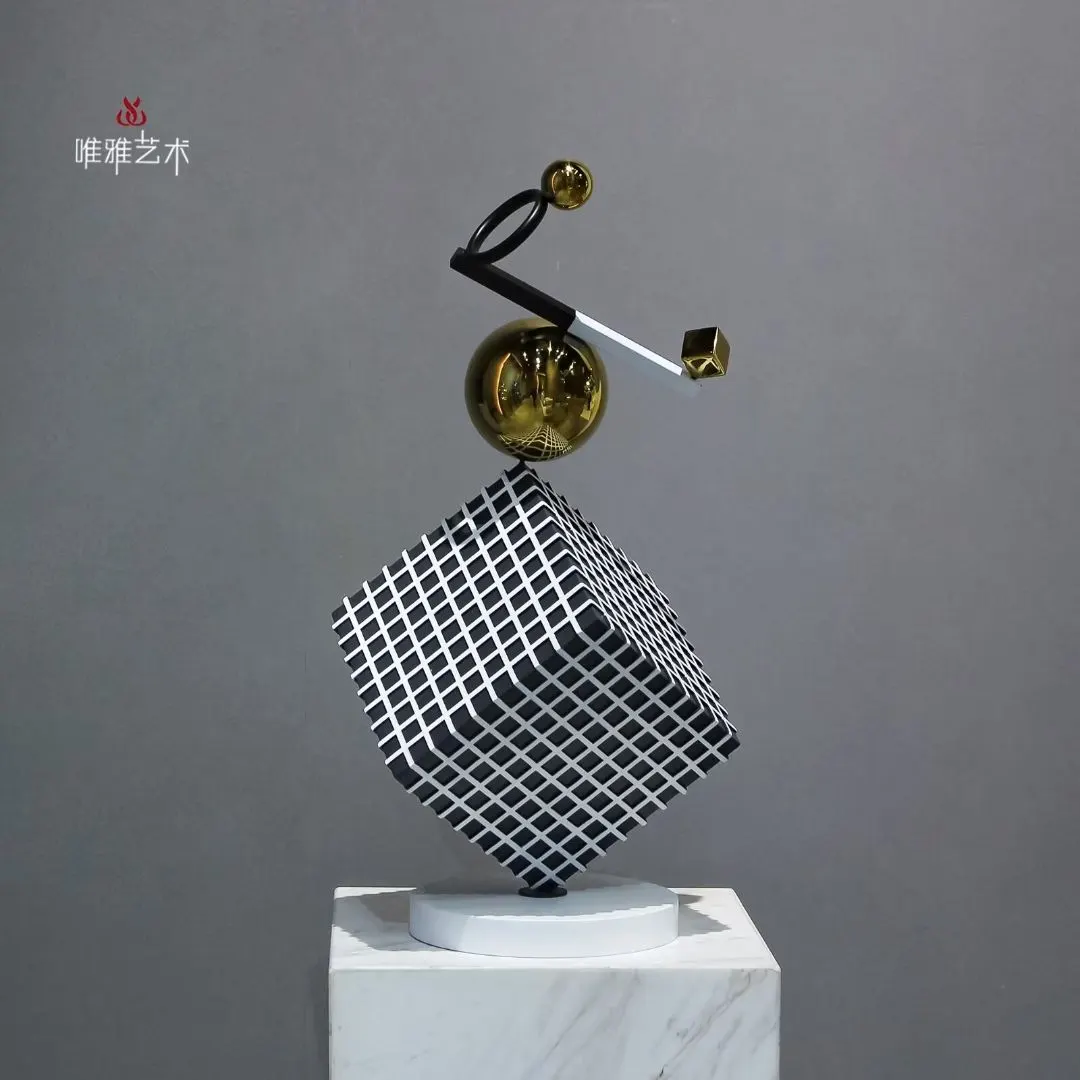
Chemical colouring of real metal.
/BLG-CX-Y001-01a4.webp)
Tough, even, metal substrates only.
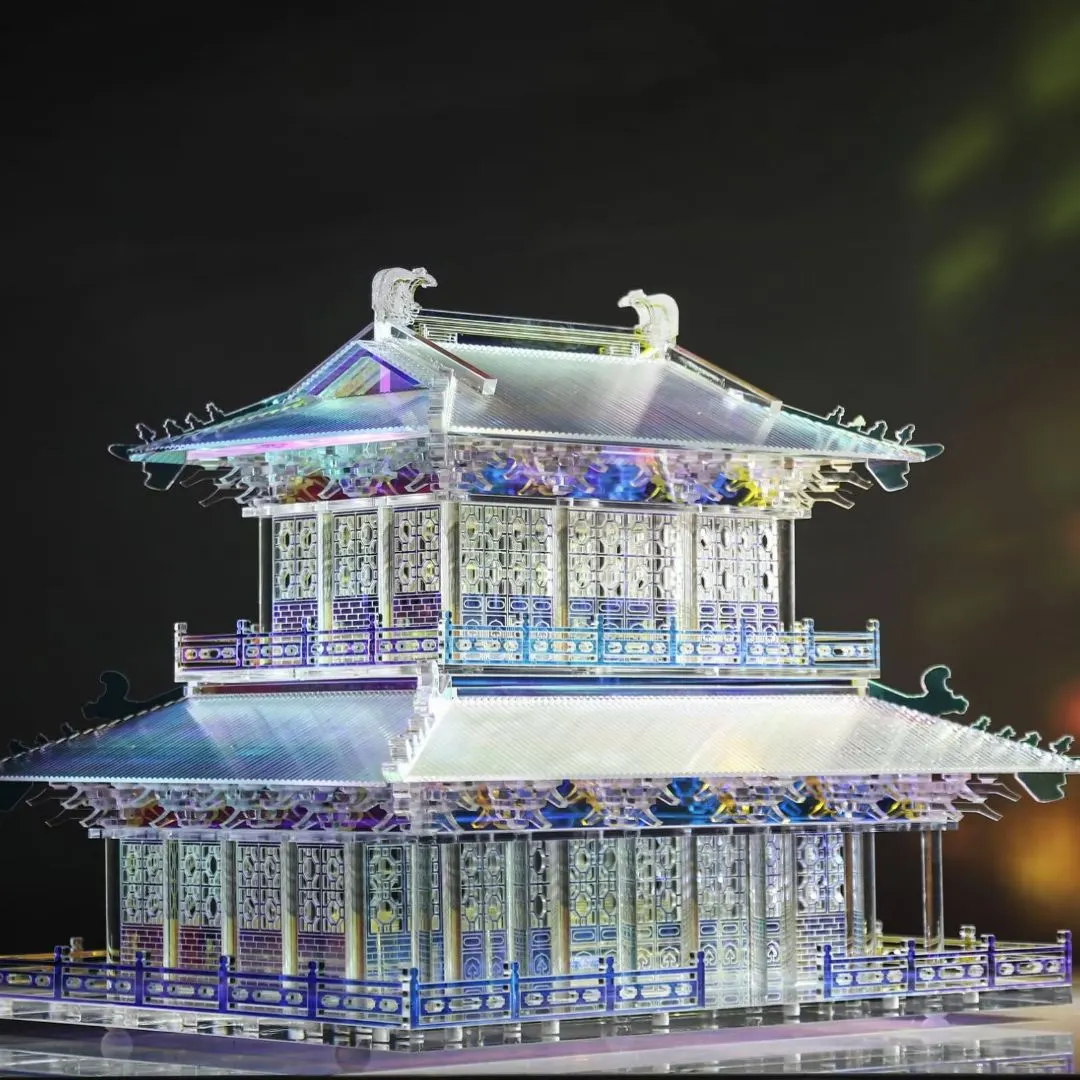
Acrylic and resin polished in the material.
Anatomy of a Finish: What You Are Actually Buying
A finish is a stack, not a colour. When quotes differ by 40% for “the same” paint job, the difference is almost always layers you cannot see once it is dry.
Preparation is most of the cost and all of the risk. On a complex sculptural form, filling, fairing and flatting can be 60–70% of the finishing labour. It is also invisible in a photograph, which is precisely why it is the first thing cut from a cheap quote — and why that quote's gloss looks “orange peel” under raking light.
Inside the workshop: surface preparation, spraying and polishing — where most of a finish budget is actually spent.
Master Comparison
| Finish | Works on | Outdoor life* | Relative cost | Repair in situ | Best for |
|---|---|---|---|---|---|
| 2K automotive paint + clear | FRP, metal, resin, wood | 10–15 yrs | ●●● | Good — spot repair & polish | Colour-critical brand work, complex forms |
| Powder coat (polyester) | Steel, aluminium only | 5–10 yrs | ●● | Poor — needs re-bake | Simple metal forms, high abrasion |
| Powder coat (superdurable/PVDF) | Steel, aluminium only | 10–20 yrs | ●●● | Poor | Architectural exterior metal |
| Electroplating (real chrome) | Metal; FRP via base layer | 10–20 yrs | ●●●● | Very poor — strip & redo | True mirror finish, small to mid pieces |
| Vacuum metallising + clear | FRP, resin, plastics | 3–7 yrs outdoors | ●●● | Poor | Chrome look on large light forms |
| Patina (bronze/brass) | Copper alloys only | Indefinite, evolves | ●● | Excellent — rewaxable | Traditional and memorial work |
| Mechanical (brushed/mirror) | Stainless, aluminium | Indefinite | ●● | Good — re-polish | Contemporary metal, no colour wanted |
| Anodising | Aluminium only | 15–20 yrs | ●●● | Poor | Aluminium in coastal or harsh sites |
*Outdoor life = years before noticeable gloss or colour change in a temperate urban environment. Coastal, desert and tropical sites shorten every figure; sheltered interiors extend them substantially.
Automotive Paint & 2K Systems
“2K” means two-component — a resin plus a hardener that cure by chemical reaction rather than by drying. That reaction is what gives automotive paint its hardness, chemical resistance and depth of gloss, and it is why 1K rattle-can finishes never look the same.
For sculpture it is the most versatile family by a wide margin: it goes on FRP, metal, resin, timber and composites; it matches any RAL or Pantone reference; and it can be finished anywhere from dead matte to a mirror. Special effects — metallic flake, pearl, colour-shift, soft-touch, textured stone — all live here too.
- Gloss is a number, not an adjective. Specify it in gloss units at 60°: ~5–10 GU is matte, ~30–40 GU satin, 85+ GU high gloss. “Semi-gloss” means different things in different workshops.
- Metallics and complex geometry fight each other. Flake orientation changes with spray angle, so deeply undercut forms can show banding. Discuss it before committing to a metallic on a very complex piece.
- Ask for a sprayed sample panel in the actual system, on the actual substrate, and sign it off. Screen colours and printed swatches will not match.
Powder Coating
Powder is applied as an electrostatically charged dry powder and then baked, typically around 180–200 °C, where it flows into a single continuous film. That gives an exceptionally even, tough, thick coating with no solvent — excellent for abrasion resistance and for pieces that will be touched constantly.
Two constraints decide whether it is available to you at all:
- The part must survive the oven. That rules out FRP, resin, acrylic, timber, and any piece with embedded electronics or adhesives that will not take the bake.
- The part must fit the oven. This is the practical killer for large sculpture. Beyond a few metres you are into segmenting the piece and coating parts separately, which puts joint lines in your finish.
Where powder is specified for exterior architectural work, the quality tiers are defined by the AAMA specifications, and they are worth naming in your purchase order because the difference is enormous:
| Spec | Chemistry | Florida exposure test | Typical use |
|---|---|---|---|
| AAMA 2603 | Standard polyester | 1 year | Interior, mild exterior |
| AAMA 2604 | Superdurable polyester | 5 years | Exterior, moderate exposure |
| AAMA 2605 | Fluoropolymer (PVDF) | 10 years | Severe exposure, long warranty |
Those exposure periods are the actual South Florida weathering durations behind each tier — see the AAMA 2605 requirements for the full test regime. In Europe the equivalent quality mark is Qualicoat.
Plating, Metallising & the Chrome Look
“Chrome” on a sculpture quote can mean three completely different processes at three very different prices. Establish which one you are being sold.
| Electroplating | Vacuum metallising (PVD) | Chrome-effect paint | |
|---|---|---|---|
| What it is | Real metal deposited electrochemically | Metal vapour condensed in a vacuum chamber, sealed with clear | Highly reflective pigment in a coating |
| Substrate | Metal, or FRP with a conductive base | FRP, resin, plastics | Anything paintable |
| Mirror quality | Highest — true reflection | Very good | Bright, but reads as paint up close |
| Size limit | Tank size — the real constraint | Chamber size, but larger than tanks | None |
| Outdoor durability | Excellent | Moderate — depends entirely on the clear | Moderate |
| Relative cost | Highest | High | Moderate |
A mirror finish is also unforgiving in a way matte finishes are not: it reflects every ripple in the substrate beneath it. Achieving a genuinely flawless mirror on a large sculptural form is mostly a story about the fairing underneath, and it is why mirror pieces carry a cost premium that has little to do with the plating itself.
/BLG-CX-D001-01a7.webp)
Patina on Bronze and Brass
Patina is not a coating applied over metal; it is a controlled chemical reaction of the metal surface. Heat and chemistry produce the browns, greens, blues and blacks of traditional bronze, and the result is integral to the piece rather than sitting on top of it.
- It only works on copper alloys. Bronze and brass, yes. Steel, aluminium, FRP, no — on those, a “patina” is a painted imitation, which is legitimate but should be described honestly.
- It is alive. A fresh patina continues to develop outdoors. Some clients want that; others are dismayed when a warm brown drifts toward green over five years. Say which you want.
- Wax is the maintenance. Outdoor bronze is traditionally protected with a microcrystalline wax, reapplied annually. Neglected, the patina still survives — it simply becomes whatever the environment makes it.
- It is the most repairable finish there is. Damage can be reworked and blended in place by a competent conservator, which is a large part of why memorial work still specifies it.
How to Choose
Four questions resolve the majority of real projects.
Writing the Spec So You Get What You Expect
A finish specification that fits on four lines removes almost all of the ambiguity that causes disputes:
1. System — e.g. “2K polyurethane basecoat + 2K clear, minimum 3 coats” or “polyester powder to AAMA 2604”.
2. Colour — RAL or Pantone reference, plus a signed sprayed sample panel on the real substrate.
3. Gloss — in gloss units at 60°, not an adjective.
4. Thickness — minimum dry film thickness in microns, and how it will be verified.
Two optional clauses worth adding for exterior or high-value work: an adhesion test to ASTM D3359 (the cross-hatch tape test) on a sample panel from the same batch, and a written warranty period with the failure modes it actually covers — adhesion, gloss retention and colour change are three separate promises, and a warranty that only covers delamination is close to worthless.
Ask for touch-up material at handover. A litre of the exact batch colour, or a kilo of the powder, costs almost nothing while the job is running and is invaluable in year four. Metallics and pearls in particular are very difficult to match later.
Frequently Asked Questions
Which finish lasts longest outdoors?
For coated work, a fluoropolymer (PVDF) system to AAMA 2605 or a full 2K automotive build with a UV clear will hold gloss and colour for 10–20 years in a temperate urban setting. For uncoated work, a mechanically finished stainless steel or a properly waxed bronze patina effectively lasts indefinitely, because there is no coating film to fail — the surface is the material.
Can fiberglass sculptures be powder coated?
No. Powder coating is baked at roughly 180–200 °C, which fiberglass, resin, acrylic and timber will not survive. Those substrates take 2K paint systems, vacuum metallising or specialist coatings instead. If a supplier offers powder coating on FRP, ask exactly what process they mean — they are probably describing a spray-applied coating.
What is the difference between real chrome and chrome-effect paint?
Real electroplated chrome is metal deposited electrochemically and gives a true mirror; it is limited by plating tank size and is the most expensive route. Vacuum metallising condenses metal vapour onto the part under vacuum and seals it with clear coat — very good, larger sizes possible, and its outdoor life depends entirely on that clear. Chrome-effect paint is a highly reflective coating: bright and unlimited in size, but visibly a paint finish at close range.
How do I make sure the colour matches my brand?
Give a RAL or Pantone reference, then require a sprayed sample panel in the final system on the actual substrate, and sign it off before production. Never approve colour from a screen, a printed swatch or a photograph. For metallics, ask for the panel to be sprayed on a curved section, because flake orientation changes the apparent colour with viewing angle.
Can a damaged finish be repaired on site?
It depends entirely on the family. 2K paint repairs well — the area can be flatted, resprayed and polished in, often invisibly. Patina is the most forgiving of all and can be reworked by a conservator. Powder coating and electroplating essentially cannot be spot-repaired: they require stripping and reprocessing off site. If the piece is in a high-traffic location, weight repairability heavily in your decision.
How much does finishing add to the cost of a sculpture?
On a complex sculptural form, finishing is commonly 25–40% of the total, and on a mirror-finish piece it can exceed the cost of fabricating the form itself. Most of that is preparation labour — filling, fairing and flatting — not the coating material. This is why finishing is where cheap quotes quietly differ, and why comparing quotes without comparing finish specifications is meaningless.
Need a finish specified properly rather than guessed at? Weiya Art finishes in-house — 2K automotive paint, electroplating and spray metallising, patina and mechanical polishing — and will supply sprayed sample panels on your actual substrate before production starts.
Related reading: cast aluminium and how it takes a finish, suspended sculpture where finish weight and fire class matter, and fiberglass fabrication for what sits under the paint.