Sculpture enlargement approval checklist for artists and project teams
Freeze the approved maquette and target dimensions, then review the digital or physical enlargement from the intended viewing positions. Give the artist separate approvals for form, texture and full-scale appearance, and ask the relevant project professionals to review support, fabrication and installation interfaces before release.
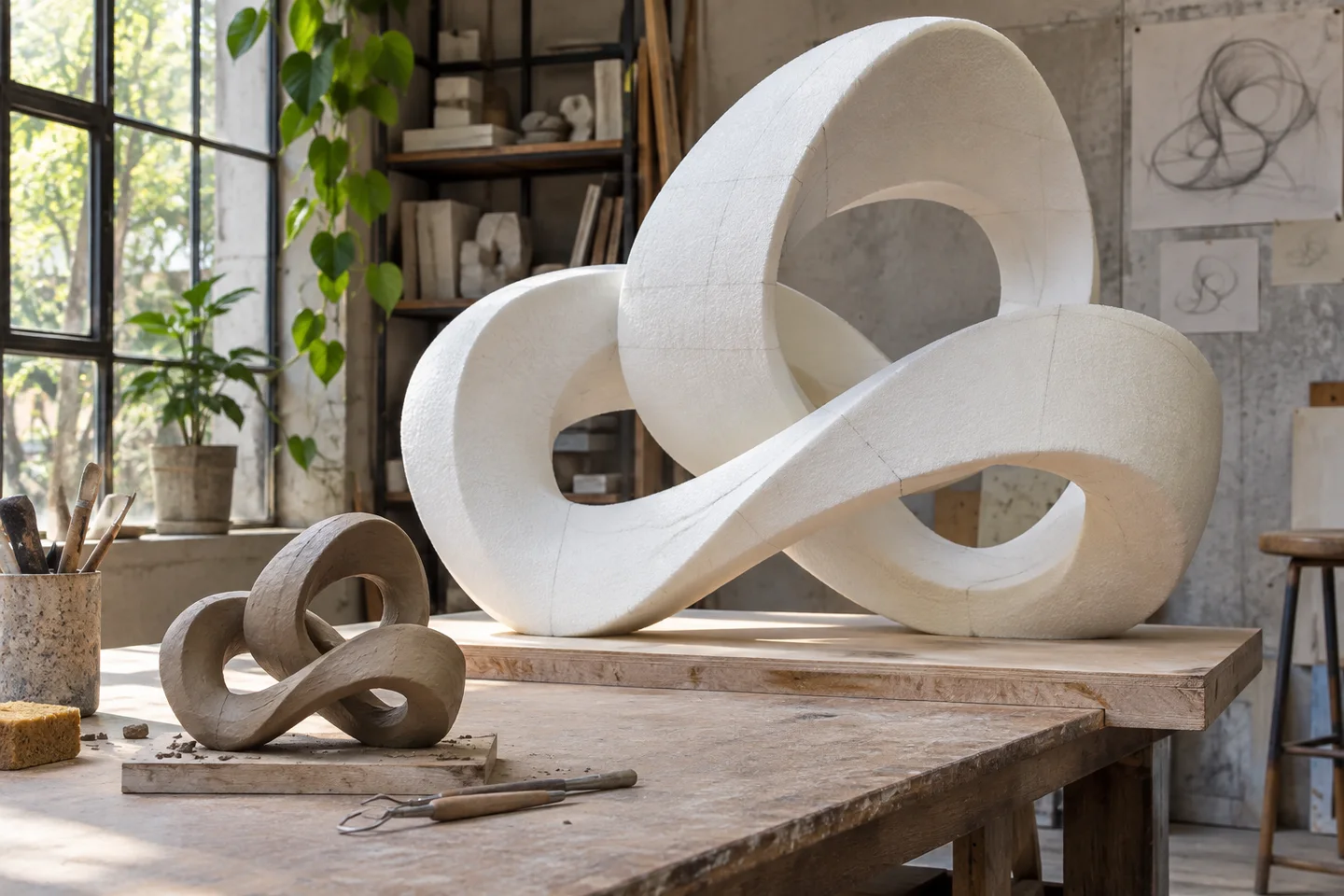
Establish which original is being enlarged
Identify the maquette, scan or source model by revision, date and owner. Include the intended front, the base datum, orientation and the dimensions used to calculate scale. If the source is fragile or incomplete, document areas that need interpretation and obtain the artist's decision before any reconstruction is treated as part of the design. Where more than one person can approve the work, record which decisions each person is authorized to make.
Have the project team distinguish the target artwork height from the installed height including the base. Ask which dimensions must stay fixed and which may change to improve the site fit. Give each provisional dimension an owner and review date. Store the approved reference separately from working files so the team can compare a later revision with the original agreement.
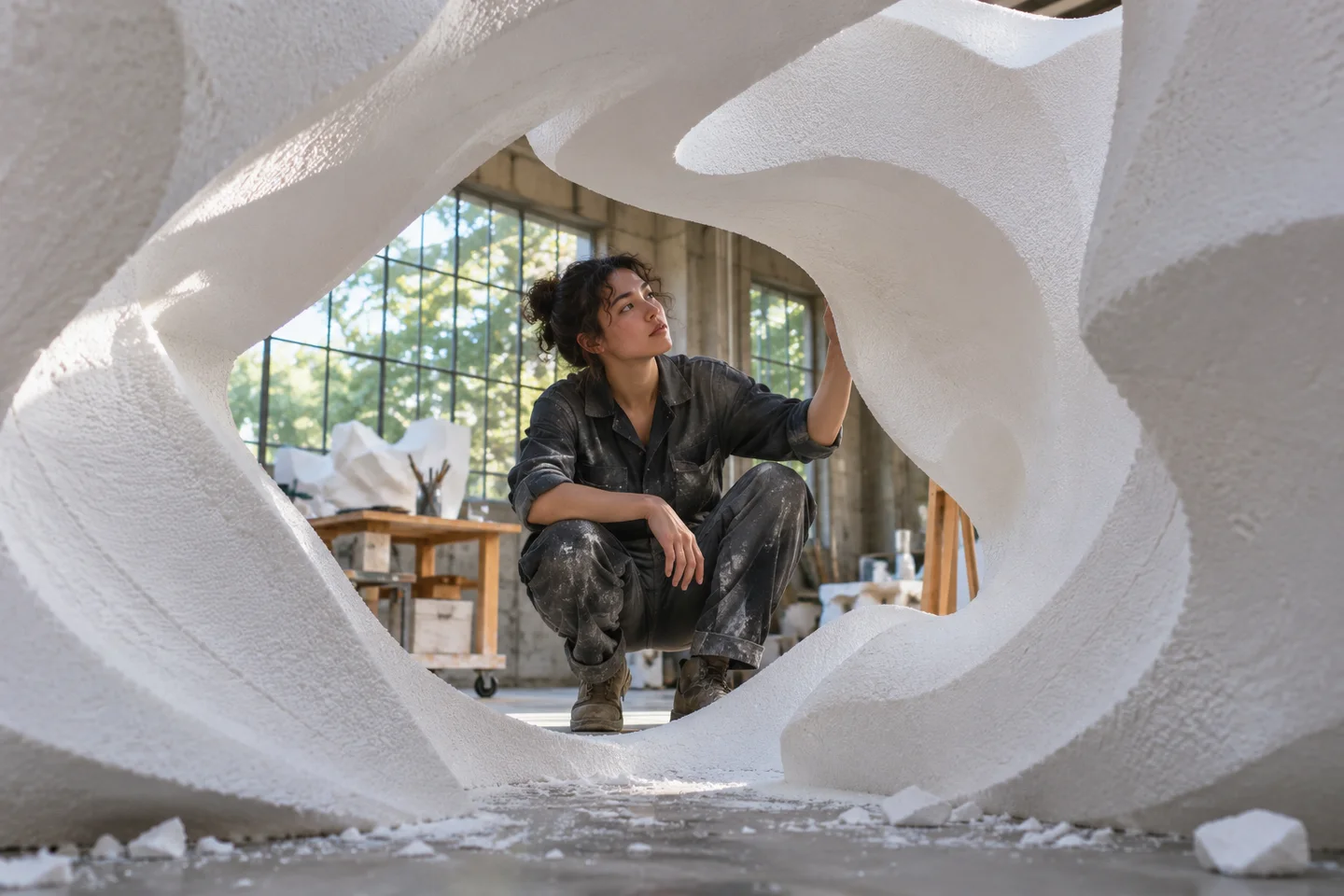
Compare the silhouette and openings in a common view set
Pick repeatable front, side, rear and three-quarter views. Overlay or place the original and revised views side by side when doing so helps the reviewer see changes. Record the base datum and camera position, especially if the viewer will approach from below or at an angle. A plan view is useful for checking projection and footprint, while a low eye-level view can reveal an opening that appears to close as the work gets larger or moves higher.
Identify the contours, openings and changes of direction that carry the artist's intent. Number critical areas on the markup and state whether each is to be preserved or reviewed. Ask the artist to distinguish corrections from deliberate departures. For an open form, include the background visible through it and note if a key opening should align with a particular approach.
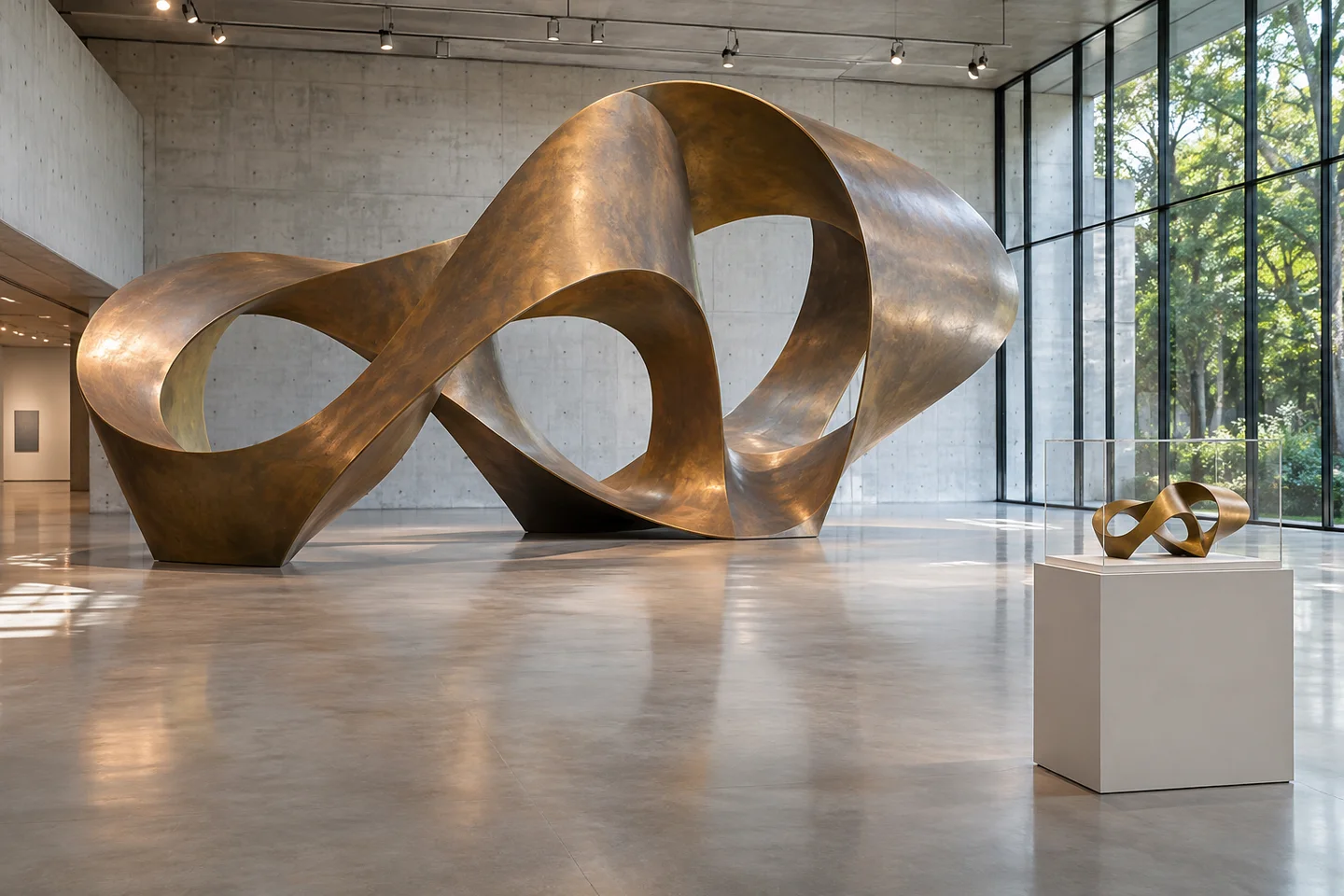
Choose a proof that can answer the next question
| Review evidence | Useful for | Decision to hold |
|---|---|---|
| Digital comparison | Proportions, envelope and repeated viewpoints | Physical texture and presence |
| Small physical study | Form and tactile direction | Final-scale detail and sightlines |
| Enlarged detail sample | Treatment of a selected edge or texture | Full-work balance |
| Full-scale mockup or master | Audience view and transition review | Final material and approved interfaces |
Fonderia Nolana describes both reference-point and scan-based enlargement workflows, including machining a physical model from digital data. The choice of workflow depends on the intended sculpture and the decisions the artist wants to make. Ask the fabricator which intermediate artifact is included and how the artist can make or review changes before the next step. Fonderia Nolana process
Decide which details should be reworked by the artist
Some details are intended to grow with the form. Others, such as a tool mark or edge transition, may look heavier at full scale than the artist intended. Choose a few decisive features and review them on representative material or a physical model. Ask whether the artist wants the enlarger to preserve the source, adjust the detail under direction, or leave an area for the artist to finish. Mark those instructions explicitly.
Bronzart describes one workflow in which a scan is enlarged in foam and clay is added for the artist to refine. This illustrates a useful approval point before making irreversible downstream commitments. Ask who owns the physical revision, how it will be documented and whether a new capture is needed after the artist changes it. Bronzart enlargement process

Keep fabrication joints and visual choices connected
Ask the fabricator to identify likely section boundaries, assembly sequence and areas that need special handling. Compare the proposed joints with the approved sightlines and texture map. A join that is easy to assemble may land across a prominent edge or a finish transition. Ask for an enlarged view or sample to show how a transition could read after assembly. Capture which party approves the appearance and which party is responsible for the technical review.
Where the final sculpture changes material from the study, have the project team identify the decisions that require renewed review. The finish may affect whether an edge reads crisply, and the assembly interface may alter the visible form. Record where specialist review is required and issue updated evidence before releasing work affected by the change. The drawing approval guide provides a companion record for drawing and revision control.
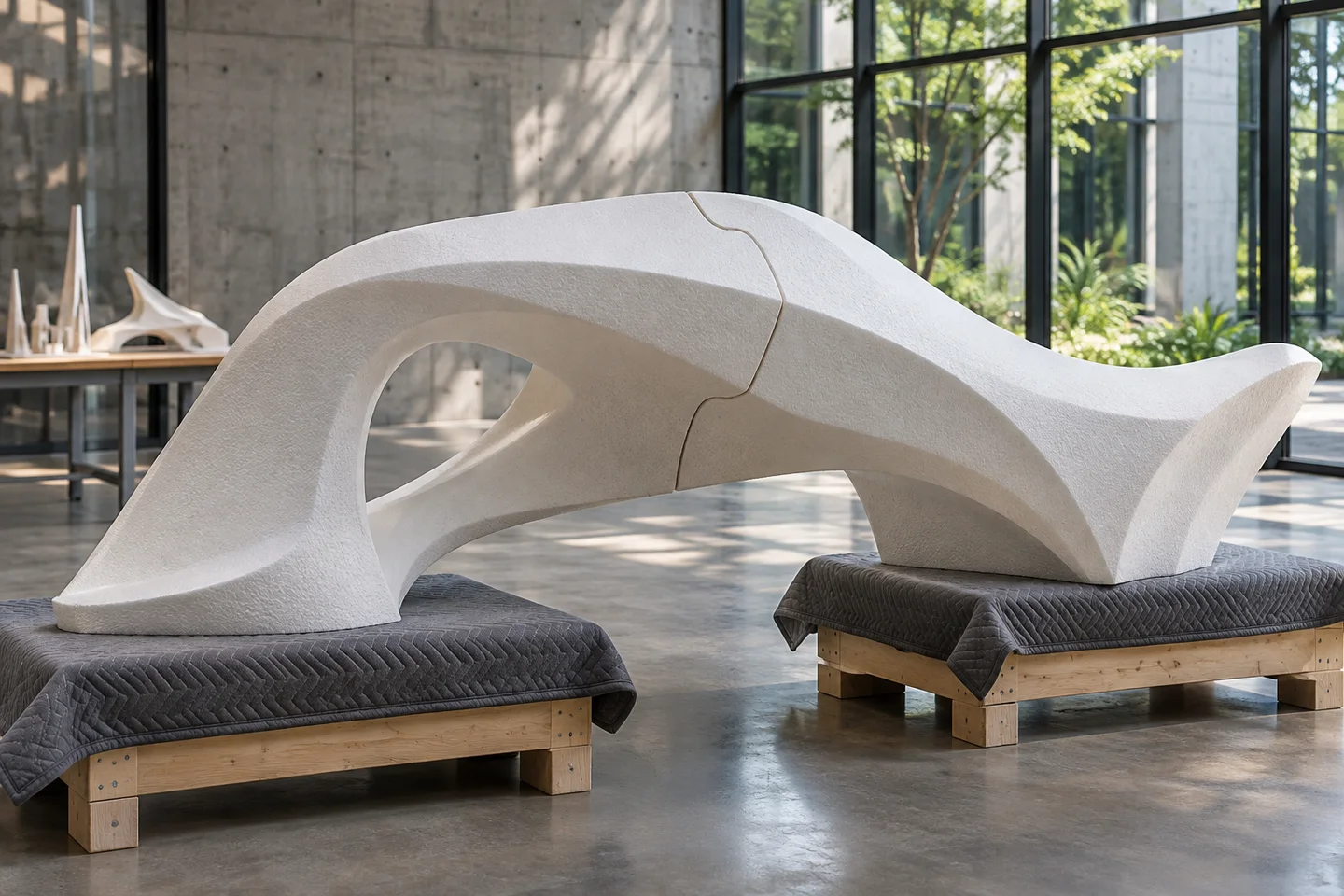
Check the work against the destination
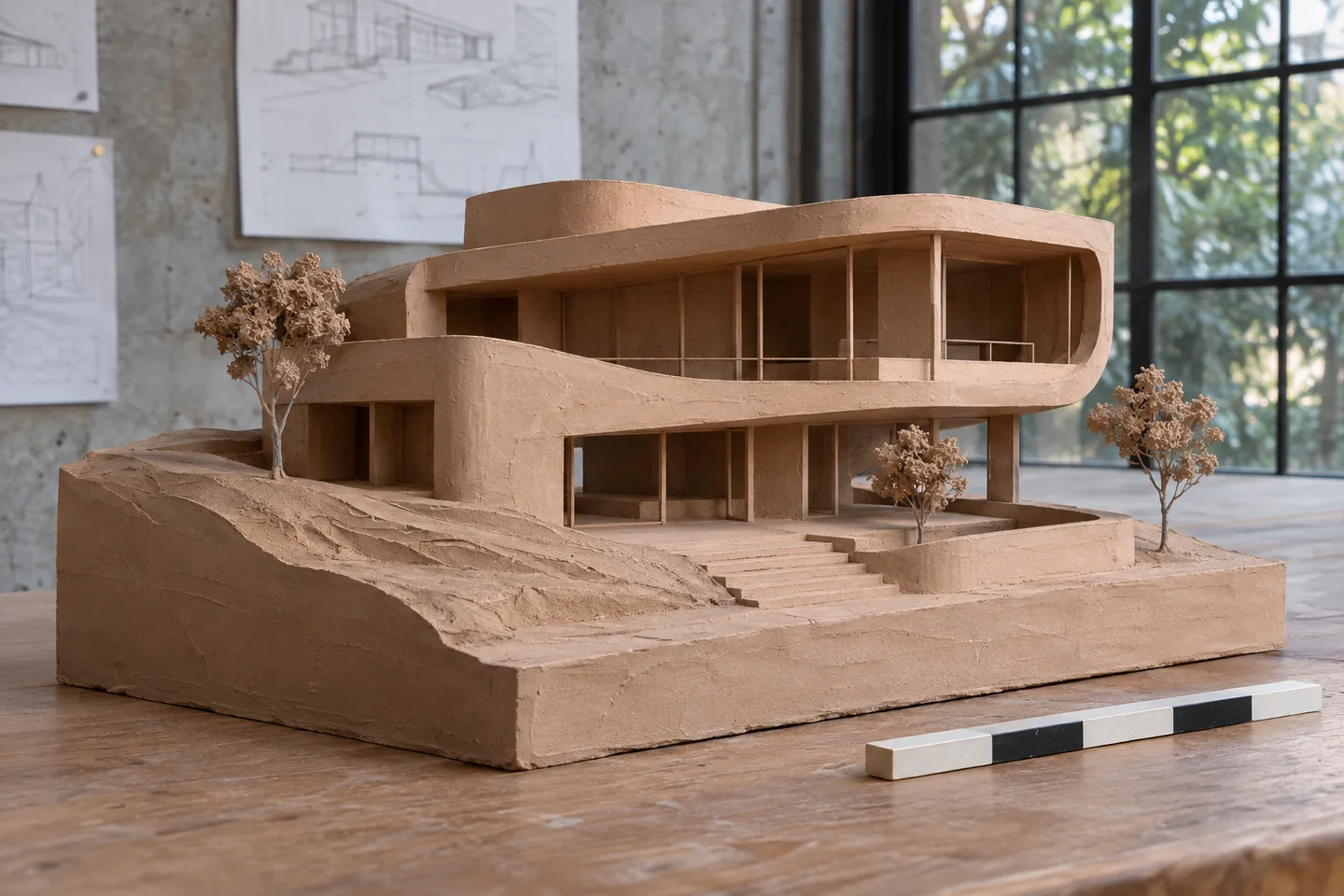
Use the architectural context to locate the sculpture and mark its orientation. Ask for the intended floor or ground level, the surrounding routes, nearby objects and the positions from which the audience will see the work. Determine whether the artist's approval should include one or several important views. In a courtyard, the sculpture can read differently from an approach across the space and a second approach beside a wall.
Give the installer the current maximum envelope and ask for the information required to check the access route and assembly options. Assign technical approval to the responsible project professionals. If the sculpture moves to a different setting, revisit the sightlines and the interfaces affected by that move. For access planning, attach the hotel sculpture access survey or the project's own route record.
Work through a scale change before release
Imagine that the artist approves an open loop maquette but requests a taller installed work after seeing the entrance rendering. The desired increase could come from a larger sculpture, a higher pedestal or a revised placement. Have the team show each alternative using the same reference views and approved orientation. Ask the artist to mark what should happen to the opening and the surface transitions in the chosen version.
At the same time, ask the fabricator and site team to state which drawings, assembly assumptions and handling plans would change. Hold the affected decisions until the revision is approved by its respective owners. Record the selected option and identify which earlier approvals are superseded. This leaves procurement with a clear scope rather than a vague instruction to make the piece taller.
Issue a decision record the shop can use
List the reference maquette, enlarged model or master revision, actual dimensions, approved views and any authorized adjustments. Keep a section for open technical and finish decisions. For each marked issue, record who decides, the due date, the evidence that will close it and what work stays on hold. If the artist approves an adjustment verbally, translate the decision into a marked record and have it confirmed before release.
Assign a named person to circulate the current pack. Attach only the current versions needed for the next stage and keep superseded files available in an archive. At handover, record whether the physical master, source data, marked views and revision history are included in the agreed deliverables. If a later edition is planned, the next review team should be able to identify exactly which version was approved.
Ask for comparable enlargement proposals
Give each bidder the same current source model, target size, site constraints and decision requirements. Ask each to describe how the form will be translated, where the artist can review it and which approvals depend on additional information. Request a clear description of what is included for the physical proof, later revisions and interface checks. If a proposal uses a different proof method, ask what evidence it supplies for the decisions you need.
Agree in advance how the team will handle a requested correction and how each approved revision will be identified. Explain whether the artist needs time with the full-size model and whether the same review needs to involve the buyer or architect. Set a review date before the project commits to a downstream process. The resulting approval pack should be usable by someone who did not attend the original design meeting.
Download the coordination worksheet
Download the editable CSV. Use one row for each interface and record the drawing revision, evidence and responsible reviewer before release.
Browse relevant sculpture references or share the current plans and constraints for a scoped review.
FAQ
What belongs in a sculpture enlargement approval checklist?
Record the approved original, target dimensions, reference views, features to preserve, evidence at each review point and the person authorized to release the next stage.
Does approval of the digital model release production?
Record exactly which form decisions the review closes. Keep physical appearance, finish and technical interfaces open until their required evidence is approved.
When should the artist review a full-scale proof?
Agree on the review point before production. Use a full-scale proof or representative detail when physical presence, texture or an important viewing angle cannot be judged from a screen.
What if the site or base height changes?
Recheck affected sightlines, dimensions, installation assumptions and support interfaces with the artist and relevant project professionals before releasing the revision.