Illuminated sculpture maintenance access and electrical interfaces
Show how the facilities team will reach, remove and replace each serviceable component before approving the sculpture and ceiling. Identify the light engine, driver, controls, diffusers and access route on the same drawings. Have the appointed electrical and building teams approve the actual equipment, interface and service method.

Start with replacement scenarios
Ask the owner which parts should be replaceable during the expected operation of the space. Give the review team scenarios such as a single dark element, a damaged diffuser, a failed driver or a controls change. For each, identify the part to reach, the equipment needed to reach it, the building finishes that may be disturbed and the decisions needed before service can begin. A high-level note saying maintainable leaves too much interpretation to a later team.
Walk through one routine service scenario and one disruptive one in the design meeting. The regular case may be a driver reached from an existing facilities area. The disruptive case may require a temporary closure to handle a fragile body panel. Let the owner decide whether the operating consequence is acceptable before sign-off, and record the scope of the approved service method.
Draw the whole route to the part
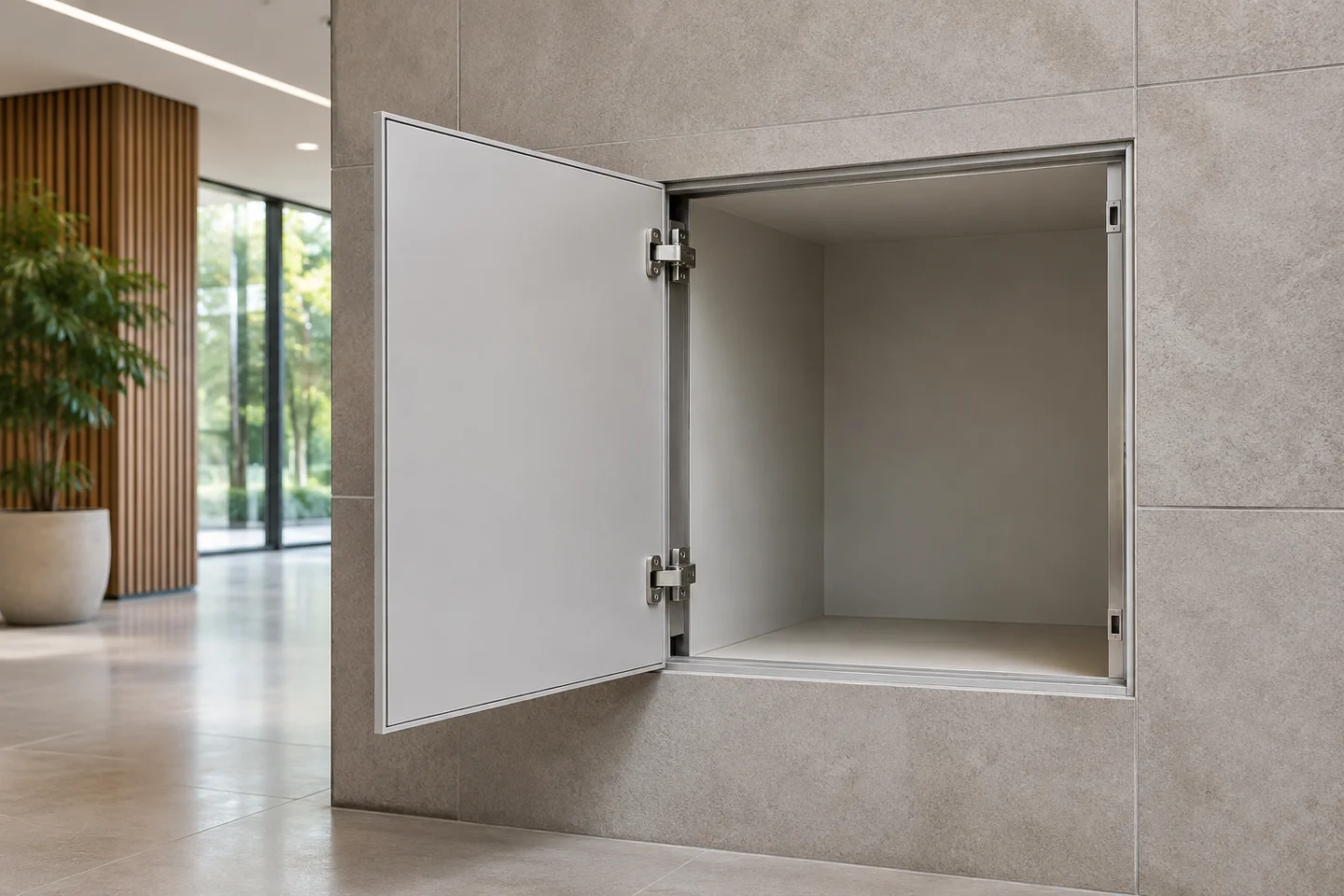
Mark the approach path, working position, access opening and extraction direction on a plan and section. For the proposed enclosure or diffuser, show the space needed to open it, withdraw the largest replaceable item and hold it securely. Check for obstructions from finishes, adjacent services, signage and furniture in the anticipated operating layout. If the maintenance team needs an access platform or other equipment, have the appointed parties check the approach and working area.
Ask the fabricator to mark the points that require simultaneous access. A component that can be seen through a hatch may be too large to remove through it, or may need support before it is released. Include these steps in a physical mockup or a review with representative parts and the people responsible for the service method.
Compare integral and remote components
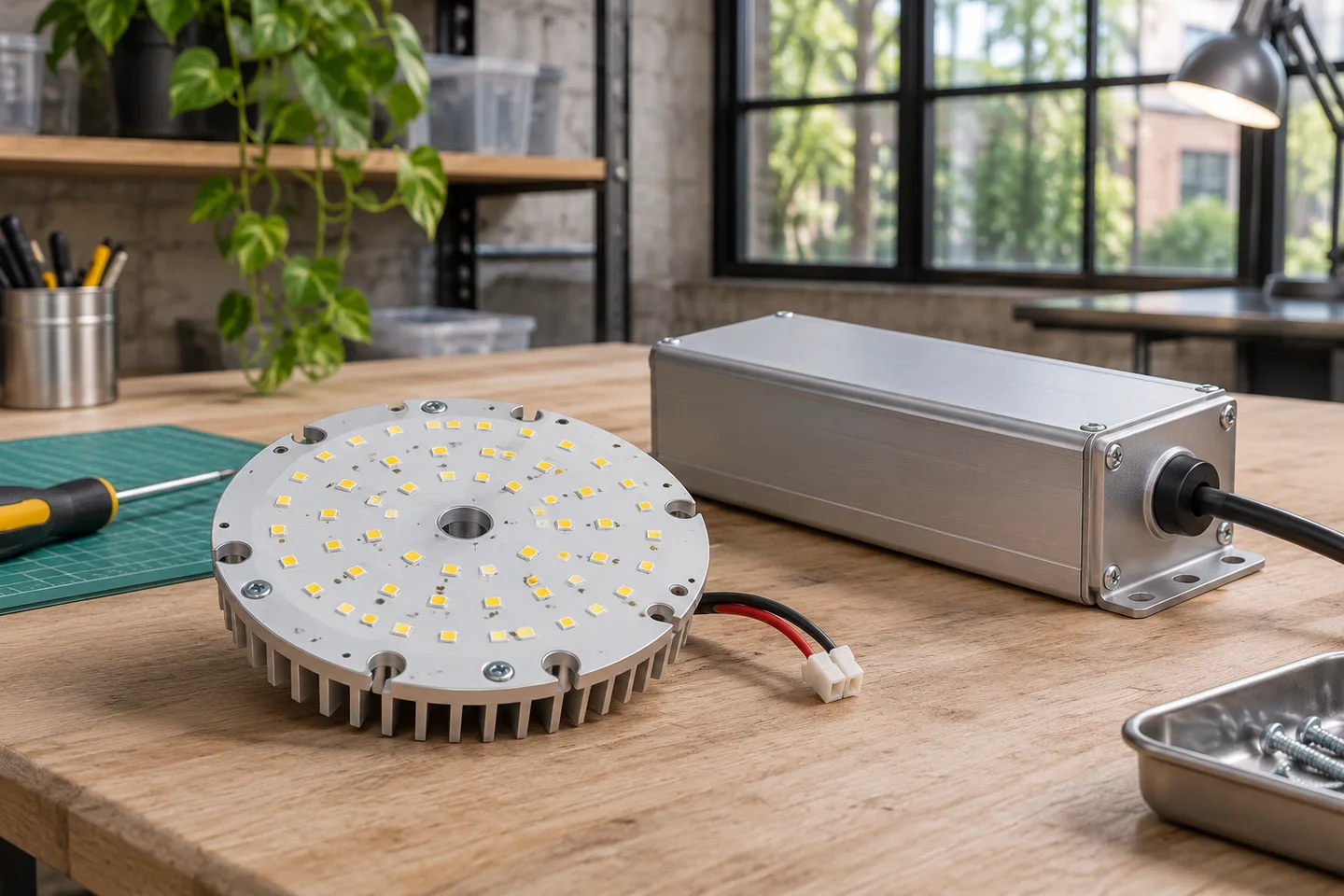
An integral arrangement can keep connections concentrated at the sculpture, but the component must be reachable and removable from that position. A remote driver can put one serviceable item in a more convenient place. The selected equipment may impose limits on its installation and lead arrangement, and the route still needs coordination with the building. Cooper Lighting publishes model-dependent constraints in its Lumiere WRx instructions. Have the lighting and electrical team verify the limits of the actual proposed system. Cooper Lighting instructions
| Item | What to mark on the drawing | What to confirm before release |
|---|---|---|
| Driver or power equipment | Location, enclosure ID and access opening | Compatible equipment and authorized service route |
| Light engine | Position, withdrawal direction and attachment access | Replacement method and visual comparison reference |
| Controls | Equipment ID, control zone and responsible trade | Settings record and functional test responsibilities |
| Diffuser and decorative cover | Removal path, protection and storage location during service | Handling procedure and appearance after reinstatement |
Identify the scope boundary at every connection
Use a one-page interface schedule to show which party provides equipment and which party verifies, installs, connects and commissions it. Ask the electrical team to confirm the equipment, installation and isolation requirements for the actual project. Include the approved control intent and define which supplier provides configuration records. Where the light and sculpture have different suppliers, have both identify the documents they need from each other.
Inter-lux distinguishes its supplied drivers from alternatives in its remote housing instructions. Treat that as a prompt to keep the product identification and approved combinations in the handover schedule. A substitute with a similar shape may still be unsuitable for the project. Ask the responsible team to review the equipment and its supporting documentation before accepting a change. Inter-lux remote housing instructions
Approve what the replacement should look like
Keep an appearance reference that the service team can actually use. Record the approved finish and diffuser revision, representative lighting scenes, viewing angles and what the owner considers an acceptable match. Include photographs as orientation aids and keep any agreed physical reference identified by revision. Ask the owner and designer to decide how to review replacements alongside older elements that have already been in use.
Make the procedure specific enough to resolve a dispute about appearance. For example, if a spare looks similar on a bench, compare it under the approved display settings and from the agreed audience positions before accepting the result. Record any visible difference and who approves it. The finish sample approval guide provides a complementary review process for the finish itself.

Keep operations in the review loop
Invite the facilities representative before finalizing equipment locations. The maintenance staff can explain normal opening hours, where a working zone can be secured and what route is available for access equipment. A driver above a quiet back-of-house corridor may be attractive if the selected system and building layout allow it. Another design may favor an integral module and require maintenance outside public hours. Ask the owner to compare both options with the same service scenario.
Record the assumption behind each choice. If the building team is relying on a removable panel, document its final opening and who controls access. If the design relies on a special service tool, include that item in the owner handover and identify how it is stored. Place access and replacement review on the approval agenda before permanent finishes conceal the service area.
Rehearse a component change before closeout
Ask the project team to demonstrate the approved removal path with representative equipment or a mockup when appropriate. Check that the part is correctly identified, can be brought to the working position and can be reinstated without compromising the appearance approval. Have the responsible team demonstrate the functional checks and document the results. This review is an opportunity to find a trim collision or ambiguous label while the project team can still correct it.
For an overhead work, coordinate electrical service access with the separate artwork support and inspection provisions. The same platform or route may be useful, but the responsible professionals should verify each activity and its scope. Use the suspended sculpture coordination guide to connect these records to the wider ceiling and installation pack.

Work through a late driver relocation
Imagine that a proposed ceiling hatch is moved to suit a revised ceiling layout. The new location looks reachable, but the routing distance to the sculpture changes and the proposed working position now overlaps a fixed counter. Record the revision and send it to the lighting and electrical team to review against the actual equipment. Have the owner and access team reassess the approach and working zone. If the previous component location is superseded, update the equipment schedule and the approved handover drawing together.
Ask the fabricator to confirm whether the relocation changes anything in its scope. Keep the agreed light output and appearance criteria visible to the reviewers while they close the access issue. Release the changed interface only when its reviewers have documented the result and the installation team has received the revised sheet.
Make the handover useful when a part fails
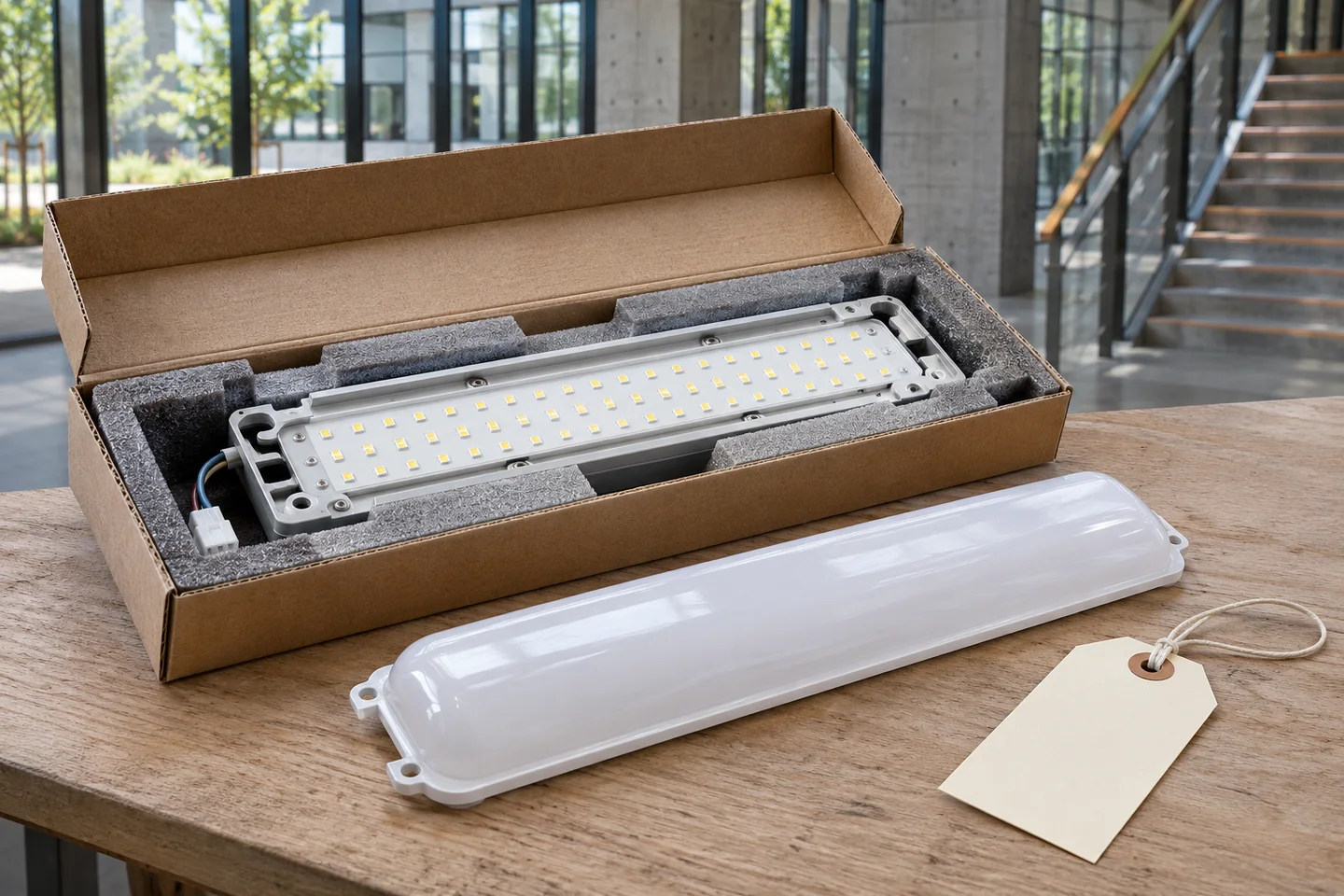
Give facilities a register with the installed location, equipment ID, approved part reference, supplier documentation and instructions for requesting a replacement. Include a drawing that locates each service point and a record of the final checks. Assign responsibility for reviewing proposed substitutions and keeping settings records available. Store retained samples and spare components so they can be matched to the correct element and revision.
Ask the buyer to attach the access worksheet to the quotation request, including the operating hours, intended site, service scenarios and ceiling constraints. Ask suppliers to state which documents they can provide and what input they need from the electrical, ceiling or access teams. Resolve these gaps while the project still has time to change the layout.
Record the equipment that was actually fitted, including any accepted substitution. Index records by service point so the same ID appears on the drawing, the physical label where practical and the spare inventory. Ask facilities to record the date and reason for a replacement along with the observed result. If the original equipment becomes unavailable, route the proposed replacement through the agreed technical and appearance review process. This gives the owner a record of how the installation has changed and which parts can still be ordered against an approved reference.
Download the coordination worksheet
Download the editable CSV. Use one row for each interface and record the drawing revision, evidence and responsible reviewer before release.
Browse relevant sculpture references or share the current plans and constraints for a scoped review.
FAQ
What should an illuminated sculpture access plan show?
Show the serviceable components, access opening, working position, removal direction, equipment IDs and the party responsible for each approved interface.
Should the driver always be remote?
Compare integral and remote options with the project team. Confirm the selected equipment, routing limits, access and commissioning scope for the actual installation.
Is a hatch enough?
Check the whole working and extraction route with representative components. Confirm the opening, obstructions, handling space and reinstatement method.
What should facilities receive at handover?
Provide installed drawings, an equipment register, approved replacement references, service instructions, access details and commissioning records.