Sculpture Maintenance & Inspection: A Facilities Manager's Guide
Nearly every guide to caring for sculpture is written for someone with one bronze on a hall table. Dust it weekly with a microfibre cloth, they say. That advice is not wrong, and it is completely useless if you are responsible for eleven pieces across three properties, one of which is four metres up in an atrium, and you have been asked what the annual line item should be. This guide is for that reader: what actually degrades and how fast, what your own team can safely do, where the line is that needs a conservator, how to write the scope into a contract, and what to budget.
Maintenance Is a Procurement Problem, Not a Cleaning Problem
Sculpture rarely fails suddenly. It degrades on a timescale long enough that no single person owns the decline: the project manager who commissioned it has moved on, the facilities team inherited a crate and a thank-you letter, and there is no line in the planned preventative maintenance schedule because nobody classified an artwork as an asset.
Five years later the piece looks tired, someone gets a quote for “restoration”, and the number is a shock — because deferred maintenance on artwork is not linear. A waxed bronze that is re-waxed annually costs very little. The same bronze left for eight years needs stripping and re-patination, which is conservation work at conservation rates.
The cheapest intervention is a clipboard. Most of what goes wrong with outdoor sculpture is visible a year before it becomes expensive: a weeping stain, a slack cable, a lifted edge, standing water where there should not be any. A twice-yearly walk-round with a checklist catches nearly all of it.
What Actually Degrades, by Material
Different materials fail in different ways and on different clocks. Treating them all as “the sculptures” is how the wrong product ends up on the wrong surface.
| Material | How it degrades | Early warning sign | Routine care |
|---|---|---|---|
| Bronze with patina | Wax breaks down; patina then reacts with pollution, salt and bird droppings; green streaking and pitting follow | Surface looks dry and dull rather than softly lustrous | Wash and re-wax annually; more often at the coast |
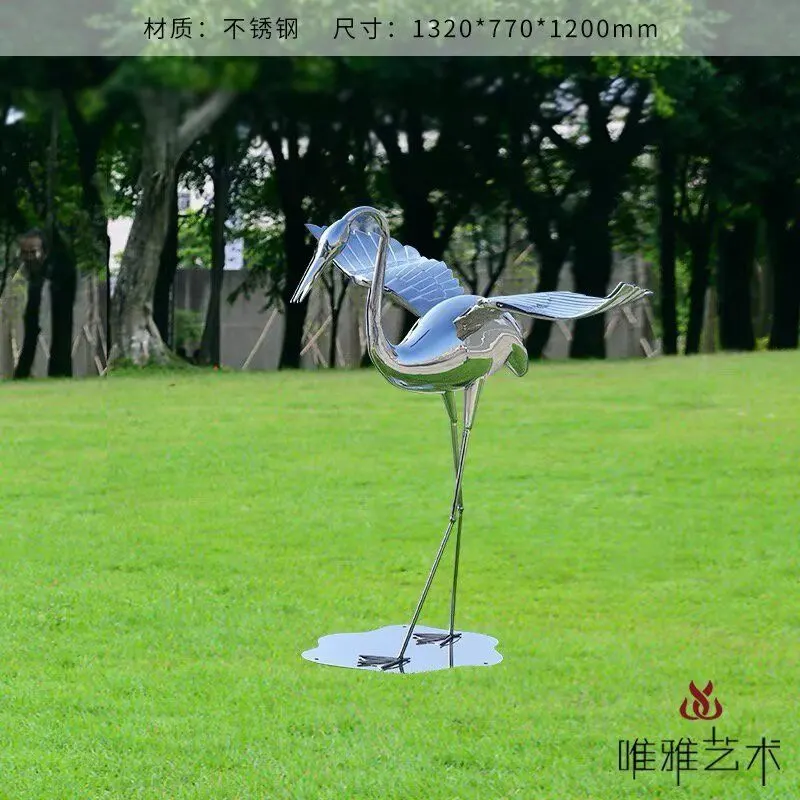
| Stainless steel | Tea staining and pitting from chlorides; scratches from cleaning with the wrong pad | Faint brown speckling, usually on sheltered faces that rain never rinses | Wash with pH-neutral detergent; rinse and dry; never use steel wool |
| Painted / coated work (FRP, steel) | UV chalking, gloss loss, then colour fade; edge chipping from contact | Colour looks powdery when wiped with a damp cloth | Gentle wash; keep a touch-up kit from the original batch |
| Fiberglass (FRP) | Coating fails first; if left, UV reaches the laminate and fibres bloom at edges | Chalky patches or hairline crazing at high spots | Wash; re-clear or re-coat every few years outdoors |
| Corten / weathering steel | Patina is the finish, but run-off stains adjacent surfaces; water traps cause perforation | Rust staining spreading onto paving below | Keep drainage clear; do not attempt to clean the patina off |
| Stone & marble | Biological growth, soiling, salt crystallisation; freeze-thaw damage at fine detail | Green or black film in shaded areas | Soft brush and water; no acids, no pressure washing |
| Aluminium | Coating failure; galvanic corrosion at dissimilar-metal fixings | White powdery bloom near bolts | Wash; check fixing isolation annually |
| Suspended & mechanical work | Cable, fitting and bond wear; fixings loosen under vibration | Piece hangs visibly out of level, or a new noise appears | Competent rigger inspection annually — not a cleaning task |
The Inspection Regime
A workable regime has four tiers. Most organisations only ever implement the first and the last, then wonder why the middle disappeared into a capital request.
The two middle tiers are the ones that get cut, and they are the ones that hold the value. A conservator's five-year survey is diagnostic; it tells you what has already happened. The annual clean is what stops it happening.
In-House or Conservator? The Line
Facilities teams are often more capable than they are permitted to be, and occasionally the reverse. The safe division is not about skill — it is about reversibility.
Two prohibitions are worth writing into the cleaning schedule in capitals, because they are the most common ways a well-meaning team causes damage:
- No pressure washing. It drives water into joints, strips wax and patina, and erodes stone detail. Almost every “the sculpture looks worse after we cleaned it” call traces back to a pressure washer.
- No general-purpose cleaning chemicals. Metal polish, brass cleaner, furniture polish, silicone spray, acidic descalers and solvent wipes all attack one finish or another. Water and a pH-neutral detergent is the safe default for every material in the table above.
Surfaces are built in the workshop — knowing how a finish was made is what tells you how to look after it.
The Annual Clean, Material by Material
| Material | Do | Never |
|---|---|---|
| Bronze | Rinse, wash with pH-neutral detergent, dry thoroughly, then apply microcrystalline wax and buff | Metal polish, brass cleaner, acids, or anything abrasive — they remove patina permanently |
| Stainless steel | pH-neutral detergent, soft sponge, rinse and dry immediately; work along the grain on brushed finishes | Steel wool, wire brushes, chloride-based cleaners; leaving it to air-dry in hard water |
| Painted / coated | Warm water, mild detergent, soft cloth; touch up chips promptly with the retained batch | Solvents, scouring pads, and any attempt to polish out a scratch in a clear coat |
| Fiberglass | As above; check for crazing at high spots and re-coat before the laminate is exposed | Aggressive solvents; ignoring chalking for years |
| Corten | Sweep debris from ledges, keep drainage paths clear, rinse adjacent paving | Trying to remove the rust; sealing it without specialist advice |
| Stone | Soft brush, plain water, patience; biological growth may need a conservator-specified biocide | Pressure washing, acids, household bleach, wire brushes |
Writing the Contract Scope
Most maintenance contracts describe frequency and forget to describe outcome. A scope that works has five parts:
- An asset register. Each piece: location, material, finish, dimensions, weight, install date, fabricator, and whether it is suspended or fixed.
- Method by material, not one generic method. Reference the fabricator's care sheet where one exists.
- Frequency and access. Who provides the access equipment, and who holds the permit for work at height — this is the clause most often left blank.
- Reporting. Photographs from fixed viewpoints each visit, a condition note per piece, and an escalation route for anything outside scope.
- Exclusions. State explicitly that patina work, structural repair and re-coating are not included, so nobody improvises.
Photograph from the same spot every time. Slow degradation is invisible in person and obvious in a sequence of images. Mark the viewpoints once, and a five-year decline becomes a decision you can take deliberately rather than a surprise.
What to Budget
Nobody publishes reliable percentages, and anyone who quotes one confidently is guessing. What is dependable is the shape of the cost:
| Item | Cadence | Cost driver |
|---|---|---|
| Walk-round inspection | Twice yearly | Staff time only — effectively free |
| Clean & wax | Annual | Size, access and material; access usually costs more than the work |
| Access equipment | Per visit, where needed | Frequently the largest single line for tall or suspended pieces |
| Rigging inspection | Annual, suspended work only | Competent-person day rate plus access |
| Condition survey | Every 5 years | Conservator time; scales with number of pieces, not size |
| Touch-up materials | As needed | Trivial — if the original batch was retained at handover |
| Deferred-maintenance repair | Unplanned | The one that hurts; scales with how long it was deferred |
Two structural points make the budget easier to defend. First, batch the access: cleaning three atrium pieces on one lift hire costs far less than three separate mobilisations, so align the schedule across the portfolio. Second, put artwork into the planned maintenance system rather than treating each intervention as a project — a recurring modest line is approved routinely, while an occasional large one is scrutinised and deferred, which is exactly the cycle that creates the large one.
For public collections, the published guidance is genuinely useful reading: the US General Services Administration's care and maintenance recommendations for fine art collections sets out the cyclical model in detail, and the Association for Public Art documents how a city-scale programme runs in practice. For bronze specifically, the conservation literature on outdoor bronze is a good primer on why wax matters so much.
The Handover Pack You Should Have Asked For
If the artwork is already installed and you inherited nothing, request this retrospectively — most fabricators can produce it. If a new piece is being commissioned, make it a deliverable.
Specification sheet
Materials, finish system with product references and colour codes, dimensions, dry and serviced weight.
Care instructions
Written by the fabricator, material-specific, naming approved and prohibited products.
Fixing and structural details
How it is anchored, what the loads are, and what must be inspected at height.
Touch-up materials
A litre of the exact batch colour or a kilo of powder. Costs almost nothing at handover, invaluable in year four.
Baseline photographs
The piece on day one, from the viewpoints you will re-shoot every inspection.
Contacts
Fabricator, installer and structural engineer — with the project reference that lets them find the file.
Frequently Asked Questions
How often should outdoor sculpture be cleaned?
Once a year is the workable default for most materials in a temperate urban setting, with a visual walk-round every six months in between. Coastal sites, city-centre locations with heavy pollution, and anything within reach of irrigation or de-icing salt should move to twice-yearly cleaning. Suspended and kinetic work needs an annual close inspection by a competent rigger regardless of how clean it looks.
Can our own cleaning team look after the sculptures?
For inspection, washing with water and pH-neutral detergent, clearing drainage and reporting, yes — and that covers most of what actually protects the work. The line is reversibility: anything that alters a surface rather than removing dirt from it should go to a specialist. That means no patina work, no stripping or re-coating, no corrosion treatment and no stone cleaning by in-house staff.
Why is pressure washing so strongly discouraged?
Because it does three things at once: it drives water into joints and cavities where it sits and freezes, it strips protective wax and can remove patina, and on stone it erodes fine carved detail irreversibly. It also makes the piece look better for about a week, which is why it keeps happening. Water, a soft sponge and a pH-neutral detergent achieve more with none of the harm.
What does it cost to maintain a sculpture each year?
The honest answer is that access usually costs more than the work. A ground-level piece may need only a few hours of a trained cleaner's time plus materials; the same piece four metres up in an atrium needs a lift, a permit and a night-work window, which can multiply the figure several times over. The practical lever is batching: clean everything that needs the same access equipment on the same visit.
We inherited a sculpture with no documentation. Where do we start?
Start with a photographic baseline and a condition note, then try to identify the fabricator — a maker's mark, the original purchase order or the project file will usually get you there. Most fabricators can reissue a specification and care sheet years later. Until you know the finish system, treat it conservatively: water and pH-neutral detergent only, and no chemical products at all.
Is deferred maintenance really that much more expensive?
Yes, because the cost is not linear. An annually waxed bronze needs washing and re-waxing. The same bronze neglected for years may need corrosion treatment and re-patination, which is conservator work at conservator rates and takes the piece out of service. The same pattern holds for coated work: touching up a chip is trivial, while re-coating an entire sculpture after the coating has failed is close to the cost of the original finishing.
Share the artwork reference, intended setting and approval requirements to discuss a project-specific scope. Material systems, supporting documents and installation responsibilities must be confirmed for your project with the appointed professionals.
Related reading: finishes for what you are actually maintaining, bases and foundations where most outdoor problems begin, and suspended sculpture for the inspection regime overhead work requires.