Metallic-Finish FRP Sculpture: Sample Approval Before Ordering
Use this guide to turn a metallic appearance reference into a documented FRP sampling request, with separate visual, technical and quotation decisions.
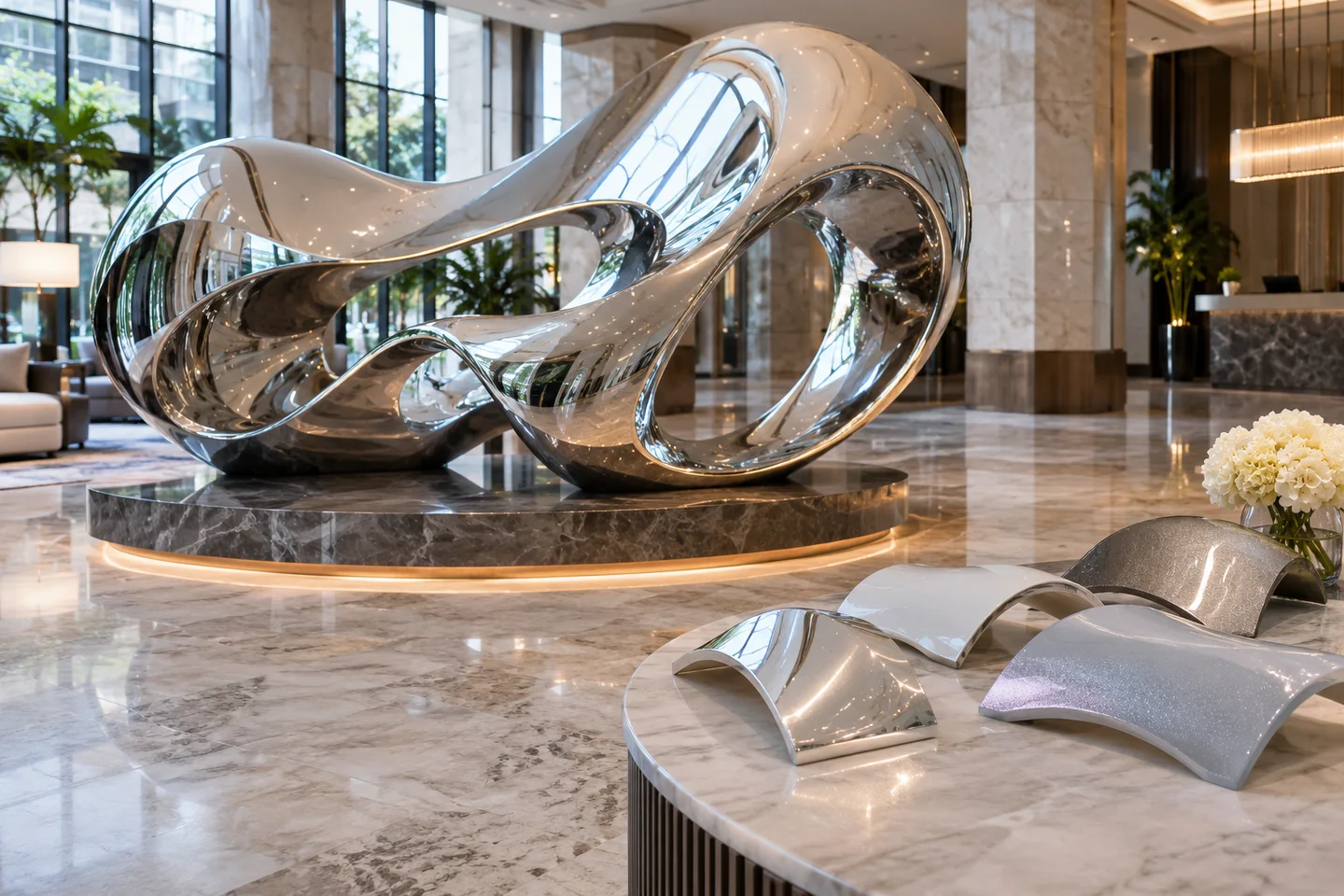
Separate the desired appearance from the proposed process
An inquiry for an electroplated fiberglass sculpture finish sample often combines several different questions. The designer wants a metallic appearance, procurement needs a comparable scope and the operator needs to know what can be touched or cleaned. Begin by separating those decisions. A silver-looking object can be visually appealing without the photograph identifying how its surface was produced or how it should be maintained.
Use the metallic-finish abstract FRP references to identify a preferred shape and visual direction. The existing collection includes reflective and metallic-looking references; its category name is not evidence of a verified process for a new order. Ask for the actual substrate and surface proposal. If a named process is important to the specification, obtain a written response and supporting project evidence rather than accepting a marketing label as a technical description.
This guide is for architects, designers and procurement teams selecting custom artwork for hospitality, retail and other managed spaces. It is an approval and quotation tool, not a coating formula, a test standard or a promise of a service that has not been confirmed. The aim is to make appearance decisions explicit while keeping process, suitability and operating conditions open for the appropriate specialists.
Compare finish routes without treating them as interchangeable
A metallic color, reflective surface and metal-containing surface are different descriptions. Ask what the proposed surface system actually is and which evidence identifies it. Do not group painting, metal-powder effects, deposition and plating under one assumed performance claim. Even when two samples look similar, their construction, care requirements and response to the intended setting may differ.
Smooth-On's decorative cold-cast panel example illustrates one route in which resin and metal powder create a metallic effect. It is an example from a material supplier, not evidence that Weiya uses that method on this FRP collection. The procurement inference is narrower: visual resemblance alone cannot identify a process. Do not copy the tutorial as a production instruction or apply its finishing steps to an unidentified artwork surface.
| Brief language | What it describes | What to confirm separately |
|---|---|---|
| Silver or bronze appearance | A visual color direction | Actual surface system and accepted reference |
| Reflective or satin | An intended optical effect | Sample preparation, texture and lighting |
| FRP substrate | A proposed composite material family | Actual construction and application-specific suitability |
| Named plating or coating process | A requested or proposed method | Written confirmation and relevant evidence |
Use the comparison diagram to keep the visual reference and the documented proposal distinct. Neither side of the comparison replaces a representative physical review.
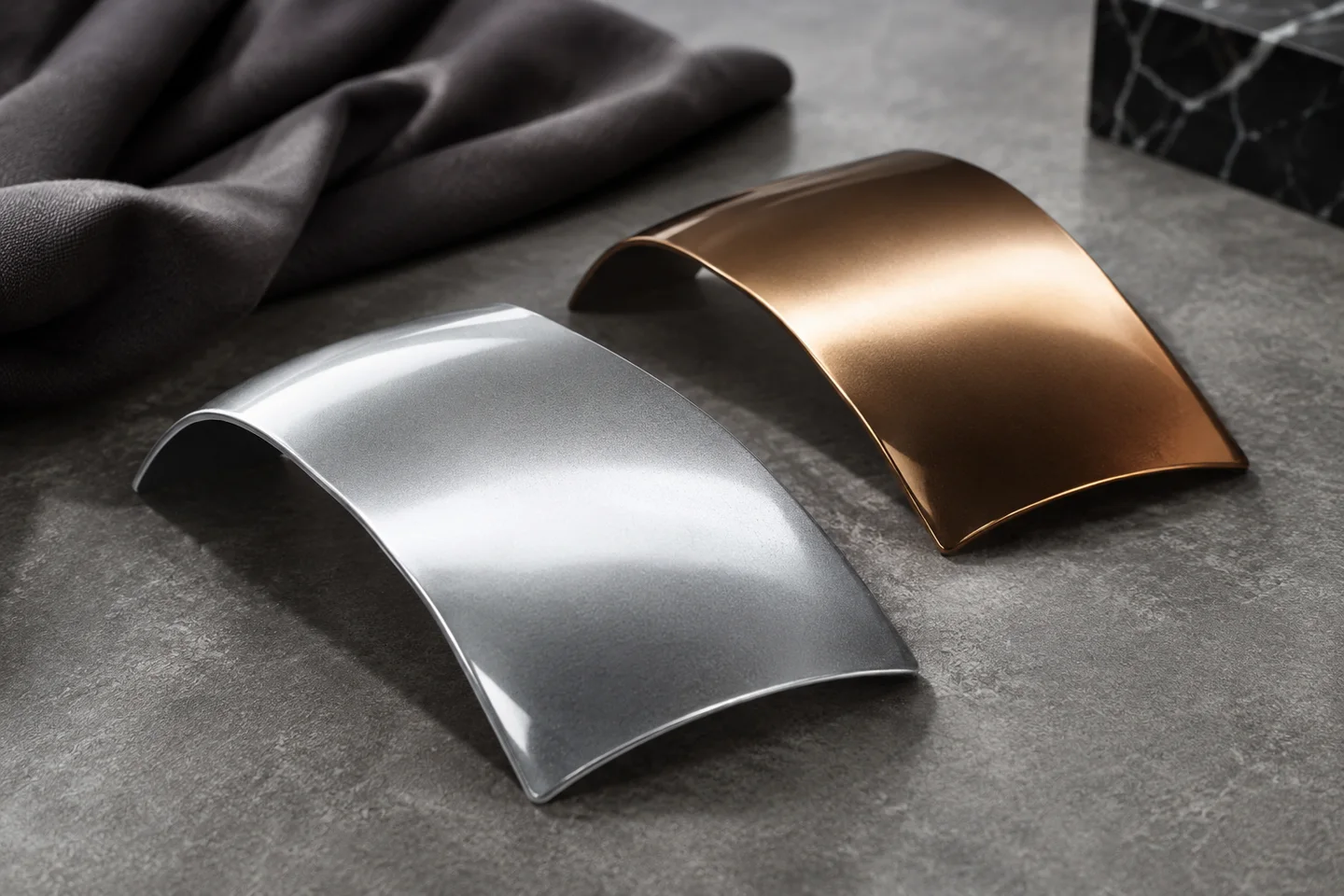
Request a sample that represents the difficult geometry
A flat chip is useful for an initial color conversation but may not represent a deep recess, tight curve, seam or edge on the final form. Ask which features the sample includes and which it leaves unresolved. Where the visual risk is concentrated in a curved or joined area, request a representative section or another agreed demonstration rather than assuming that a small flat panel approves every detail.
Identify each sample with a project reference, preparation revision and date. Keep the physical sample and its photographs connected to the same record. If several bidders submit different shapes, explain what can and cannot be compared fairly. A smoother or differently curved sample can produce a different visual impression even when both are described by the same color name.
Do not turn the request into an unsupported demand for a universal thickness, bond strength or service life. If measurable performance is part of the project requirement, ask the responsible technical reviewer to identify relevant methods, acceptance criteria and evidence for the actual system. Record whether that evidence is supplied, excluded or pending. A sample that looks convincing is an appearance reference, not automatically a certificate of technical compliance.
Review under the lighting and viewing conditions that matter
Reflective forms show their surroundings as well as their own shape. Record the planned light sources, background and viewing positions. Compare samples in the same setting, with the same orientation and a consistent reference where useful. If the actual room is unavailable, state which temporary conditions were used and which later confirmation remains necessary.
Look at an overall view, a normal approach view and the details that control the design decision. A close inspection can reveal texture or seam information while an overall view tests whether the intended silhouette and reflectivity work together. Keep those purposes separate rather than letting one dramatic photograph govern every approval. The project lighting and finish sample guide provides the broader recording framework.
Smooth-On's metal-effect examples explicitly treat photographs as approximations of appearance. That is a useful reminder when reviewing a supplier gallery, even though those products and methods are not the same as a proposed FRP finish. Keep image files as supporting communication and identify the physical or other agreed acceptance reference that governs the actual order.

Define the visible faces, seams and acceptable variation
Mark primary viewing faces and areas that may normally be concealed. Describe whether joins, recessed areas, texture transitions or the underside need appearance approval. A rendering can hide a seam or show an ideal reflection that does not document how an assembled object will be reviewed. Ask for the proposed joint locations and how the relevant appearance will be represented before release.
Record agreed variation in practical terms with an identified sample or view. Avoid vague instructions such as perfect mirror everywhere when the parties have not discussed form, access, joints and viewing conditions. Equally, do not allow a broad phrase such as handmade variation to close every question. The authorized reviewer should identify which observations are accepted and which need a revised sample or clarification.
Use a decision record that identifies the exact version being reviewed. If the geometry changes after sample approval, ask whether the earlier sample remains representative. A color decision should not silently approve a different seam arrangement, and a shape signature should not automatically approve a new surface system. The design-freeze guide explains how separate decisions can be controlled through a common revision record.
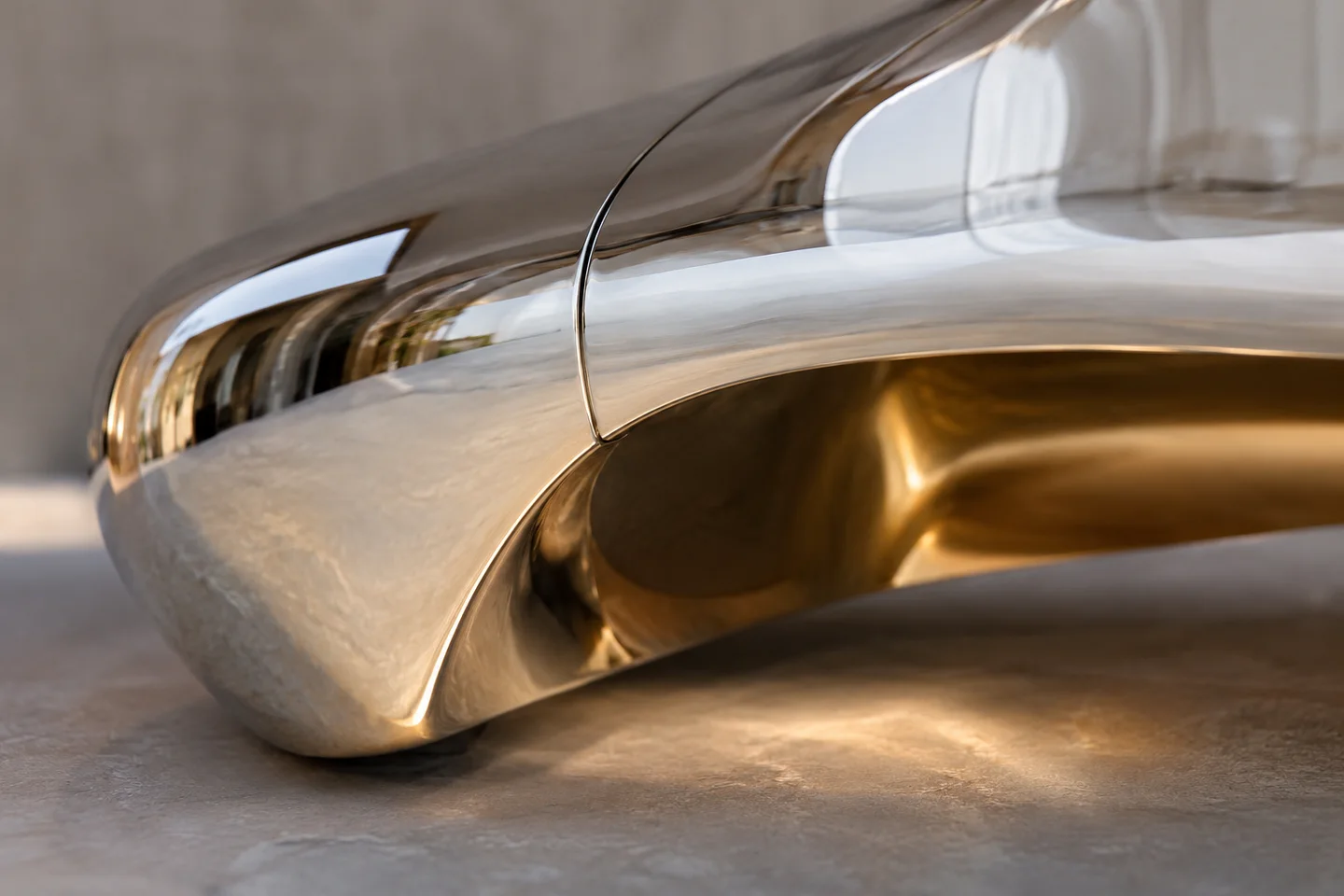
Describe contact, cleaning and exposure before selecting
Provide the intended location and the conditions that affect selection: indoor or outdoor display, access by visitors, cleaning routines, nearby moisture and any known environmental exposure. Ask the proposed provider to state suitability and limitations for the actual system and setting. Neither FRP nor a metallic-looking surface is a universal promise of outdoor performance, resistance to contact or simple repair.
Request care instructions that identify the supplied finish and distinguish permitted routine actions from tasks requiring advice. Do not assume that a metal polish is appropriate because the surface resembles metal. Avoid selecting cleaning chemicals or abrasive methods from an unrelated tutorial. The relevant specialist should identify the actual surface and the operating conditions before advising on maintenance or an appearance trial.
If the artwork can be touched, describe how visitors are expected to encounter it and which faces are accessible. If the design relies on a protected display position, record who provides that arrangement. Ask how a later mark or surface change should be reported, keeping the original sample and handover records available. The handover document pack guide links appearance approval to the information needed by facilities staff.
Use an approval matrix that does not overstate a signature
Record visual approval, technical review and commercial scope as separate decisions with named owners. Procurement can confirm that a sample arrived without being authorized to accept its appearance. A designer can select a sheen without confirming a concealed support. A provider can offer a finish direction while still needing location information before confirming suitability.
| Decision | Reviewer to identify | Evidence before release |
|---|---|---|
| Visual direction | Authorized designer or owner representative | Identified sample and viewing notes |
| Process and substrate proposal | Proposed provider and relevant specialists | Written system description and open limitations |
| Contact and location fit | Owner and appointed technical reviewers | Actual setting and operating assumptions |
| Quote inclusions | Procurement and bidder | Sampling, revisions, packing and delivery scope |
| Care handover | Facilities representative | Applicable instructions and escalation contact |
These are planning roles, not an assertion that Weiya supplies every review or test. The flow diagram gives a simple sequence from brief to sample review and controlled release. Where a technical question remains unanswered, preserve that question in the register instead of using a visual signature to close it by implication.
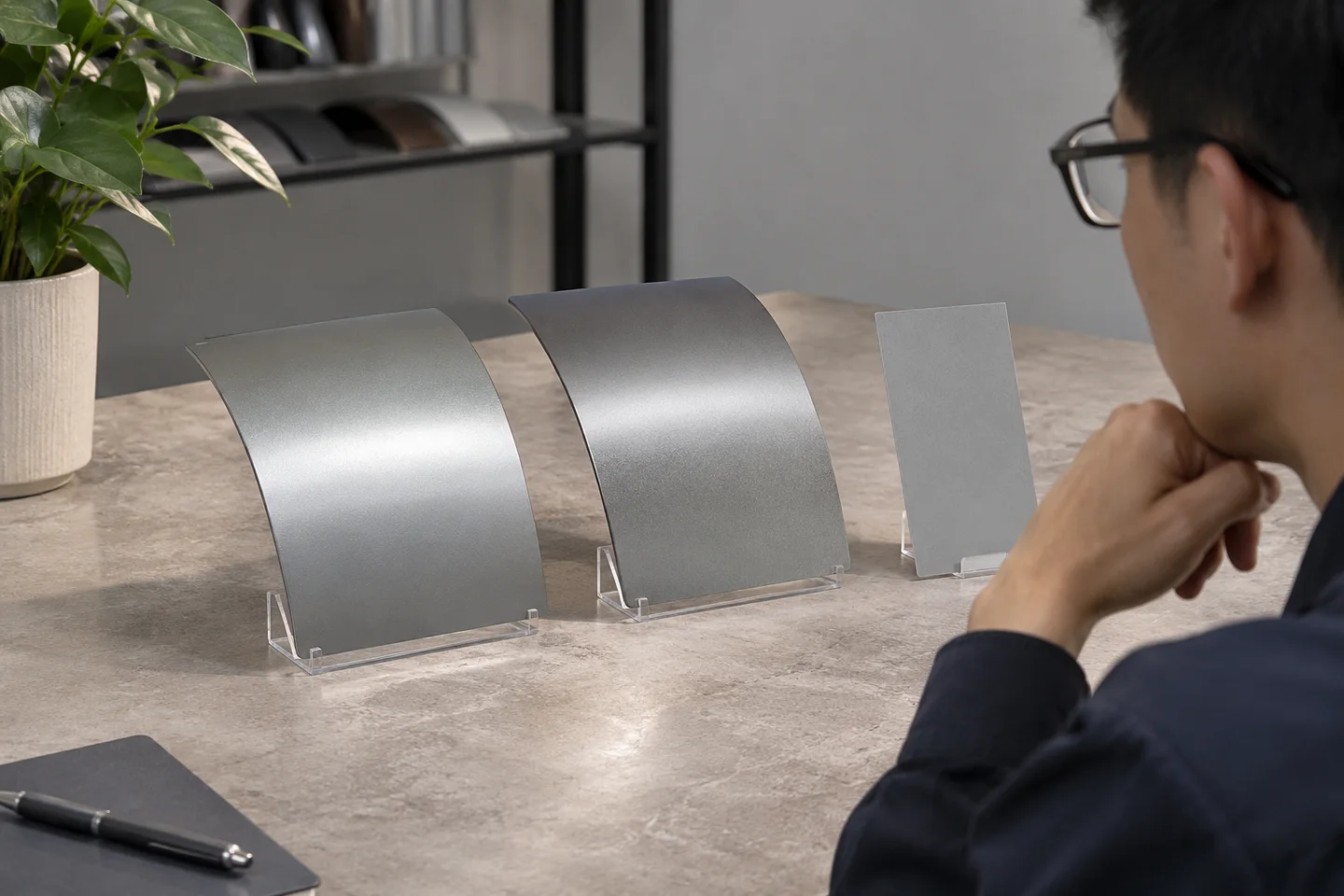
Make sample quotations comparable and changes traceable
Give each bidder the same shape reference, intended dimensions, quantity, surface direction and display conditions. Ask what the sampling offer includes: a flat chip, curved section, maquette or another defined deliverable. Clarify how revisions are handled, which sample is retained and which decisions must precede production. Do not assume that a quotation includes unlimited sampling or identical treatment of every change.
Connect the selected sample to the proposed full artwork and identify any remaining limitations. If there is a difference between the approved small sample and a later production-stage review, record it as a question requiring a response. Do not retrospectively replace the original reference with the newer photograph merely because it is easier to circulate. Preserve the decision trail and the reason for each revision.
For custom metallic-looking FRP artwork, send the catalogue identifier and your sample scope with the inquiry. Ask for a project-specific response rather than demanding a fixed price or date based only on a reflective image. The actual proposal should identify assumptions and exclusions so the buyer can compare what is being offered before deciding which scope to approve.
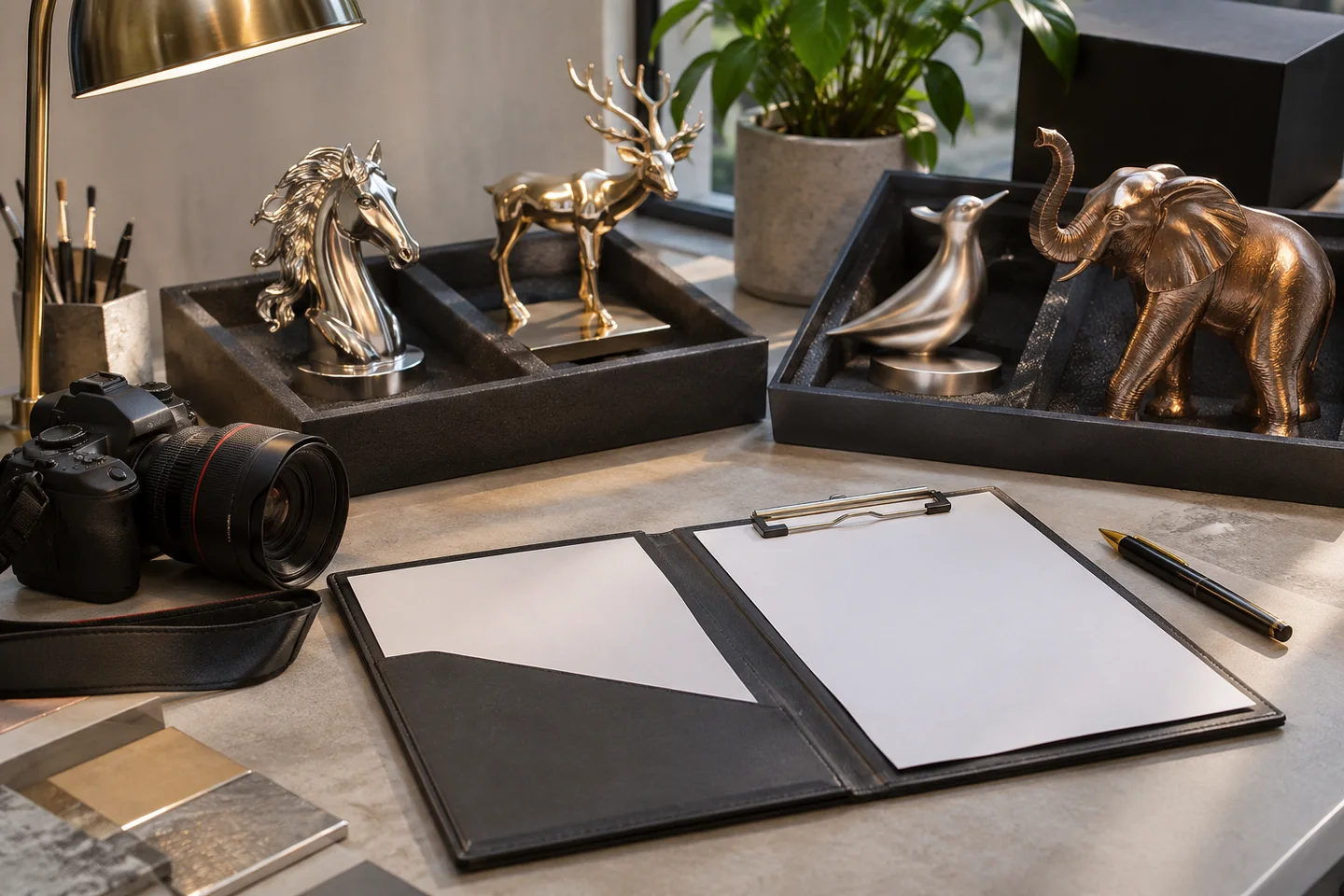
Use the worksheet to prepare the next review
The downloadable sample decision register is an original editable tool. Use one row for each visual or scope issue: substrate confirmation, process description, color direction, sheen, difficult geometry, viewing conditions, contact, care or outstanding technical evidence. Record the requested evidence, sample identifier, reviewer, decision and next action. An empty response is not the same as an accepted exclusion.
Before a meeting, identify the exact question each participant should answer. For example, the designer may need to accept a curved sample under a planned lamp, while procurement needs confirmation that the same sample scope is included in the quotation. A later technical review may still be required for the setting. These are hypothetical planning examples and do not describe an actual Weiya order or a proven coating result.
Close the meeting by listing accepted decisions and open actions separately. The next inquiry should include the authorized shape reference, dimensions, quantity, display and contact conditions, desired metallic appearance and sample requirements. Use the product and source-preserving project links below to request that discussion. Sample availability, actual finish method, suitability and any production commitment remain subject to explicit confirmation in the project proposal.
Download the FRP sample decision register
Download the editable CSV worksheet. Separate appearance acceptance from technical and quotation decisions. Identify the sample revision, reviewer, limitation and next action for each issue.
Explore metallic-finish FRP sculpture references and send the artwork reference and project requirements for a scoped inquiry.
FAQ
Does a reflective photograph prove that an FRP sculpture is electroplated?
No. Ask for the actual substrate and proposed finish system. Use the photograph as an appearance reference rather than proof of a deposition or plating method.
Is a flat sample sufficient for every sculptural form?
Not necessarily. Identify the curves, recesses, edges and seams that matter and ask how the sample represents them. Record features that still need another review.
Can I approve a finish from a screen image alone?
Record the acceptance method actually agreed for the project. Where physical appearance matters, request an identified sample and meaningful viewing conditions; photographs are supporting communication with limitations.
Can the facilities team use ordinary metal polish?
Do not infer a cleaning method from metallic appearance. Obtain instructions for the actual surface system and consult the responsible specialist before using chemicals or abrasives.
What should accompany the sampling inquiry?
Send the authorized form reference, dimensions, quantity, intended setting, contact conditions, appearance direction and sample scope. Identify the reviewer and the next decision needed without assuming a service or performance guarantee.