Sculpture Packing Requirements: A Buyer’s Crate Brief
For hotel, commercial and art procurement teams: asking for a strong wooden box leaves important decisions unanswered. The sculpture may have projecting features, a delicate surface, separate sections or a receiving route that changes what can travel together. This guide helps you brief the packing provider, compare the scope offered and organize the records needed by the receiving team. It is a procurement brief, not a crate construction drawing or a handling method.

Describe the object that will actually travel
Start with an artwork identifier and the current approved reference. List the parts expected in the shipment, including bases, decorative components, agreed hardware and documents. Identify which items are assembled for travel and which are separate. Keep proposed arrangements clearly marked until the responsible parties confirm them; a catalogue size describes an artwork, not necessarily its packed envelope.
Ask the supplier for the relevant dimensions, reported mass and their basis, together with any information the appointed packing and handling specialists need. Do not estimate these values from a photograph. Identify who will verify them and who receives a changed value. A small difference at an interface may affect a support arrangement even when the overall shape looks unchanged.
Distinguish the finished work, any transport frame and the final external package. Record which measurement belongs to each. The receiving team needs the actual configuration proposed for movement, including any separate packages, rather than a convenient dimension copied from an early design presentation.
Locate vulnerable features and surface questions
Provide an overall view and a simple location reference for projecting details, thin visual edges, finished faces, accessible openings and separate elements. Ask the maker to identify handling restrictions and where specialist advice is needed. A feature that looks substantial may be decorative; a shiny finish does not identify which wrapping or contact material is compatible with it.

Have the appointed packing specialist describe the proposed protection and support in relation to those features. Ask what contact is proposed, which areas must remain free and how the object is accessed without disturbing delicate details. Keep those answers tied to the current artwork issue. Do not prescribe foam type, timber thickness, fastener spacing or lifting points from a generic blog diagram.
Hedley’s published service description distinguishes packing and condition-reporting provisions across different service scopes. The useful buying lesson is to ask what is included in your actual offer. Its descriptions are not a universal packaging specification, a transport guarantee or evidence of a relationship with Weiya.
Connect packing decisions to the receiving route
Send the packing and logistics teams the receiving restrictions that are already known: the agreed delivery point, access window, available holding area and route evidence. Ask them to resolve how the proposed package reaches that point and whether it must be opened before any later movement. A package can be suitable for one transport stage while its dimensions or opening arrangement conflict with the next stage.
Use the hotel sculpture access survey for doors, turns, lifts and venue coordination. This brief addresses the package that will use that route. Keep route feasibility, protection of the artwork and protection of the building as linked but separate questions, each assigned to the appropriate reviewer.
If the proposal changes to sectional travel or a different orientation, reopen affected design, packing and handling decisions. Ask who confirms the revised arrangement and who updates the component list. A change made to solve a doorway problem should not silently invalidate a surface approval, an assembly plan or the identity of the pieces expected at the destination.
Plan how the crate will be opened and retained
Request opening information appropriate to the actual package. Identify the intended opening face, the sequence information supplied by the provider and the people qualified or authorized to do the work. Ask what clear space, equipment and access are required at the receiving location. Record these as provider-confirmed requirements, not assumptions drawn from a picture of a removable lid.
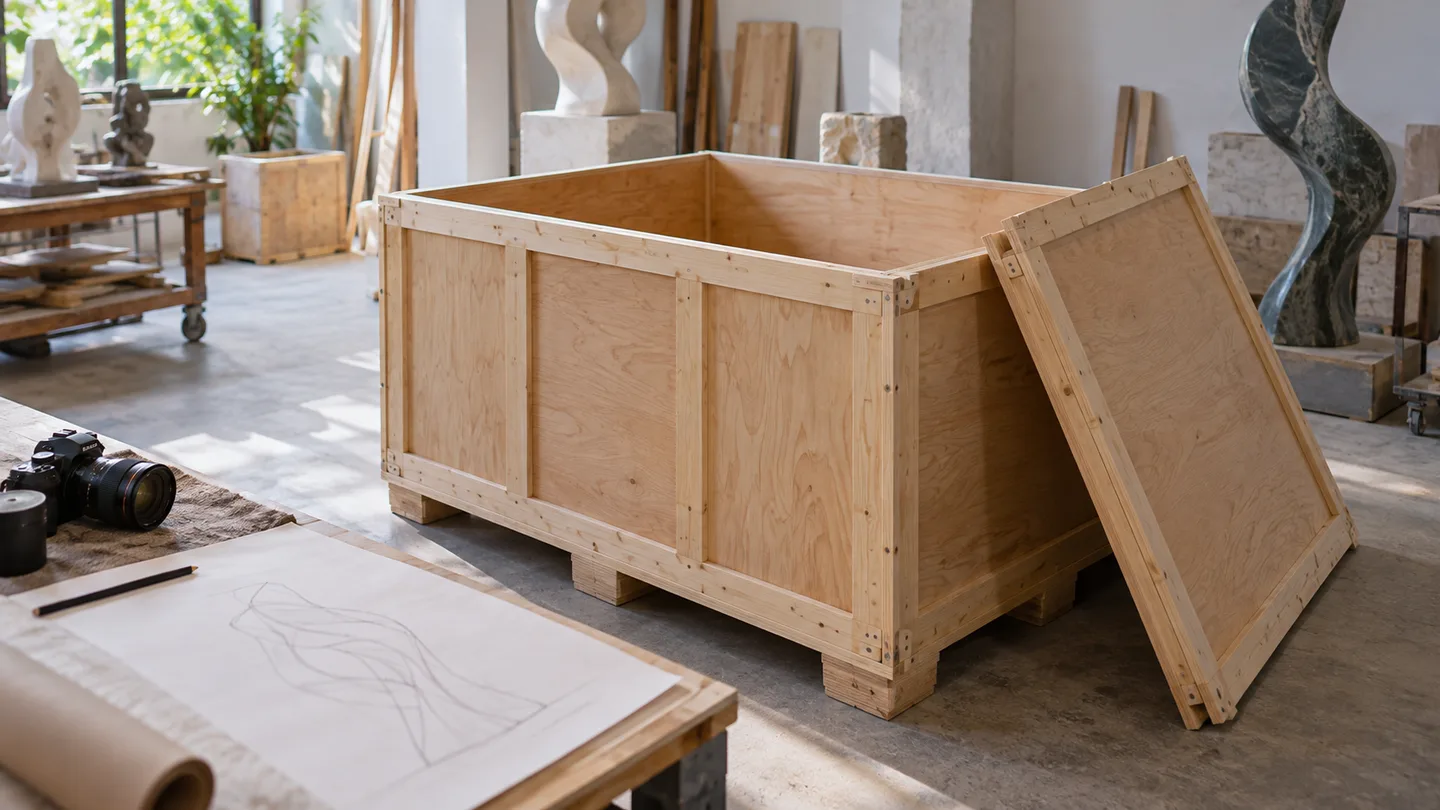
Agree whether the crate and protection are retained for later movement, return, repair or disposal. Identify where retained parts will be stored and how they remain linked to the artwork. Reusable packaging is only useful when the next team can identify the parts and obtain the relevant instructions. Do not assume a package is suitable for a different orientation, new artwork or changed journey merely because it can be closed again.
Main Field Projects lists packing, crating, storage and installation as distinct services. That separation is useful when reviewing a quotation: supplying a crate does not by itself confirm who unpacks, stores it or assembles the work. Our brief turns those questions into named actions instead of treating every service as part of one undefined delivery.
Retain condition and package identity at the transition
Agree what condition evidence will be recorded before the work is concealed. Link the overall object, relevant details, item identifiers and record date to the packing issue. Keep the original files and observations available to the receiving team. If an area was inaccessible or a question remained open, state that limitation instead of using a general “good condition” label that appears to cover everything.
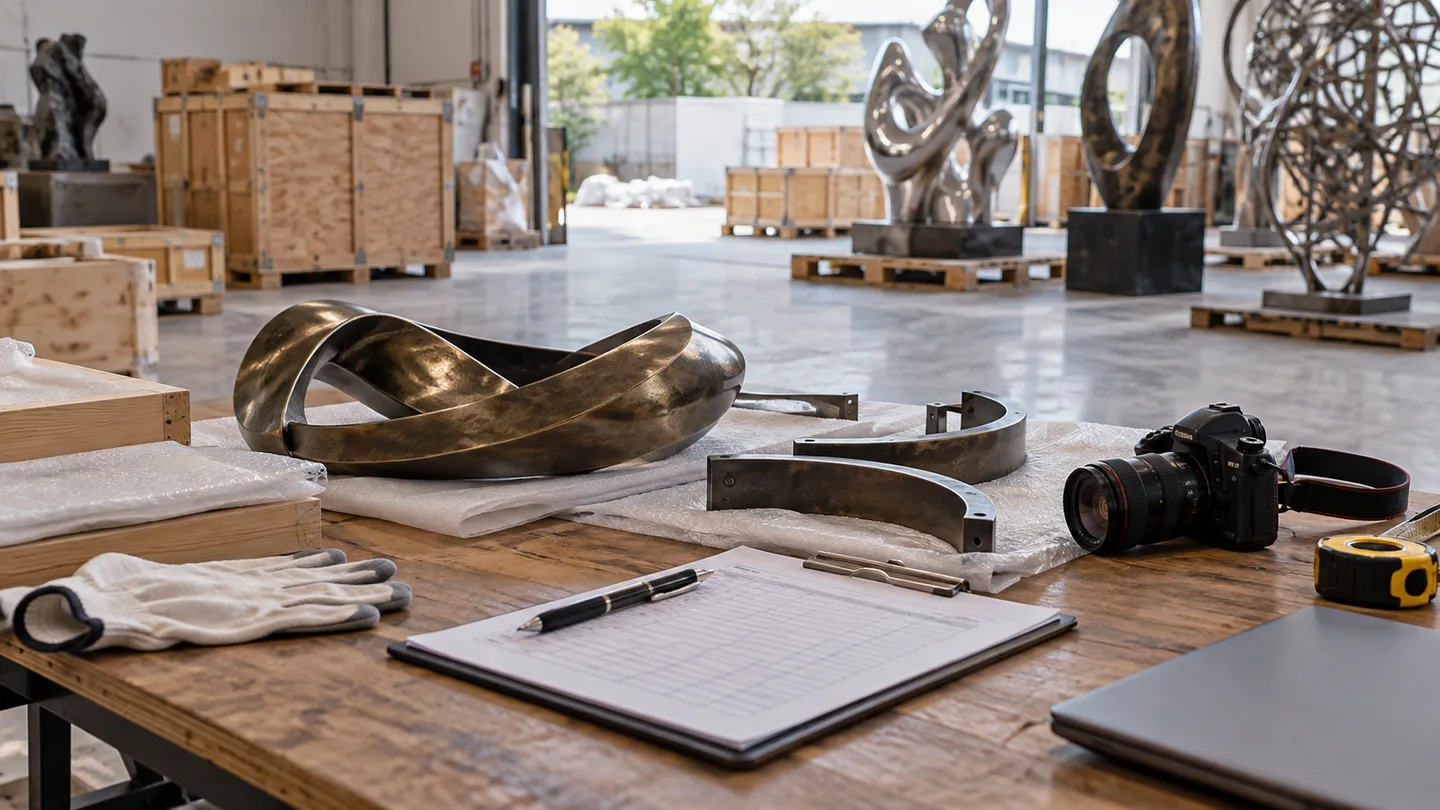
Then connect the artwork inventory to the package inventory. Record which component is in which package, the external marks used to identify it and which documents travel separately or electronically. A package identifier should survive the handoff between teams. Where access to sensitive project information is restricted, agree how the receiving team can obtain the necessary handling information without exposing unrelated commercial records.
Cadogan Tate describes condition reporting and photography at requested touchpoints within its fine-art services. This is a limited industry example of evidence travelling with custody. It does not establish a required report format or prove the condition of your particular artwork; the actual scope and record still need agreement.
| Question | Information to request | Owner to name |
|---|---|---|
| Travelling configuration | Items, sections and current reference | Supplier and handling reviewer |
| Protection and support | Proposal, sensitive areas and limitations | Appointed packing specialist |
| Opening at destination | Access, information and authorized team | Packing provider and receiver |
| Evidence before concealment | Condition views and item-to-package mapping | Record preparer and reviewer |
| Later use of packaging | Retention, location and change triggers | Buyer and operating owner |
Close the brief before committing the packing arrangement
Illustrative scenario, not a completed Weiya shipment: a buyer orders a hanging artwork with several fragile branches. The initial quote mentions a wooden crate, but the receiving team has no agreed place to open it and the loose components are not listed. The buyer records both gaps and asks the provider and venue to resolve them before confirming the arrangement. A thicker box would not answer either question.
Use the editable sculpture packing brief (.csv) to keep the requirement, source, proposal, reviewer, limitation and action together. It does not calculate a crate or approve a method. Transfer unresolved matters into the order clarification record and identify what decision is held until each answer arrives.
A current industry planning example is Heather Young’s September 2026 Frieze interview, published before the October fairs. It describes coordination extending beyond transport to installation and returns. We use it as a planning example, not as independently verified evidence of completed fair deliveries or a Weiya project.
For the final condition and completeness review, use the pre-shipment inspection checklist. For the people and activities on each side of delivery, use the delivery responsibility checklist. Keeping these records linked avoids making the packing brief stand in for every later approval.
Request packing scope alongside the artwork
Browse hanging sculpture references and send the current artwork reference, proposed destination, known access constraints and packing questions. Ask for explicit inclusions, exclusions and responsible parties.
Frequently asked questions
What should sculpture packing requirements include?
Identify the actual work and components, current references, sensitive features, proposed travel configuration and receiving constraints. Ask the packing specialist to define protection and support. Include opening information, condition evidence, package identity, responsible parties and unresolved actions; a crate description alone does not cover these decisions.
Can catalogue dimensions determine the crate size?
Not by themselves. The proposed supports, protection, orientation and separate items affect the external package. Ask the responsible provider for the actual packed envelope and its basis, then have the relevant team review the receiving route. Do not calculate trustworthy dimensions from a photograph.
Who chooses packing contact materials?
The appointed packing specialist should assess them against the actual material, surface, construction, condition and journey, using relevant maker or conservator input. A generic foam or wrapping recommendation cannot establish compatibility for every sculpture. Record the proposal and any limits in the agreed scope.
Does a wooden crate mean unpacking is included?
No. Confirm who opens it, what information and access they need, and who supplies the required team or equipment. Also agree whether packaging is retained and where it is stored. These activities should be named in the actual quotation and receiving plan.
When should condition photographs be taken?
Agree the relevant touchpoints and scope with the responsible parties, including useful evidence before packing conceals the work and at later handoffs. Link actual images to item identifiers, dates and observations. Photographs do not establish areas or conditions that were not visible or checked.
Does this brief certify safe packing or lifting?
No. It organizes procurement information and responsibilities. The appointed packing, transport and handling specialists determine the project-specific method and required evidence. Keep their actual instructions, scope and approvals linked rather than treating an editorial checklist or concept photograph as certification.
Sources and further reading
Sources read on 28 October 2026. References support the limited observations identified in the text; our worksheets, matrices and illustrative scenarios are original editorial tools. Citations do not imply endorsement, a partnership or a shared client. Apply the actual project requirements rather than another organization’s contract or technical solution.