Sculpture Delivery Damage Review: Evidence to Collect Before Requesting Repair Options
If a sculpture arrives with a suspected change, first keep people and the artwork safe, record the package and artwork as found, retain packaging and original photographs, and notify the named project and transport contacts under the applicable arrangements. Link observations to artwork identifiers and earlier records. Request a scoped professional review before cleaning, touching up, dismantling or authorizing repair; photographs alone cannot establish cause, liability, structural safety or a guaranteed remedy.
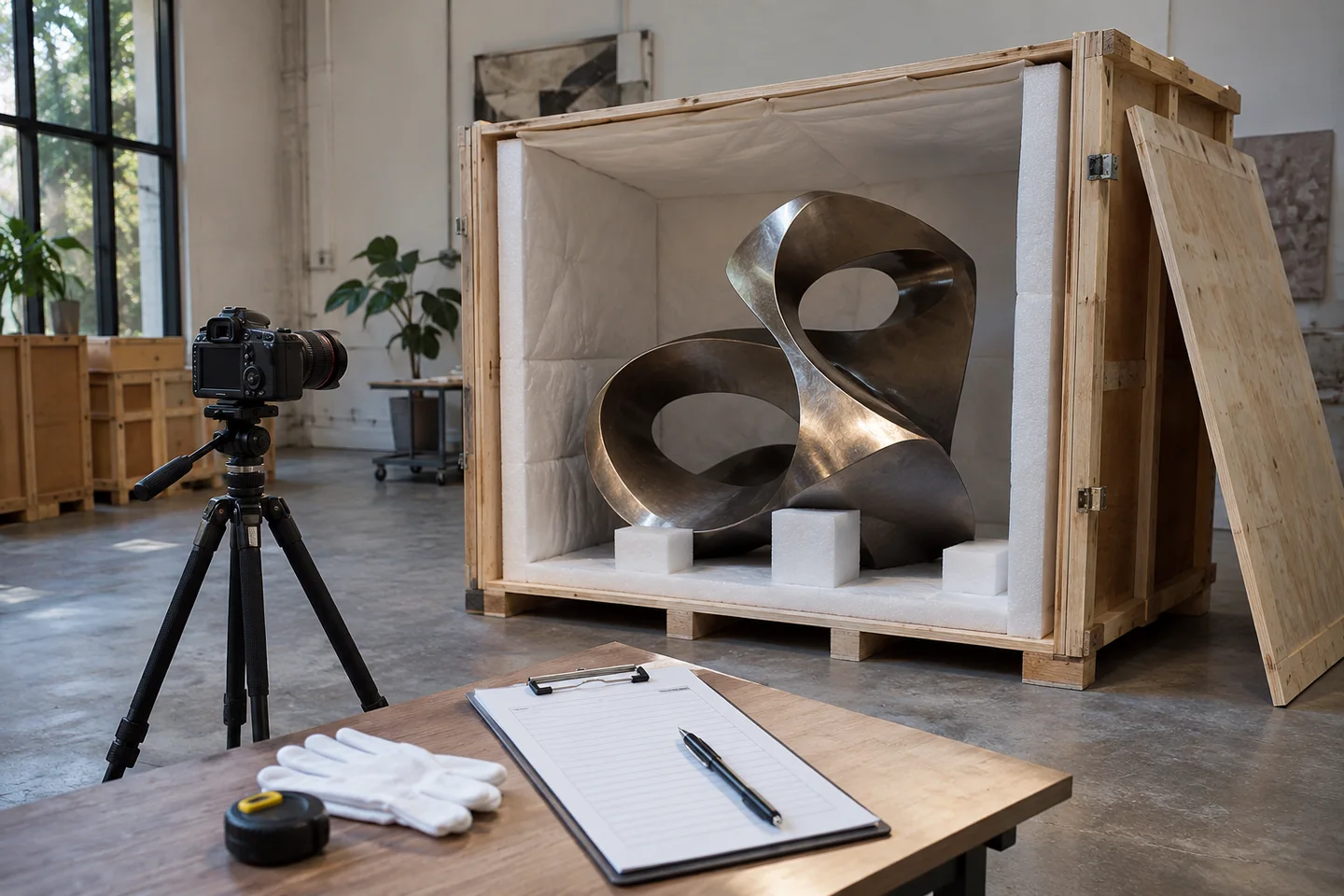
Decide whether this is an evidence request or a repair order
A buyer notices a mark after unpacking and asks for the quickest fix. That question skips several decisions: whether the mark is new, which surface is affected, who may examine it, and whether intervention could remove evidence or change the artwork. Sculpture damage inspection documentation should establish the observed condition and the next responsible reviewer before discussing a repair method or quotation.
This guide serves hotel procurement teams, designers, brand project managers and owners receiving commissioned artwork. It supports an initial evidence package, not a remote diagnosis or legal claim determination. For reference selection, use the metal-alloy sculpture collection. Its category label and photographs do not prove the exact alloy, coating or repair process for your piece. Obtain the project's material and finish records before treating a cast-looking object as bronze, aluminum or any other specific material.
Keep three questions separate in correspondence: what has been observed, what still needs professional assessment, and what work, if any, is authorized. A request for information does not authorize a site repair. If the opening date is approaching, record that constraint, but do not let urgency silently turn a preliminary suggestion into permission to alter the surface.
Pause handling when there is a safety or stability concern
If there is unexpected movement, a loose projecting part, damaged support, sharp fragment or uncertainty about stability, keep people clear and contact the appointed site or handling professional. Do not test the artwork by pushing it, tightening unknown fixings or lifting it for a better photograph. The person controlling the receiving area should decide safe access with the appropriate specialists. Ordinary receiving staff should not certify structural safety from an image.
When the object is stable and safe to observe, record its position without unnecessary movement. Keep a note of any action already taken to make the area safe, including time, person and reason. If immediate protective action is required, safety takes priority; document what can be documented safely and tell the reviewers what changed. Never preserve an unsafe situation merely to keep a photograph unchanged.
Separate an observed cosmetic mark from a suspected support or electrical problem. The latter may require a different professional and an access restriction. If the sculpture has powered elements, do not energize damaged or uncertain equipment for a demonstration; ask the appointed electrical professional to assess the situation. This is a decision to escalate, not a universal repair instruction for every type of artwork.
Record the package before the evidence disappears
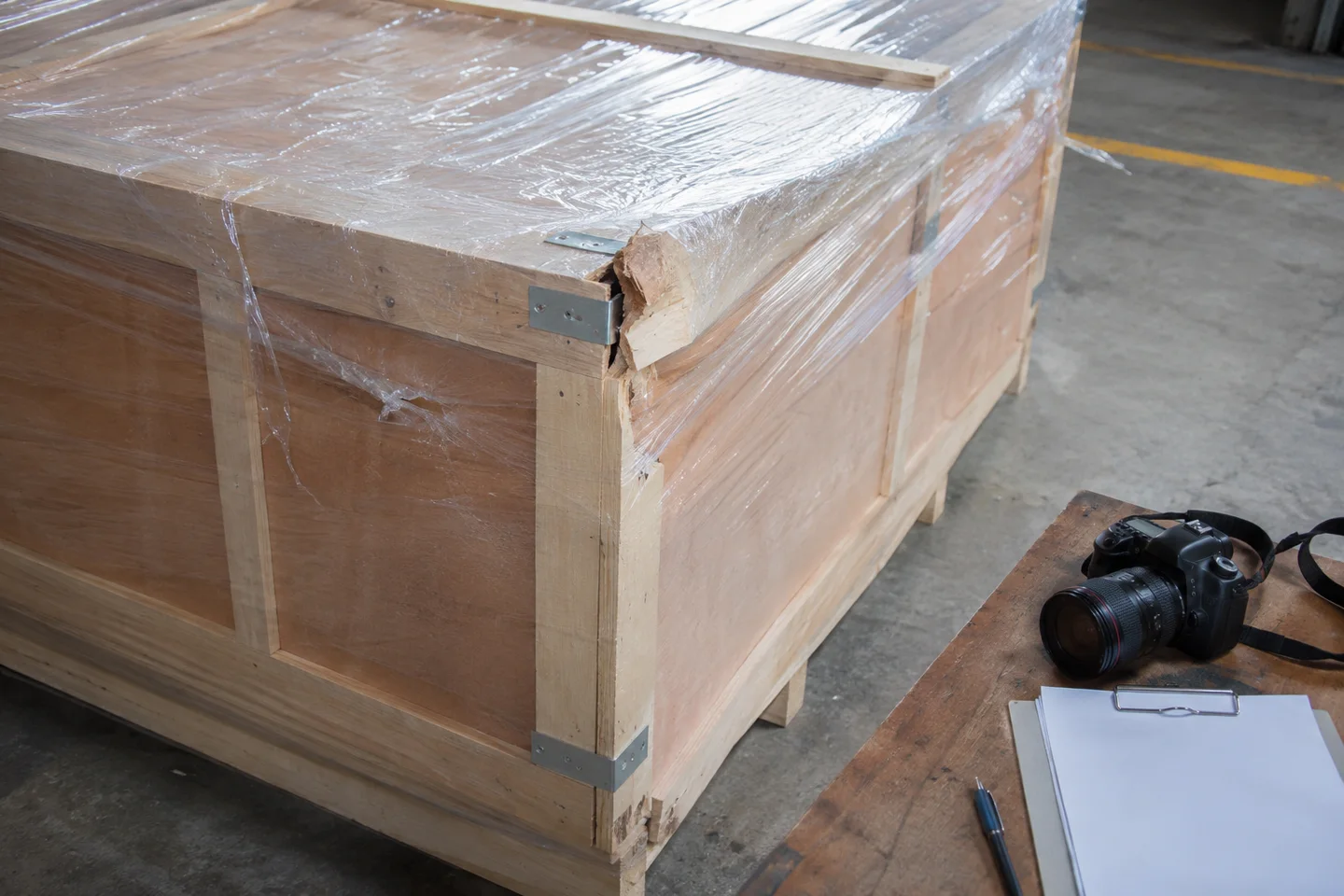
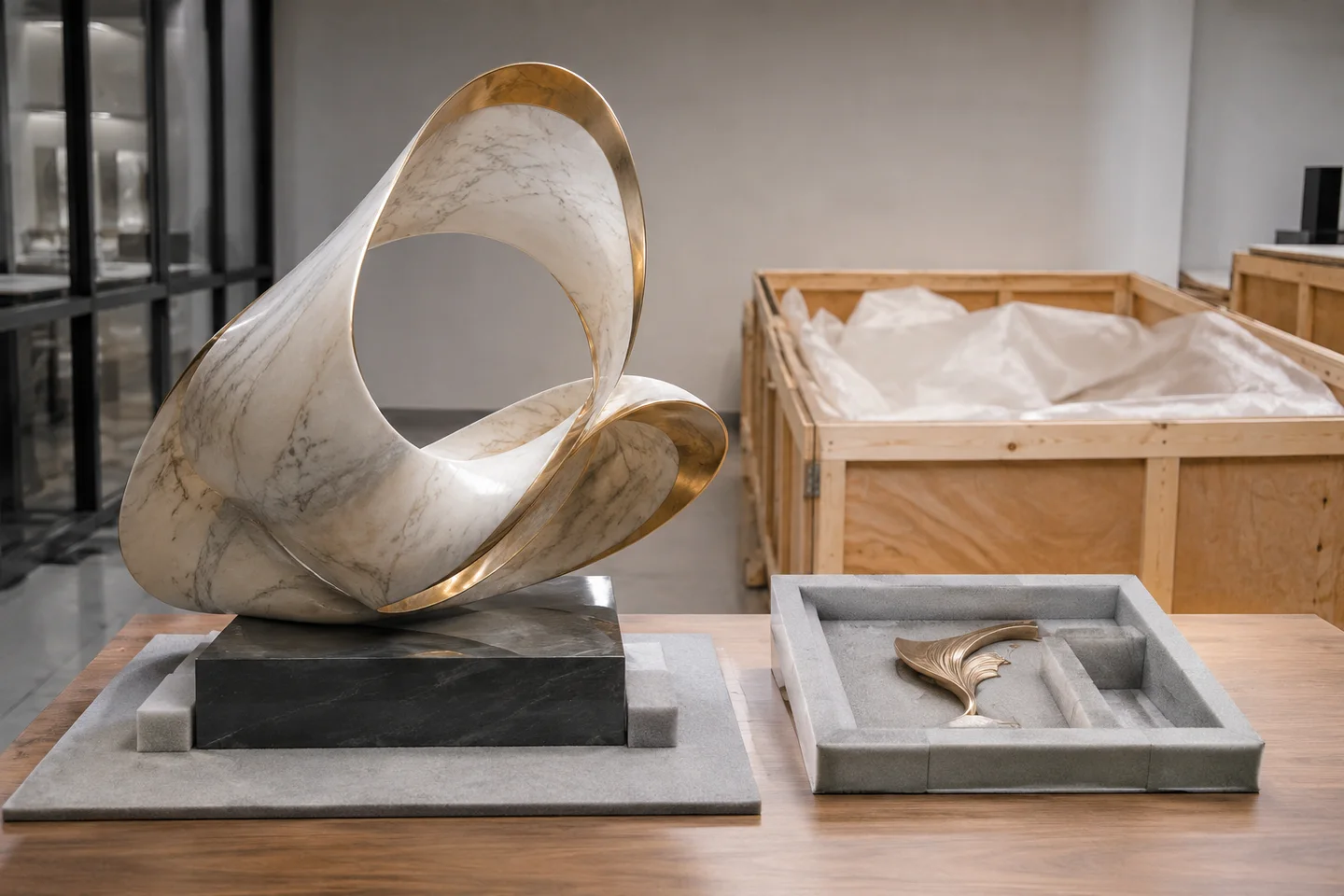
Capture the crate or carton in its received position, with an overall view and views of relevant faces, labels, seals and visible changes. Photograph crush marks, punctures, wet areas or displaced protection as observations, without claiming they explain every mark on the artwork. Link the package identifier to the delivery reference and artwork or component list. If one crate contains several pieces, record that relationship explicitly.
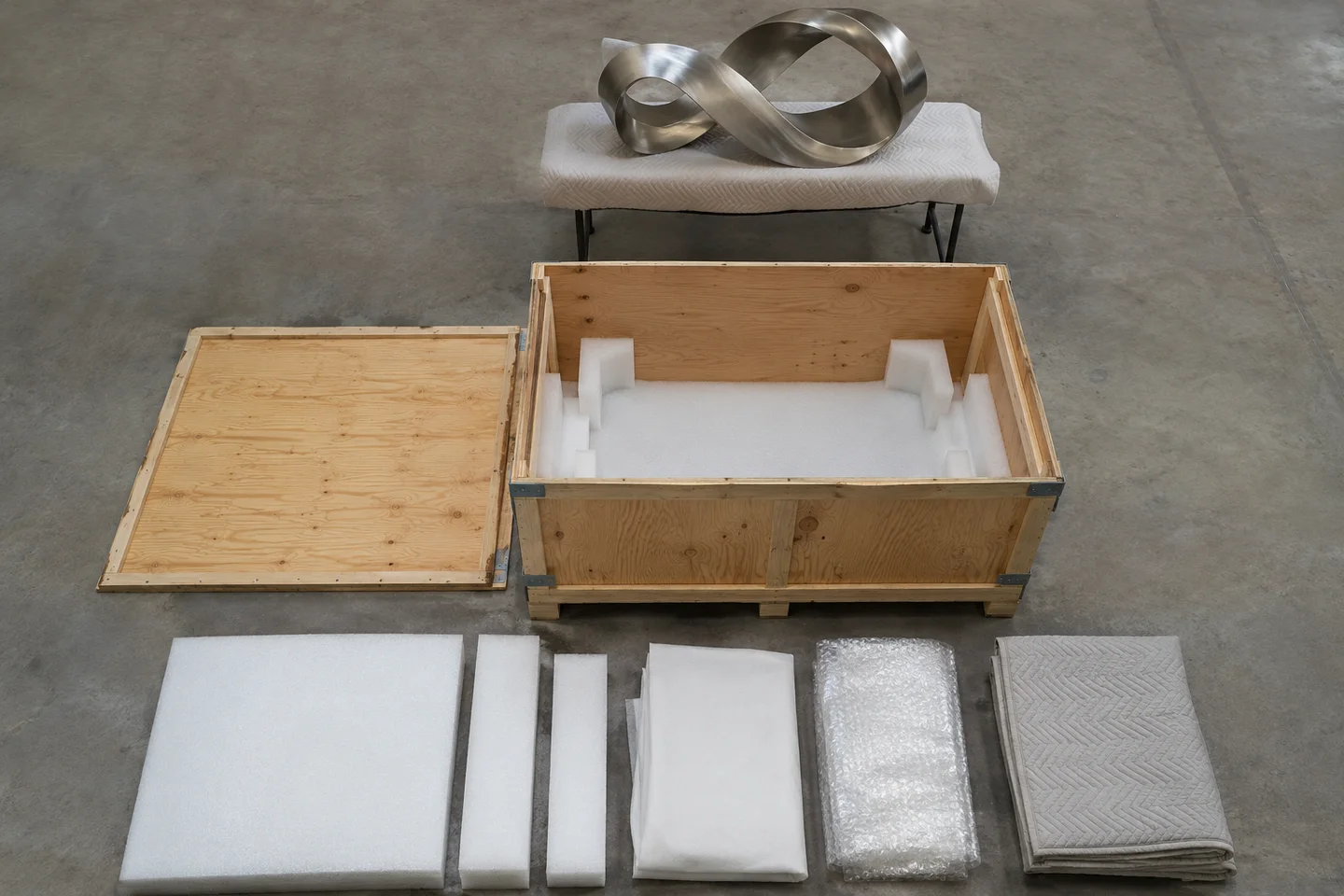
During safe unpacking by the responsible handlers, document the sequence and the position of protection. Retain packaging and detached pieces securely while the relevant parties advise what is required. Do not throw away a damaged foam insert because the sculpture has already been moved to display. Packaging may matter to a later review even when the exterior looks normal.
Convelio's published shipment insurance explanation asks its customers to photograph unpacking stages and retain packing materials. Its procedures apply to its arrangements, not automatically to yours. Check the actual carrier, insurer and contract instructions promptly; do not borrow another provider's notification deadline or assume every shipment has identical coverage. The packing and handling brief helps connect the received package to the originally agreed packing scope.
Make a repeatable photo set rather than a dramatic close-up
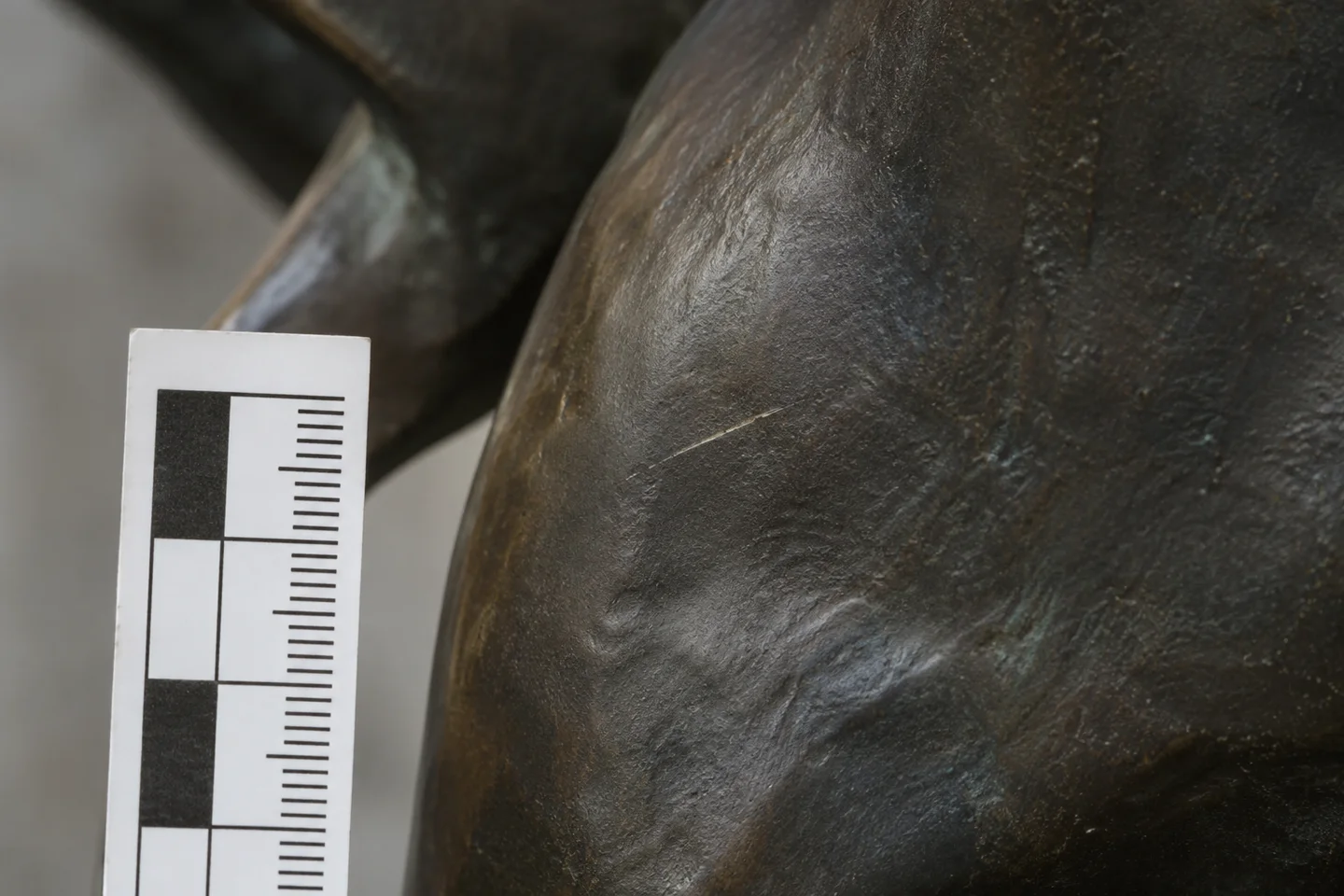
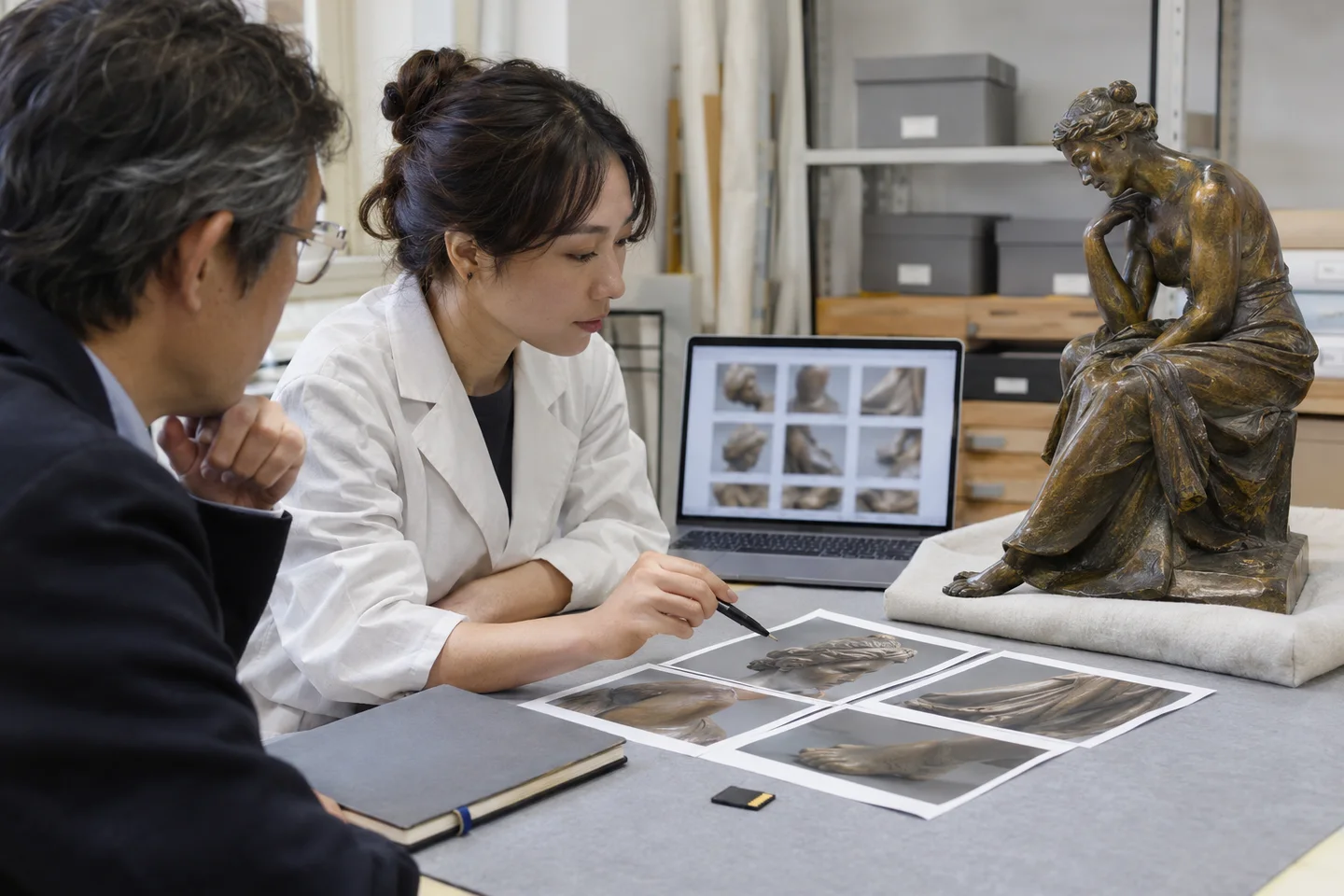
Begin with a whole-object view that establishes orientation and location. Add an intermediate view connecting the suspected area to the whole, then a clear detail. Include a separate scale reference when it can be positioned without touching or risking the surface. Record the date, observer, lighting and image filename. A close-up without orientation can leave a remote reviewer unable to locate the area on a complex form.
Use descriptive observations: a line, depression, missing element or visible separation at a named position. Avoid assigning a cause, exact material loss or depth that the evidence does not establish. Preserve original images with their metadata where available; make separate annotated copies with arrows or labels rather than overwriting originals. Do not enhance an image until a small mark appears more severe, and disclose any processing used for a comparison.
| Image layer | Buyer question it answers | Limitation to record |
|---|---|---|
| Overall object and location | Which artwork and orientation? | Concealed surfaces may be unobserved |
| Intermediate view | Where is the suspected area? | Reflections may obscure boundaries |
| Detail with separate scale | What is visibly present here? | Cause, depth and safety remain unverified |
| Package sequence | What protection and exterior condition were observed? | A photo does not establish the entire journey |
The comparison diagram contrasts an isolated image with a linked evidence set. Neither replaces the professional assessment required for a repair decision.
Compare earlier records without assuming causation
Request the latest available pre-packing, dispatch and earlier condition records, including original dates and identifiers. Compare the same orientation and area under reasonably comparable viewing conditions. If the earlier view is absent, too distant or obscured by glare, record that limitation. Absence of a visible mark in an unsuitable photograph is not proof that the area was undamaged at that time.
The Getty condition and examination framework treats assessments as observations made at particular times. Apply that principle by retaining each record separately. Avoid merging all photographs into a single before-and-after claim when the dates, lighting or object identity are uncertain. An identified difference may justify further examination without establishing who caused it.
Check the accepted finish reference too. An intended patina variation, casting feature or approved seam can look unexpected to a receiving team that did not attend sample approval. Conversely, calling every change normal variation can conceal a genuine issue. Ask the authorized design reviewer to clarify the agreed appearance and the qualified examiner to assess any unresolved condition. Preserve both decisions so design intent and physical assessment are not confused.
Build a custody timeline and an open-question log
Record events you can verify: collection, arrival, temporary storage, unpacking, movement and discovery. Include who held or handled the artwork at each known stage and the supporting document or photograph. Mark times as approximate when they are estimates. Use an unknown interval explicitly rather than filling it with an assumed transport event. Keep the original receiving notes, even if a later observation adds detail.
Separate recorded facts from reported statements. For instance, note that a handler reported an intact seal, together with the reporter and time, instead of treating it as a direct observation by the buyer. An issue log can hold questions such as whether a cover was removed after delivery or where a loose component was first found. A question should not read like an accusation disguised as a conclusion.
Assign a coordinator to circulate one evidence index to the project parties entitled to receive it. Redact unrelated personal data from a wider review copy while preserving appropriate originals securely. Send notifications through the actual agreed channels and retain confirmation of transmission. The delivery and assembly responsibility guide can help identify the relevant contacts, but the project contract governs their real duties and the applicable process.
Ask for assessment, repair options and authorization in stages
An initial review request should identify the object, known material and surface records, observed issue, safety restrictions, available evidence and desired decision. Ask the reviewer to state what can be concluded remotely and what requires physical access, testing or another specialist. AMNH explains that condition documentation supports a tailored treatment plan; documentation is the starting point, not the treatment itself.
| Stage | Requested output | Buyer release decision |
|---|---|---|
| Evidence review | Missing information and examination requirements | Permit appropriate access under agreed conditions |
| Option proposal | Scope, assumptions, risks, appearance limits and exclusions | Select an option or request clarification |
| Work authorization | Named performer, access arrangements and approved method | Written authorization by the responsible party |
| Completion review | Dated records and remaining limitations | Accept, request follow-up or keep issue open |
For quotation comparison, ask whether the proposal includes travel, access equipment, temporary protection, removal, transport, sample matching, reinstatement and documentation where relevant. Ask for costs and timing only after the provider understands the scope; this guide supplies no standard price or turnaround promise. Any insurance or liability decision remains with the appropriate parties under their actual arrangements.
Understand why a matching-looking repair may still need review
Surface appearance depends on the actual material, previous treatment, texture and viewing conditions. A small local intervention may remain visible, and working on one area may affect surrounding surfaces. A reviewer may propose further examination, a sample trial, off-site work, replacement of a component or no intervention. None of these outcomes should be promised before the piece and project constraints are understood.
When requesting options for artwork from the custom metal-alloy sculpture references, provide the exact catalogue or commission identifier, approved finish information and dated photographs. Do not ask the supplier to infer a material grade from a screenshot. Distinguish a fabrication inquiry for a new or replacement component from a conservation assessment of existing artwork; the provider should confirm what services and evidence it can actually supply.
Ask who approves an appearance trial and how it will be compared with the retained reference. Where the proposal changes the original finish or component design, record that change explicitly. Keep the authorization and completion photographs with the original issue record, so a later facilities team can distinguish original delivery condition from subsequent work.
Use the evidence worksheet to send a focused review request
The downloadable evidence register is an original procurement tool. Use one row per observation, with fields for artwork and package IDs, location, discovery time, observer, original image filenames, earlier comparison records, custody event and next reviewer. Keep the observation and interpretation in separate columns. Add a decision field so an unresolved question is not accidentally shown as a closed defect.
Start with a concise cover note: the artwork reference; what was observed and when; whether access is restricted; which original records are attached; and which decision is requested now. If something has already been cleaned or moved, state that clearly and include any earlier evidence. Do not hide an intervention to make the account simpler. Send a secure folder or controlled file set rather than scattered compressed chat images when originals are needed.
This article concerns evidence after a suspected delivery change, rather than replacing the pre-shipment inspection checklist. Once the issue is resolved, add the decision and any authorized work to the handover document pack. For a project-specific request, use the inquiry below with your reference, known material and finish, destination and evidence index. Ask first whether the proposed review or replacement scope is available; a submission does not establish a repair commitment or acceptance of responsibility.
Download the damage evidence register
Download the editable CSV worksheet. Use one row for each observation. Keep observation separate from interpretation, preserve original filenames, and record unknown intervals and the next decision owner. This tool does not determine liability or authorize treatment.
Compare custom metal-alloy sculpture references and send the artwork reference and project requirements for a scoped inquiry.
FAQ
Can photographs prove that the carrier caused damage?
Photographs record visible condition at particular stages but do not establish the whole journey or liability on their own. Preserve dated originals, earlier records, packaging and the custody timeline for the appropriate reviewers.
Should I clean or touch up the mark before requesting advice?
Avoid altering the suspected area while a review is pending unless the responsible professionals direct necessary protective action. Record any action already taken. Safety takes priority, and unsafe artwork should not remain accessible merely to preserve evidence.
Is the notification deadline the same for every shipment?
No. Check the actual contract, carrier, insurer and applicable requirements promptly. Another provider's published timeframe should not be treated as the rule for your delivery.
Does the metal-alloy catalogue identify the material needed for repair?
No. The category and image do not establish alloy composition, coating or an appropriate repair method. Provide the confirmed order and finish records or identify those details as unknown.
What is the minimum useful evidence for a first review?
Supply artwork and package references, dated overall and detail views, a clear observation, available earlier records, a custody timeline and known safety or access restrictions. Record missing evidence openly and ask what further examination is needed.